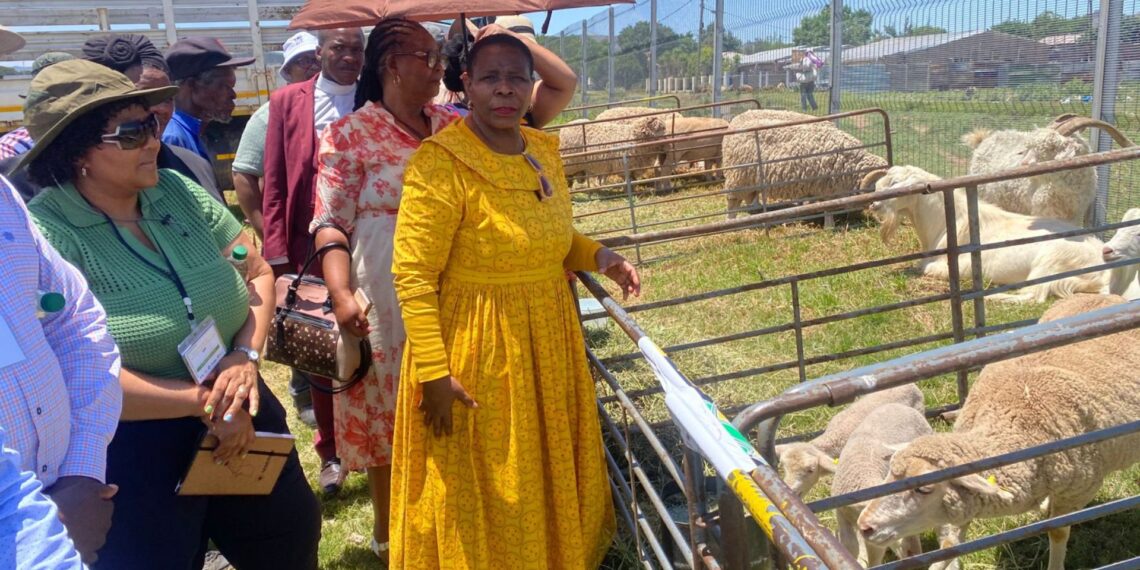
The Chris Hani District Agricultural Show in Komani, Eastern Cape, drew strong interest from financiers, agribusinesses and local producers eager to scale up commercial farming.
The event showcased an impressive range of agricultural and food products from local producers and traders. It also serves as a key marketing platform for local agricultural enterprises, giving them exposure to potential buyers and access to various business support packages.
The Eastern Cape Development Corporation (ECDC) regional manager for Buffalo City and Amathole, Rufus Nayo, said the agricultural show was an important market access opportunity and allowed financiers such as the ECDC to promote investment and extend enterprise development support to deserving traders and producers.
Showcasing opportunities across value chain
“This includes funding instruments and facilitating linkages between farmers, markets and financiers. The department of agriculture also presented available technical support for farmers, including the mobilisation of extension officers and commodity specialists, as well as government support programmes and incentives.
Related stories
- The alphabet soup that stifles rural development
- R1.2m agreement to boost black citrus producers in EC
- How pastoralists are redefining survival in Africa’s drylands
- Sugar imports threaten local industry and rural jobs
“From an ECDC perspective, the show confirmed that there are real, bankable opportunities for smallholder farmers in the Chris Hani District, especially when they organise around value chains rather than operating in isolation,” Nayo said.
Nayo highlighted agro-processing and value addition as key opportunities.
“Many farmers are still selling raw products. There is clear potential for small processing plants in areas such as meat processing, milling, dairy, fruit and vegetable drying, and wool washing, ensuring that more value remains within the district. There are also strong opportunities for formal market access and off-take agreements.
“Retailers, abattoirs, processors and buyers can work with organised farmer groups. This creates an opportunity for ECDC to help structure off-take agreements and connect farmers to stable markets, not just once-off sales,” he said.
Need for infrastructure and tech
Nayo added that the show also highlighted the need for shared infrastructure such as collection points, storage facilities, cold rooms and basic logistics. These would help reduce costs for individual farmers and improve quality and consistency for buyers.
“We saw growing interest from young and women farmers in climate-smart, technology-enabled production, such as irrigation solutions, digital platforms for inputs and markets, and data-driven farming.
“This is a clear opportunity for enterprise development and blended-finance support. Overall, the show confirmed that smallholder farmers from Chris Hani and Joe Gqabi are not merely subsistence producers; with the right investment and support, they can become reliable suppliers to local, provincial and even export value chains,” he said.
READ NEXT: Joburg Market shines with three consecutive clean audits