Tuesday, December 2, 2025
SUBSCRIBE
21 GLOBAL MEDIA AWARDS
Food For Mzansi
  • News
  • Changemakers
  • Lifestyle
  • Farmer’s Inside Track
  • Food for Thought
No Result
View All Result
  • News
  • Changemakers
  • Lifestyle
  • Farmer’s Inside Track
  • Food for Thought
No Result
View All Result
Food For Mzansi
No Result
View All Result
in Farmer's Inside Track

Farming within limits: Understanding planetary boundaries

Protecting your land means protecting your future. Dr Ndeke Musee unpacks planetary boundaries – scientific 'guardrails' that show farmers the safe limits for water use, soil management, and emissions

by Patricia Tembo
2nd December 2025
South African farmers are being urged to use science-based planetary boundary tools to better understand their land, water, biodiversity and emissions limits and strengthen sustainable farming in line with PDALA. Photo: Pexels

South African farmers are being urged to use science-based planetary boundary tools to better understand their land, water, biodiversity and emissions limits and strengthen sustainable farming in line with PDALA. Photo: Pexels

Share on FacebookShare on TwitterShare on WhatsApp

With growing populations and limited resources, producing enough food while keeping the land healthy is no easy task. That’s where agricultural planetary boundaries come in, as a simple way to understand the limits of what the environment can handle so farmers can keep their land, water, and biodiversity in balance.

Dr Ndeke Musee, founder of Beyond Genβ Solutions, explains what planetary boundaries mean for everyday farming. He shares how they can be applied on the farm and how using this approach together with laws, such as the Preservation and Development of Agricultural Land Act (PDALA), can help South African farmers farm sustainably, protect their land, and secure food for the future.

What are planetary boundaries?

Planetary boundaries are scientific thresholds that indicate how far human activities can go before upsetting the planet’s life-support systems.

Musee explains, “Planetary boundaries help us define the limits within which we can operate safely without destabilising the Earth’s systems.”

He compares them to everyday guardrails. “Think of the guardrails along a staircase. They guide you so you don’t fall off. Planetary boundaries guide us in the same way, to meet our needs without causing extreme impacts.”

These boundaries help farmers understand how land use, water use, biodiversity, emissions, and chemicals interact with the environment.


Related stories
  • Neglected conservation law threatens SA’s farmland
  • Conservation agriculture for livestock farming
  • Ten tips to establish grazing pasture and boost profits
  • Farming smarter: Digging into GIS data

Applying planetary boundaries on the farm

On a farm, planetary boundaries are a lived reality. Farmers work directly with land, water, and biodiversity every day, and those interactions need to remain within sustainable limits to maintain a resilient production system.

For example:

  • Water use must remain within safe extraction levels. “If you over-extract borehole or surface water, you destabilise the surrounding ecosystem,” he notes.
  • Soil management must protect fertility and structure.
  • Fertiliser and chemical use must minimise greenhouse gases and pollution, correspondingly.

“Every activity, from fertiliser use to use of tractors, has an impact. You must ensure you are farming within your environmental limits,” Musee says.
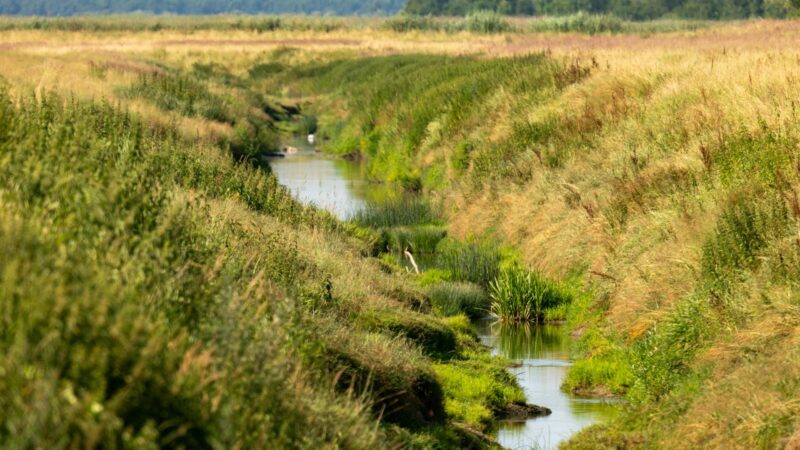
South African farmers work directly with land, water, and biodiversity, making planetary boundaries a daily reality on the farm. Photo: Pexels

Is there a policy supporting this?

Although the concept of planetary boundaries is relatively new to South Africa, there is one major policy aligned with this thinking: The Preservation and Development of Agricultural Land Act (PDALA), Act 39 of 2024.

“If applied correctly, PDALA becomes an enabler, not a punishment, to help us produce food sustainably.”

How PDALA supports sustainable farming

The goal of PDALA is to protect high-potential agricultural land from competing uses like mining or residential development.

According to Musee, “Its core purpose is to ensure that agricultural land is preserved and protected from all non-agricultural uses.”

This data mirrors what’s required for planetary boundary assessments. “The same information used for PDALA can show whether farmers are operating within planetary boundaries.”

How do farmers know whether they are within the boundaries?

Musee explains that this framework is anchored in scientific evidence and depends strongly on accurate data. It requires an expert to analyse a farmer’s information, such as water consumption, land use, emissions and biodiversity impacts, and evaluate each planetary boundary individually.

He adds that his company, Beyond Genβ Solutions, has already built tools for this purpose, including the Agricultural Planetary Boundaries Audit Framework (AgPBAF), designed to help South African farmers understand where they stand in relation to these limits.

However, Musee emphasises that national oversteps do not automatically mean farms are in breach. “Just because a boundary is exceeded nationally does not mean every farm has exceeded it. We assess each farm on a case-by-case basis.”

The nine planetary boundaries explained

Musee groups it into two main categories:

1. Natural resource-based boundaries

  • Freshwater use
  • Biodiversity
  • Land use

These are essential, Musee notes, “when you want to do anything – mine, farm, produce energy – the first three things you need are water, biodiversity, and land.”

2. Waste-linked boundaries

These arise from inefficiencies and pollution:

  • Climate change
  • Ozone depletion
  • Ocean acidification
  • Atmospheric aerosol loading
  • Nutrient losses
  • Chemical pollution

Using the example of fertilisers, he explains, “Some of the nutrients feed your crop, a portion becomes runoff, which then impacts on a waste-linked boundary- chemical pollution.”

Benefits and challenges across the agricultural value chain

Planetary boundaries offer consistency and transparency on sustainability assessment from farm to retailer.

Musee illustrates this with beef production: “You can determine the planetary boundary performance at the farm, the feedlot, the abattoir, and the retailer. It’s consistent across the chain.”

This matters because “planetary boundaries offer absolute environmental sustainability, not just comparisons between farms.”

The main obstacle is the quality of data. Musee emphasises that if a scientific framework is applied, the information feeding into it needs to be reliable and consistently measured.

Different regions must be measured and assessed consistently. “You cannot compare KwaZulu-Natal water challenges with those of the Northern Cape,” he says, as an example.

This is where training, support systems, and shared tools become essential.

READ NEXT: Value-added farming: Build a high-profit, sustainable business

Sign-up to Farmer's Inside Track for the best farming tips, news and advice to thrive!

Patricia Tembo

Patricia Tembo is motivated by her passion for sustainable agriculture. Registered with the South African Council for Natural Scientific Professions (SACNASP), she uses her academic background in agriculture to provide credibility and technical depth to her journalism. When not in immersed in the world of agriculture, she is engaged in outdoor activities and her creative pursuits.

Tags: biodiversityFuture-focused farmerSustainable agricultureTeach me

Related Posts

A modest backyard garden in Limpopo has grown into Mazeli Farming and Projects, a 140-hectare commercial enterprise led by recent Potato South Africa Farmer of the Year finalist Andries Masoga, showcasing how family, principles, and strategic partnerships can turn small beginnings into a thriving agribusiness. Photo: Gareth Davies/Food For Mzansi

Masogas’ backyard garden booms into 140-ha crop blueprint

26th November 2025
Farmers are urged to think like agripreneurs by embracing fast-moving crops, strong branding, strategic diversification, market research, solid management skills, mentorship, and export-driven opportunities. Photo: Pexels

Value-added farming: Build a high-profit, sustainable business

25th November 2025

Maintaining organic matter: Key steps to boost soil health

Maize farmer Matsole builds empire on education and hard work

Mastering poultry feed: Tips to maximise efficiency

JW believes in back to basics while building a legacy

Protect your livestock: Dos and don’ts for the rainy season

Four steps to formalise your farm and unlock finance

Capsicum Culinary Studio
Lifestyle

Township dreams: How chef Sesethu cooked his way to Nobu Doha

by Staff Reporter
30th November 2025

Mdantsane-born chef Sesethu Bukani has gone from township cook to culinary star at Nobu Doha. His journey – grounded in...

Read moreDetails
Dr Ndeke Musee

Respecting planetary boundaries protects SA food future

29th November 2025
Screenshot

Proper way to wear PPE: Protect yourself when handling pesticides

29th November 2025
Fairtrade Africa hosted a wage study release for the Cape Winelands, bringing together government, unions, producers, and farmworkers in a central location to foster dialogue ahead of the report’s finalisation. Photo: Food For Mzansi

Living wage study on Cape Winelands opens for public comment

29th November 2025
Nedbank

African Greeneurs & Nedbank: Growing Africa’s future farmers

28th November 2025

This week’s agri events: 1 – 5 December

South African vineyards shine in global top 100 rankings

Living wage study on Cape Winelands opens for public comment

Herbal heritage: Eastern Cape agripreneur boosts livestock health

Sweet potential: Raisin crop signals strong industry rebound

Join Food For Mzansi's WhatsApp channel for the latest updates!

JOIN NOW!

THE NEW FACE OF SOUTH AFRICAN AGRICULTURE

With 21 global awards in the first six years of its existence, Food For Mzansi is much more than an agriculture publication. It is a movement, unashamedly saluting the unsung heroes of South African agriculture. We believe in the power of agriculture to promote nation building and social cohesion by telling stories that are often overlooked by broader society.

Farming within limits: Understanding planetary boundaries

SoilSistas celebrate graduation of empowered women farmers

Sweet potential: Raisin crop signals strong industry rebound

Tariff delays cost wheat importers millions, warns Sacota

SA beer awards celebrate jobs and brewing innovation

Voermol Protein Block is NW Bonsmara farmer’s secret weapon

  • Awards & Global Impact
  • Our Story
  • Contact Us
  • Cookie Policy
  • Privacy Policy
  • Copyright

Contact us
Office: +27 21 879 1824
News: info@foodformzansi.co.za
Advertising: sales@foodformzansi.co.za

Contact us
Office: +27 21 879 1824
News: info@foodformzansi.co.za
Advertising: sales@foodformzansi.co.za

  • Awards & Global Impact
  • Our Story
  • Contact Us
  • Cookie Policy
  • Privacy Policy
  • Copyright
No Result
View All Result
  • News
  • Changemakers
  • Lifestyle
  • Farmer’s Inside Track
  • Food for Thought

Copyright © 2024 Food for Mzansi

This website uses cookies. By continuing to use this website you are giving consent to cookies being used. Visit our Privacy and Cookie Policy.