Wednesday, July 22, 2026
SUBSCRIBE
22 GLOBAL MEDIA AWARDS
Food For Mzansi
  • News
  • Changemakers
  • Lifestyle
  • Farmer’s Inside Track
  • Food for Thought
No Result
View All Result
  • News
  • Changemakers
  • Lifestyle
  • Farmer’s Inside Track
  • Food for Thought
No Result
View All Result
Food For Mzansi
No Result
View All Result
in News

Feed prices: desperate farmers turn to kitchen waste

Feed prices are leaving pig farmers so desperate that some have turned to kitchen waste to keep their animals from starving. But a vet and fellow farmers warn that this holds a biosecurity risk and says there are safer alternatives

by Zolani Sinxo
1st December 2021
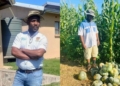
Farmers like Ipeleng Kwadi warn fellow farmers that resorting to kitchen waste to feed their pigs is not safe and that farmers should do their utmost to find better alternatives. Photos: Supplied/Food For Mzansi

Farmers like Ipeleng Kwadi warn fellow farmers that resorting to kitchen waste to feed their pigs is not safe and that farmers should do their utmost to find better alternatives. Photos: Supplied/Food For Mzansi

Share on FacebookShare on TwitterShare on WhatsApp

In the fight against soaring animal feed prices, frustrated famers are starting to resort to unconventional feeding methods. Farmers, set against watching their animals starve to death, say they are forced to feed their animals what they can with some going as far as feeding animals kitchen waste.

Especially pig farmers have been hard hit by the scarcity of high-quality feed and high prices. Across the country agribusiness are reporting a decline in their operating profit.

Ipeleng Kwadi, a pig farmer in North West, agrees that expensive feed has brought her and others a lot of frustrations.

Ipeleng Kwadi, livestock farmer and owner of Motsobella Farming Enterprise. Photo: Supplied/FoodForMzansi

“Bags of pig grower, dry sog and lactating sow feeds are becoming more expensive,” she says.

In 2019 lactating sow feeds cost around R290 and in 2021 it totals about R384, while pig grower would set a farmer back R260, it now costs about R315.

“When a farmer weans piglets, he or she needs to introduce these piglets to this feed before they eat pig grower as it has more protein. The fact that they are stressed after weaning – the higher proteins help them to grow fast and relaxed,” Kwadi says.

According to Kwadi the market price of feed is leaving farmers in the lurch. Many she says they want to quit the industry because they are not coping and fail to produce good quality meat.

“The market is too expensive. We are barely coping. For alternative feeding, I buy concentrates and chop mix them. Sometimes I get the first grade of lucerne and then mix them so that my pigs can have some protein,” she explains.

It is reported that some farmers are feeding their pigs with kitchen waste.

“I would urge farmers to avoid using kitchen waste to feed pigs as they will not do any justice to the market weight,” Kwadi advises.

Giving advice to pig farmers, Kwadi says the most important thing is to manage spillage and for farmers not to waste their feed. She adds that some farmers are using yellow maize and soya beans to manage.

Pigs at the risk of getting diseases

Dr Justice Masilela, a veterinarian, shares Kwadi’s sentiments cautioning farmers against the use of the kitchen waste as feed for pigs.

“When it comes to pigs there’s one disease that comes to mind such as the African swine fever. This disease breaks out in many provinces of the country, and it is very dangerous.

“When epidemiologists traced its origins, it was strongly linked to alternative feeds, whereby farmers are feeding their pigs kitchen leftovers which are mixed with meat products and many other things,” Masilela explains.

Using alternative feeds weakens the farmer’s biosecurity because they do not have a track record of the food; whether it is healthy or not for the animal.

Dr Justice Msilela started his consultancy in Gauteng but is now delivering services in six provinces. Photo: Supplied/Dr Justice Msilela
Dr Justice Masilela started his consultancy in Gauteng but is now delivering services in six provinces. Photo: Supplied/Dr Justice Msilela

He said this lack of knowledge creates a danger of diseases being transmitted through kitchen waste.

“With alternative feed, people are running the risk of not only endangering their pigs but also threatening the safety of people that consume this meat. It is of utmost importance that farmers invest in feed additives and mix their own feed as a measure to save cost,” Masilela says.

His advice to farmers with available space on their land is to plant their own produce and mix it for feed. Masilela says this is a cheaper option which will also minimise the risks of diseases.

‘No voice in the markets’

But for small-scale pig farmer Xolisani Booi in George, Western Cape, it is a matter of not having a choice. He refuses to watch his animals starve to death and feed the animals what he can.

Xolisani Booi a farmer in George, Western Cape. Photo. Supplied/Food for Mzansi

“As if the Covid-19 pandemic was not enough, now they have really put a nail on the coffin by raising the feed prices. Our pigs are dying. We can’t afford to feed them. We have knocked on every possible door that you can think of, but instead we are fed a whole lot of bureaucratic jargon and red tape,” says Booi.

It is not just pig feed that Booi is struggling with. He’s also lost about 13 sheep due to the unavailability of feed and grassing land. He believes that as small-scale farmers, they are being overlooked.

“Government has failed us as small farmers by not being our voice in the markets,” he says.

“We just came from a difficult pandemic. One would have thought at least government will negotiate with the markets to reduce the price of feed. A pig eats every day. A 50kg bag of feed is only enough for four pigs in four days, and good quality feed can cost you anything to R500. Imagine buying this feed every week. It costs a fortune.”

ALSO READ: ‘The planet, people and pigs are a unit’

Sign up for Mzansi Today: Your daily take on the news and happenings from the agriculture value chain.

Zolani Sinxo

Zolani is an award-winning journalist and holds a National Diploma and a B Tech in journalism, he is a journalist at heart with a particular interest in developmental journalism, politics, African development stories, environment, and global and national current affairs. He started to develop an interest in writing and storytelling at a young age after he co-authored a folk tales children’s book in 2005 titled Our Stories, Amabali Ethu. After graduating, Zolani worked at various government institutions where he worked in the marketing and communication departments specialising in media liaison and editorial management. His passion for developmental journalism saw him being a co-founder of a community newspaper in Stellenbosch, Umlambo News. He has also worked for the Group Editors as a journalist for the George Herald and is also the editor of Idinga community newspaper. Zolani loves books, especially on Africa’s politics, history, stories, and biographies of African leaders who have made a significate contribution to the continent’s socio-economic wellbeing.

Tags: feed pricesPig farmer
The Forest of Renewal at Rustlers Valley celebrates the intertwined legacies of Frik Grobbelaar, Anton Chaka and Riky Rick, inviting South Africans to restore the land while cultivating hope, belonging and community. Illustration: ChatGPT
Food for Thought

Rustlers Valley offers a blueprint for South Africa’s renewal

by Ivor Price
18th July 2026

As the Rustlers Valley Memorial Forest is launched in the eastern Free State this weekend, Ivor Price reflects on why...

Read moreDetails
Grain SA appoints Mabuza to lead farmer development

Rising stars: 2026 PGP finalists redefining SA grain farming

18th July 2026
Rooibos heads to space in groundbreaking Mzansi experiment

Rooibos heads to space in groundbreaking Mzansi experiment

18th July 2026

Seriti Institute CEO wins prestigious Best Woman 2026 CSI award

17th July 2026
Farmers and brewers call for budget that builds, not breaks

Minister details Land Bank’s success in boosting black farmers

17th July 2026

Grain SA defends farmers against blame for rising food prices

Weekly stock theft reports pile pressure on farmers

Unused KZN school transformed into a thriving 16-hectare farm

Rising stars: 2026 PGP finalists redefining SA grain farming

Climate change: SA’s food processors are feeling the heat

Join Food For Mzansi's WhatsApp channel for the latest updates!

JOIN NOW!
Next Post
Early B (from top, left), Stephanie Baartman Petersen and Sunset Sweatshop are all on the VKB Bieliemielie Festival line-up. Photos: Supplied/Food For Mzansi

Hurry! Ticket sales for VKB’s Bieliemielie fest now open

THE NEW FACE OF SOUTH AFRICAN AGRICULTURE

With 21 global awards in the first six years of its existence, Food For Mzansi is much more than an agriculture publication. It is a movement, unashamedly saluting the unsung heroes of South African agriculture. We believe in the power of agriculture to promote nation building and social cohesion by telling stories that are often overlooked by broader society.

Smart vineyard irrigation starts below the ground

Treat food processing as essential national infrastructure – Khoury

Farmers urged to embrace uncertainty and build resilience

SA poultry industry calls for urgent bird flu vaccine rollout

Mother’s legacy, neighbour’s grace: Venessa Simelane’s farm story

Deadline looms: Register water use by 23 July or risk penalties

  • Awards & Global Impact
  • Our Story
  • Contact Us
  • Cookie Policy
  • Privacy Policy
  • Copyright

Contact us
Office: +27 21 879 1824
News: info@foodformzansi.co.za
Advertising: sales@foodformzansi.co.za

Contact us
Office: +27 21 879 1824
News: info@foodformzansi.co.za
Advertising: sales@foodformzansi.co.za

  • Awards & Global Impact
  • Our Story
  • Contact Us
  • Cookie Policy
  • Privacy Policy
  • Copyright

Chat Options

I'm Lerato, your AI assistant!
No Result
View All Result
  • News
  • Changemakers
  • Lifestyle
  • Farmer’s Inside Track
  • Food for Thought

Copyright © 2024 Food for Mzansi

This website uses cookies. By continuing to use this website you are giving consent to cookies being used. Visit our Privacy and Cookie Policy.