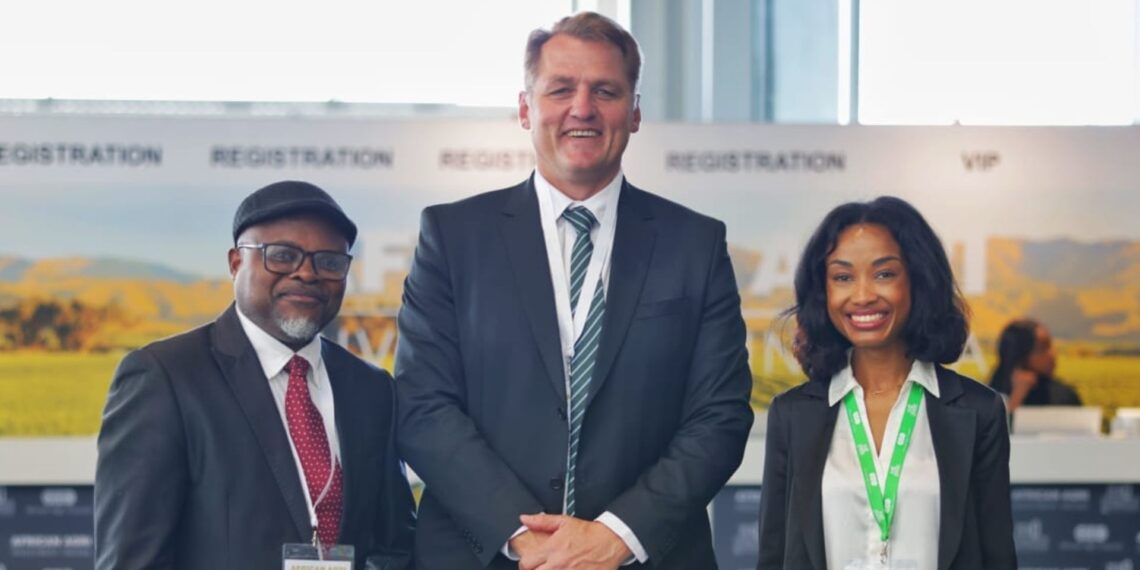
As the annual African Agri Investment Indaba (AAII) concluded in Cape Town, the aim of reducing poverty, unemployment, hunger and malnutrition by 2030 will not be realised unless funding for farmers, fighting climate change, creating an enabling environment and policy certainty are fully addressed. This was the message from experts in the industry.
Director of agribusiness at the Dutch Development Bank in the Netherlands, Hans Bogaard, said operating farming enterprises in Africa requires a lot of money and up to five years to start seeing results.
Bogaard said public-private partnerships cannot be over-emphasised as they play a critical role in ensuring food is available beyond 2030, which is expected to be the time Africa runs out of food to feed its people.
Better conditions needed to produce food
“Policy change is very crucial as that enables farmers and exporters to work better. Issues of trade cannot be concluded by private companies – that is trade relations between country to country – so it needs governments to address and outline what needs to be done. It’s pointless to want to plant and sell something that cannot be accepted into the next country.
“And when we talk about ending hunger in 2030, the issue of land needs to be addressed. We know in South Africa and some parts of the African continent it is a sensitive topic, it is crucial that people get land to farm and produce food,” he said.
Bogaard said while Africa needs extraordinary growth, taking it a step at the time is important and what Africa needs is good growth that ensures everyone is on the same page.
Challenges hampering investment in Africa
Director at ISF Advisors in New York City and Washington, Craig Courtney, said addressing logistics, high packaging and distribution costs will play a key role in unlocking Africa’s potential of being food secure.
“We need to see logistics capacity being addressed because, in many instances, those are the main issues that hamper food to enter into a country resulting at the same time in losses for farmers and job losses,” he said.
Related stories
Chief executive officer of the African Agri Council, Ben Leyka, said throughout the African Agri Investment Indaba he met visionaries who wanted to invest in Africa and improve the food value chain of the continent.
“I met policymakers who had their wish list and want to see upbringing and Africa changing for the better. It is equally important that entities that want to invest in the continent do so, but they cannot do it alone. They need to be assisted by all stakeholders.
“This is the platform for private companies and policymakers to sit around the table and discuss their wish lists and targets,” he said.
Crop farmer David Mthombeni said the key points he has taken away from the conference are food security and the importance of collaboration amongst different institutions.
“One of the critical issues we are faced with is that the population is growing day by day, but production of food is going down. As industry people we need to come up with a clear strategy as to how we [are] going to boost food production through technology, innovation or any other means so that the people can eat,” he said.
Meanwhile, the executive director and chief executive officer of Afgri South Africa, Norman Celliers, said operating a farming entity in Africa is costly with many laws and regulations that one must follow hence food security on the continent is a concern.
“To start with, export license is a headache. One is being taken from pillar to post and it can take forever, that is not a conducive environment to operate in,” he said.
READ NEXT: Lesotho Highlands shutdown: Govt assures sufficient water supply
Sign up for Mzansi Today: Your daily take on the news and happenings from the agriculture value chain