Agriculture can be South Africa’s fastest route to real transformation, but only if people, not just land, are placed at the centre of development.
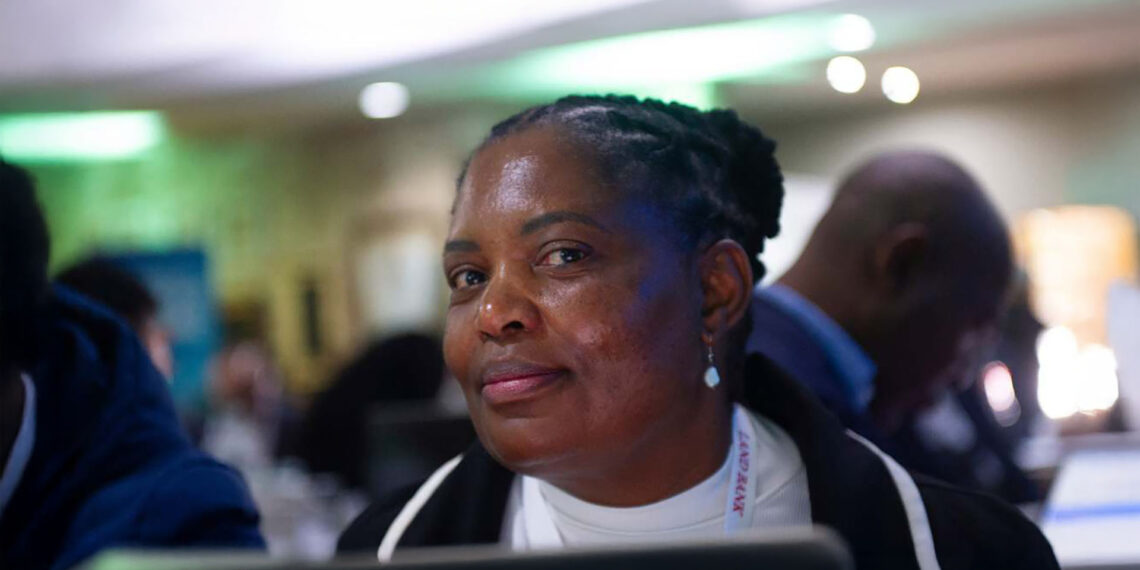
This was the challenge from Dr Mankodi Moitse, CEO of Kagiso Trust, speaking at the 2025 Agricultural Transformation Lekgotla, presented by Food For Mzansi in partnership with Land Bank, Kagiso Trust, and Joburg Market.
Marking 40 years since its founding, Kagiso Trust used the platform to push for a new way of doing agricultural development – one rooted in human dignity, deliberate investment in people, and community-led solutions.
First-world and third-world realities
Moitse began her address with a stark reflection on inequality, using images of Mitchells Plain and Avalon cemetery in Soweto to highlight the divide. “Our country has these first-world and third-world features that are troubling,” she said. “Even the graveyard does not have grass.”
She asked delegates to consider the human side of development: “Can we put soul into what we do? Can we make sure a child from a poor background is afforded the opportunity to write their own narrative – and transition away from the third-world South Africa?”
She recounted her experiences visiting rural homes where families are isolated and children carry immense responsibility. “Some of the homes are such, they’re so unreachable,” she said. “These kids hold so much hope for their families.”

Related stories
- Targeted support, partnerships key to black farmers’ success
- Transformation Lekgotla: Call to fix ‘stubborn problems’ in farming
- SA government unveils plan to counter US tariff storm
- R30m boost for black sugarcane farmers through Kagiso Trust deal
Building farmers, not just farms
Moitse cautioned against focusing on land redistribution alone. “What kind of an entrepreneur are we producing? We need capable farmers with proper skills and leadership, not just beneficiaries on paper,” she said.
Kagiso Trust’s agricultural model, reshaped after listening to farmer associations, now supports three categories of producers:
- Build: Farmers needing foundational training.
- Grow: Farmers ready to scale operations.
- Influence: Farmers positioned to access markets, lead communities, and shape agricultural strategy.
“We thought if you give people finances, things will work. But farmers told us: you don’t understand us. We changed our strategy because their voices matter,” Moitse said, highlighting the importance of active listening and co-creation with farmers.
The approach includes aggregation hubs, urban agriculture initiatives, and climate-smart farming practices, with partnerships spanning Spar, Land Bank, Harambee, and other development networks.

Farmer associations and orchestration
Moitse noted the critical role of farmer associations. “The voice of farmers matters. Associations ensure farmers continue to be organised, structured, professional, legitimate voices,” she said.
She also highlighted the importance of the agricultural value chain beyond primary production, noting that coordinated participation – from farmers to processors to retailers – could unlock opportunities for youth employment, entrepreneurship, and local economic growth.
With youth unemployment a national crisis, Moitse believes agriculture can set the tone for solutions across every sector. Kagiso Trust and its partners have committed to a 20% reduction in youth unemployment by 2030, and she encouraged agribusinesses to create pathways for young people.
“This country trains trainers very well. We do enterprise development very well. Let’s trust young people. If we show them where opportunities are, they will organise themselves,” she said.
Human capital at the heart of transformation
While land reform is vital, Moitse stressed the need to invest in human capital, particularly in education, mentorship, and skills development. She encouraged stakeholders to focus on female capacity as a key driver of transformation.
“Agriculture can leapfrog transformation,” she said. “It’s an opportunity, second only to ICT. If we get it right, we can show the rest of the country how transformation should be done.”
She concluded with a call to action: “As we address land, let’s also invest in people. Let’s grow farmers with soul.”
READ NEXT: Transformation Lekgotla: Call to fix ‘stubborn problems’ in farming