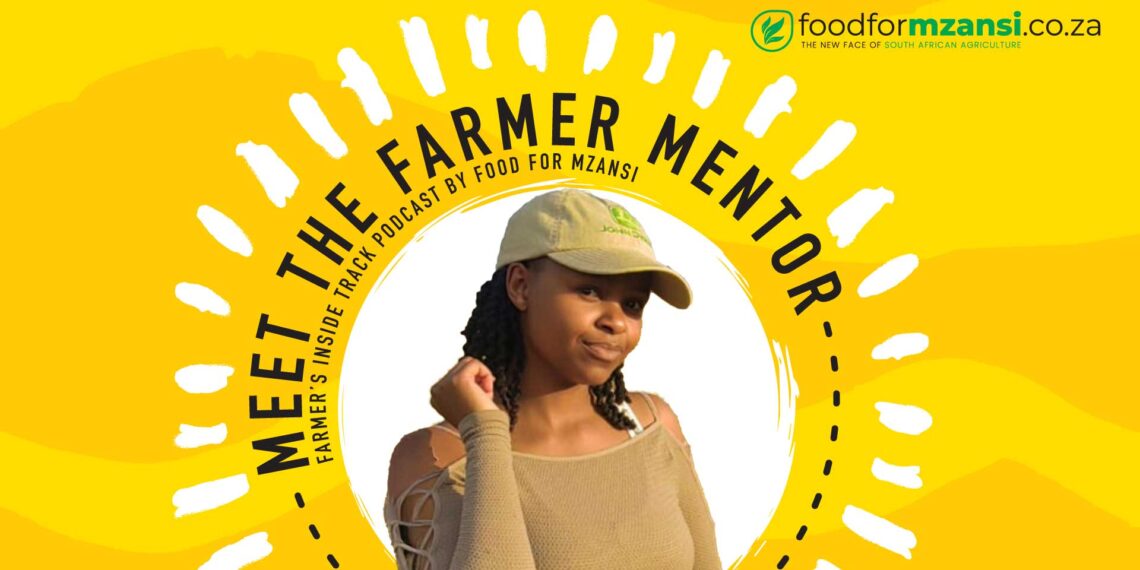
They laughed at her tuck shop. Now she’s supplying South Africa’s biggest names in agriculture. Njabulo Mbokane shares her rise in agriculture in this episode of the Farmer Mentor series.
In the heart of Mpumalanga, lives a woman whose journey defies every odd. Njabulo Mbokane’s name is now recognised in boardrooms, on national stages, and across farmlands as a force in South African agriculture. However, her story didn’t begin in the corridors of success. It started with a fryer and a dream, and she did it all for her son.
“I told myself, you know what, nobody is coming to save me,” she recalls. “Before opening the fish and chips business, I delivered firewood to petrol stations. I ran a tuck shop. I did what I could for the sake of my son.”
Fresh out of matric with an infant, Mbokane looked around and realised her parents’ life would not be enough for her or the little boy now depending on her. While her peers moved on to universities, she started selling fast food in her community.
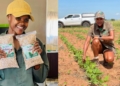
It wasn’t long before her entrepreneurial spirit led to something much bigger. In 2016, she founded Awdalia, a 100% youth- and black woman-owned agribusiness. It started small, with vegetables planted in abandoned school gardens. However, the vision was always big, she says.
“You know we start small, but we mustn’t stay there long. We must always think big.”
And Mbokane did. Today, Awdalia spans two highly productive farms, Sunnyside in Lothair and Driehoek near Ermelo. Her operation includes maize and soybeans, alongside Merino sheep for wool and meat production.
Her choice of crops and livestock wasn’t accidental; it was strategic, guided by mentorship, market demand, and sheer tenacity.
“With grains, I started on half a hectare. That’s the honest truth. I used the wrong chemicals. I didn’t harvest anything,” she admits.
Instead of giving up, she leaned into partnerships and mentorship. She paid attention to her environment. “I checked what my neighbours were planting, what implements they had. I asked myself, can I grow these? Can I make a business from this?”
Diversifying with intention
Maize and soybeans are now planted in rotation over large tracts of land, with production practices refined for both profitability and sustainability. The soya also feeds her Merino sheep, whose wool and meat she now sells, diversifying her enterprise to weather any storm.
“Back in 2019, during Covid, I had sheep, but theft forced me to sell. It was a bad time. But when Merino Mall opened nearby, I thought, ‘Why not benefit from wool too?’”
Mbokane produces her own feed, partnering with neighbouring farmers to supply maize and bales. She grinds and mixes her feed with molasses and nutrients, crafting a feed formula tailored to her livestock’s needs. Nothing is done without purpose. Nothing is wasted, she tells Food For Mzansi.
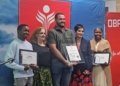
Her achievements have not gone unnoticed. SA Breweries named her Young Farmer of the Year, she was recognised at the Mpumalanga Hollywood Mbombela Business Awards, and honoured by the provincial department of agriculture.
“Sometimes it’s crazy… am I working so hard that even the president knows me?” she laughs. “Older people come up to me, saying they want to start doing what I’m doing. It’s incredible.”
For Mbokane, every milestone points back to her why. Her son. Her workers. Her dream of building something that lasts beyond her time.
Related stories
- Avocado farmer grows success by thinking like a boss
- Groot Phesantekraal: Smart risks, hard work lead to lasting rewards
Creating a system and culture that works
Managing two farms 50 kilometres apart is no small feat, but she does it with intention, through systems, structure, and values. Every sheep has a tag and a story. Every process is recorded. Every worker is empowered to contribute to the culture of Awdalia.
“You must create your own systems, create your culture. You guys must know this is how we do things here. That’s how we grow,” she says.
Today, Mbokane supplies to industry giants like Sacta, Afgri, BKB, and SA Breweries. However, it wasn’t luck. It was trust. Relationships built over time, maintained through transparency and performance.
“For them to trust you, you have to be a committed person. Deliver. Do reports even when they haven’t asked. That’s how you get mentioned in big boardrooms.”
Farming is not a monthly salary, and Mbokane plans accordingly. Every cent is accounted for. She budgets before a seed is planted and starts planning for the next season the moment harvesting ends.
“Money only comes once a year. I could buy expensive clothes, a new car… but I think of the workers. I think of the generation to come. I don’t want Awdalia to crash.”
And above all, she reminds other farmers: don’t be afraid to use other people’s money wisely.
Njabulo Mbokane stands as a powerful example of what happens when vision meets discipline. From a fish and chips stand to an award-winning agripreneur, her journey is a masterclass in resilience, reinvention, and radical self-belief.
“The economy is so bad. It’s just about time that we think big and step out of our comfort zone. Whatever fear we have, we just pass it aside. It’s up to us now to step in,” she says.
READ NEXT: EC villages under siege as livestock theft cripples farmers
Sign up for Mzansi Today: Your daily take on the news and happenings from the agriculture value chain.