South African livestock producers are being urged to adopt practical management practices – from strict legal identification protocols and body condition scoring to calm handling techniques – to build sustainable, profitable farming operations.
Industry stakeholders gathered for the launch of the Livestock Growth Series, the free online initiative designed to equip farmers with actionable knowledge to minimise operational risk and increase farm productivity.
During an online training session this week presented by Ernest Makua from the Red Meat Industry Services (RMIS), in partnership with the Agriculture Development Agency (Agda), Makua challenged prospective producers to clarify their primary objective before purchasing livestock, emphasising that clear decision-making is the foundation of farm management.
“Are you a livestock owner or a farmer?” Makua asked.
He explained that breed selection must be carefully aligned with local environmental conditions, climate, production systems (whether crossbred or purebred), and market requirements. When selecting individual animals, producers should base their criteria on fertility, growth rate, overall body capacity, temperament, leg and hoof structure, and specific cow or bull characteristics.
Related stories
- Steenhuisen appoints FMD task team to take bull by the horns
- Jacques Theron’s dairy legacy: From 6 cows to industry leader
- Dairy dynasty: Family, innovation fuel Foundation Farm success
- How genetic testing transforms dairy farming
Regulatory compliance and herd management standards
Makua highlighted the legal mandates surrounding livestock ownership under the Animal Identification Act, noting that animal identification is central to traceability and risk management.
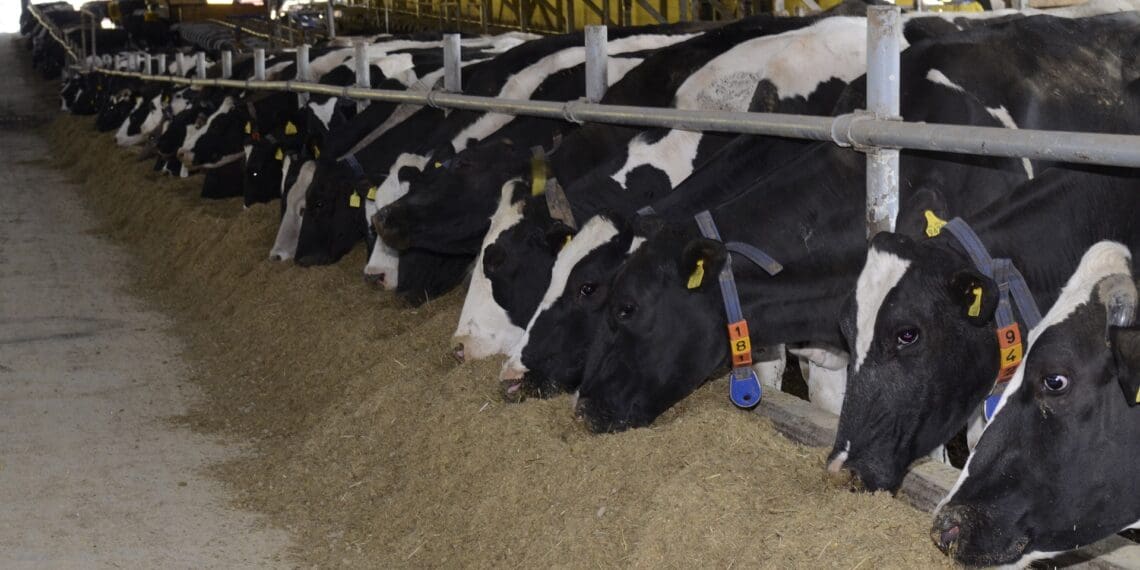
Under the act, every cattle owner must apply for and register an identification mark with the registrar of animal identification, pay the required application fee, and notify the registrar in the event of an address change. Furthermore, all cattle must be marked or branded. Calves can be marked from one month of age, must be branded by six months of age, and newly purchased animals must be branded within 14 days of acquisition.
Addressing feedlot practices, Makua noted that dehorning is essential for reducing injury risks among cattle and promoting safer handling for farm workers. He highlighted disbudding, the removal of horn buds in calves under two months using a hot iron or chemical paste as a primary method.
To assist producers in monitoring herd health and nutrition, Makua detailed the standard body condition scoring (BCS) system ranging from 1 to 5:
- Condition score 1: Skeletal outline, with prominent backbone, hip, and shoulder bones, clearly visible ribs, and a recessed tail-head area.
- Condition score 2: Bony outline, with visible backbone, hip, and shoulder bones, faintly visible ribs, and a slightly recessed tail-head area.
- Condition score 3: Almost smooth body outline, with faintly visible hip bones, generally non-visible ribs, and a non-recessed tail-head area.
- Condition score 4: Rounded body outline, with non-visible hip bones, well-covered ribs, and a slightly lumpy tail-head area.
- Condition score 5: Bulging body outline due to fat, with hip bones showing fat deposits, very well-covered ribs, and a very lumpy tail-head area.
In terms of herd composition, Makua advised maintaining a ratio of 4% bulls (or one bull per 25 females) and an annual culling replacement rate of 20%. Expected annual calving percentages are 80% for cows and 90% for heifers, both maintaining a 50:50 male-to-female ratio.
Across a 63-day mating period, target calving distribution should ideally achieve 50% in the first month, 20% in the second, and 10% in the third, with no more than 20% remaining unbred.
Calm handling and safe transit protocols
Stressing the importance of moving cattle safely, calmly, and humanely, Makua recommended managing animals in small groups rather than large herds to reduce panic, lower injury risks, and avoid missing sick animals. Small groups are particularly recommended during loading, vaccination, or movement through handling facilities, whereas large groups present higher risks of panic and trampling.
For cattle transport, Makua outlined strict operational rules to ensure animal welfare and prevent injury during transit:
- Transport best practices: Load cattle calmly using non-slip ramps; ensure adequate space for all animals; separate aggressive or horned animals; verify vehicle roadworthiness; transport during cooler hours; and provide water and rest on long journeys.
- Practices to avoid: Overloading vehicles, beating or kicking animals, transporting sick or injured livestock without veterinary guidance, using damaged trailers with sharp edges, leaving animals standing in direct sun, or driving aggressively.
As the RMIS and Agda Livestock Growth Series continues, future sessions will cover additional topics to help farmers build resilient, highly profitable livestock enterprises.
READ NEXT: Joburg school yields 5 000 crop units and empowers young farmers