The importance of sustainability, responsible sourcing and stronger value-chain partnerships are some of the key indicators shaping the food industry.
This was the focus of recent discussions during the South Africa Future Food Conference, where experts emphasised the need to move smallholder farmers beyond development initiatives and towards genuine commercial opportunities.
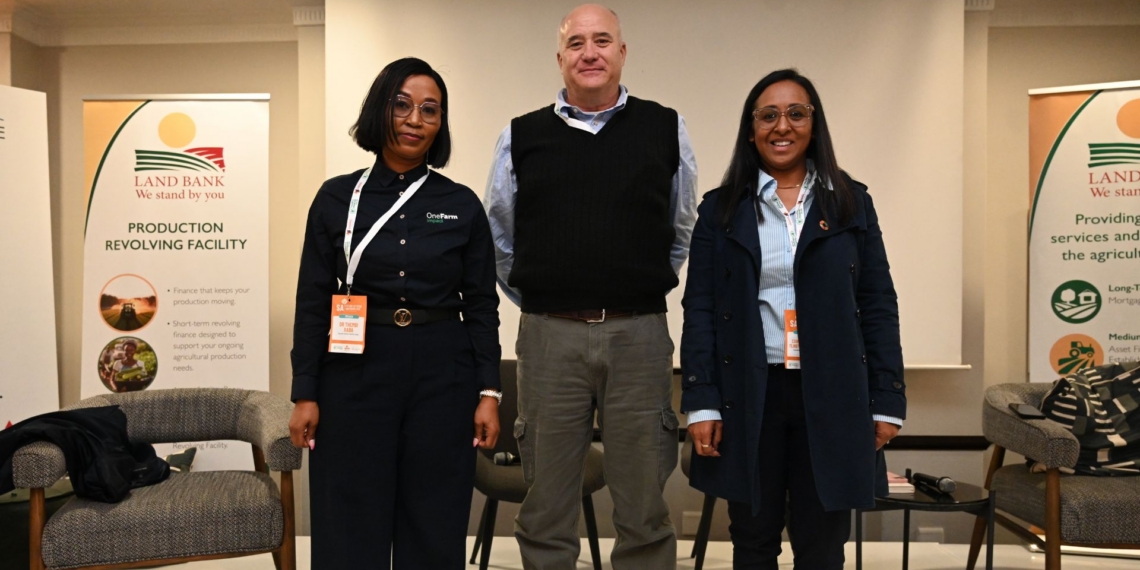
Sustainability cannot be reduced to recyclable packaging or environmental initiatives, according to Candice Knipe-Tlhotlhalemajoe, corporate affairs and environmental, social, and governance (ESG) executive. She participated in a panel discussion on how sustainability shapes demand across retail, hospitality and global consumer brands.
Knipe-Tlhotlhalemajoe said consumers often only see the finished product on a shelf, without seeing the decisions and impacts behind it. “Sustainability at its very core is: how do we make a company and a product sustainable over the long term?”
This requires businesses to consider how products affect the entire value chain, including responsible sourcing, electricity use, waste reduction and social impact.
Related stories
- Why money is not moving to SA farmers – and how to fix it
- Strong demand sees Land Bank pause blended finance scheme
- Beyond finance: Making women-led farms bankable
- FNB launches funding boost for women in agriculture
Knipe-Tlhotlhalemajoe cautioned against focusing only on the environmental component of ESG.
“We all know the E, the environment, but in the context of South Africa, the S is actually kind of important,” she said, adding that businesses should first understand governance requirements before addressing the social, value-chain and environmental elements.
She also highlighted the challenge of balancing sustainability with affordability. Agriculture itself accounts for only a portion of the wider value chain, she said, making collaboration across the ecosystem essential.
“If it isn’t [quality, affordable and accessible], then it isn’t really sustainable either,” she said.
She pointed to opportunities such as collaborating with neighbouring farms on alternative energy, improving logistics and reducing transport distances and waste.

Responsible production and food safety
Rod Bell, CEO of CropLife, highlighted the importance of responsible agricultural practices, particularly around the use of plant-protection products and food safety.
He said responsible use starts on the farm, with products stored correctly, appropriate protective equipment provided to workers and plant-protection products applied strictly according to their labels.
He also pointed to extended producer responsibility legislation, which requires attention to the collection and recycling of empty containers.
“For us in the food industry, that is what responsibility is. The farmer has to use the tools at his disposal that are going to maximise his yields in a responsible manner in all forms of responsibility,” Bell said.
He emphasised that responsible production should protect consumers, farm workers, surrounding communities and the environment.

Bell also raised concerns about misinformation and sensational claims around food safety, urging consumers to consider the credibility of the information they use when making purchasing decisions.
“It’s how to get people to believe in the science. People would rather read sensational stuff on social media rather than reading the science,” he said.
However, Bell said scientific information also needs to be communicated in accessible language rather than technical jargon that consumers may struggle to understand.
He added that farmers should not be expected to carry the full responsibility for communicating how food is produced safely and sustainably.
“I think it’s really tough to expect farmers to be expert communicators in communicating how they are producing safer food,” Bell said, highlighting the role of other players across the food supply chain in communicating responsible production practices.

Moving smallholders towards commercial markets
The discussion also focused on how businesses can move beyond supporting smallholder farmers through enterprise and supplier development initiatives and instead create pathways towards commercial supply.
Dr Thembi Xaba, executive director at OneFarm Impact, said smallholder development should include capacity building, graduation and commercialisation.
Organisations, she said, need to move away from treating smallholder farmers as side projects and instead integrate them into broader economic growth.
Xaba argued that smallholder farmers need to be part of the economic opportunities created around such markets.
“Nothing for us without us,” she said, emphasising that farmers’ own ambitions should help shape development programmes.
She also stressed the importance of creating economies of scale, access to finance and post-investment support so that farmers can progress towards sustainable commercial operations.
Bridging the food-access gap
Xaba also highlighted the disconnect between South Africa’s food production capacity and consumers’ access to nutritious food.
OneFarm Impact works across food security, food rescue and smallholder farmer development, procuring food from smallholder farmers and distributing it to charitable beneficiary organisations.
“Remember, South Africa is food secure. The challenge is access,” she noted, particularly access to nutritious food.
She said structural inequalities, supply-chain fragmentation and logistical inefficiencies contribute to situations where surplus food exists while households struggle to access food.


READ NEXT: How pig farmers can stop African swine fever before it strikes