South Africa’s grain and fruit industries have navigated a year of opportunities and challenges, from shifting global trade dynamics to evolving legislative pressures at home.
General manager at Agbiz, Dr Charl Van der Merwe, said the current grain landscape is well-positioned in South Africa’s agricultural sector.
“We are quite fortunate within the grain industry that we have quite good structures that develop mainly from the old commodity boards with the trusts for different commodities like the maize trust, the oil protein trust and also the sorghum trust,” he said.
Mixed bag for grain industry
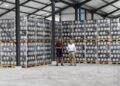
Over the past five years, South African grain storage and trade have fluctuated between 10 and 40 million tonnes, with silos, silo bags, and bunkers remaining the primary storage methods.
In terms of crop production, maize area has stabilised since the 1990s with increasing yields, whereas wheat hectares have declined, particularly in the Free State, as other crops like soybeans gained prominence. Soybean production has seen significant growth in both area and yield, with exports increasingly replacing imports.
Looking ahead, Van der Merwe highlighted key challenges and projects for 2026.
Related stories
- Water-smart farming takes centre stage in fruit industry
- Grain and oilseed markets: Tariffs shake up global trade
- New Plant Improvement Act to boost SA crop quality
- Africa has four harvests left to secure its food future
“As we can see, the rainfall plays a vital role, so production systems will stay very important. Things like conservation agriculture, continuous research funded by the various industry trusts, new technologies like NBTs, AI, and precision farming will play a vital role,” he said.
He also noted ongoing regulatory developments affecting storage, handling, and food safety standards, alongside infrastructure considerations, particularly the shift from rail to road transport and its impact on costs.
Fruit exports drive growth
Wolfe Braude, Agbiz fruit manager, emphasised the strategic importance of trade for the fruit industry, which accounts for about a third of South Africa’s export basket. He highlighted South Africa’s diversified export markets, particularly the EU, UK, Africa, and the emerging importance of China and Asia.
He also explained the importance of maintaining multiple trade partners.
“We must ensure that South Africa is well placed with a number of trade partners. As soon as we head east to Asia, we have no signed, legally binding trade agreements. We have one-on-one biosecurity protocols, bilateral commissions, MOUs, but not a free trade agreement with mediation clauses and dispute arrangements.”
Legislative developments impacting agriculture
Annelize Crosby, Agbiz head fruit manager, addressed several legislative issues with implications for the grain and fruit industries. Key areas of concern include land expropriation, agrochemical regulation, and water access.
Agrochemical regulation is another pressing issue. Crosby explained, “The agricultural sector hasn’t been consulted in any of this, we haven’t had an opportunity to put our case. There are very serious potential unintended consequences that can flow if you just quickly ban all these substances and take them off the market.”
Speaking on water access, Crosby noted that crops that rely on irrigation are facing increased scrutiny. Irrigation accounts for roughly a quarter to a third of national agricultural output, and any uncertainty around water availability could affect sector investment, farm valuations, and overall production in the affected farming communities.
READ NEXT: Value-added farming: Build a high-profit, sustainable business