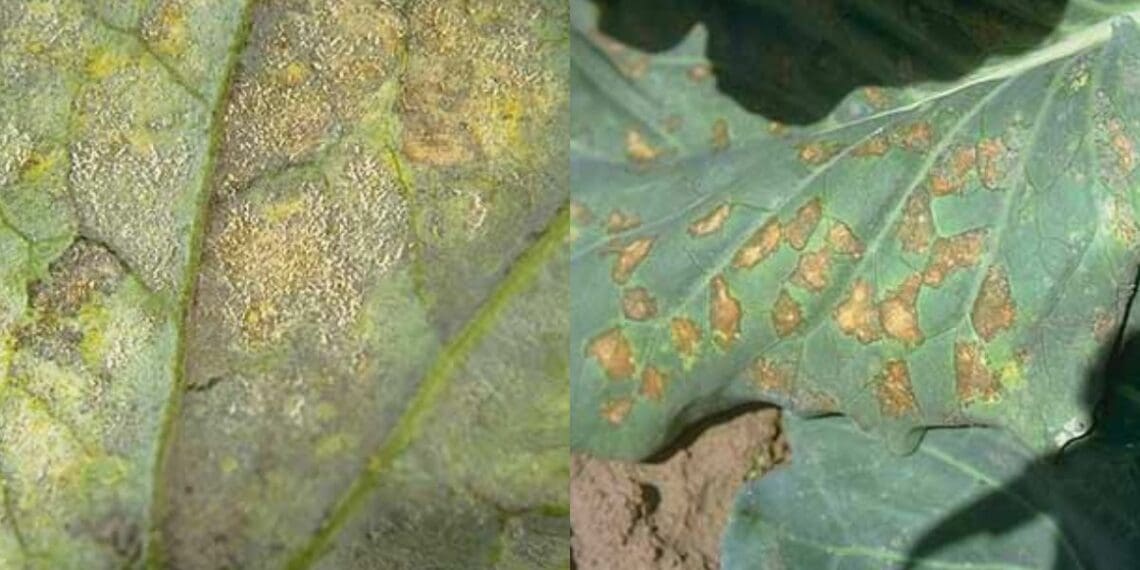
Broccoli and cauliflower farmers need to watch out for downy mildew, a plant fungus common in wet, human conditions. Together with AECI Plant Health, Food For Mzansi readers get insight into why their plants are sick. If you have any plant health questions, please email your questions and pictures to info@foodformzansi.co.za.
Nomxolisi Witbooi from East London in the Eastern Cape, writes: My cauliflower leaves have odd bumps on them, and seem to be fuzzy on one side. I’m not sure what’s wrong.
Simon Louw, technical adviser at AECI Plant Health, explains:
It seems your cauliflower plants have been attacked by downy mildew, Nomxolisi. Scientifically known as Halyoperonospora parasitica, downy mildew develops as small lesions on your plant leaves. These lesions enlarge, become irregular and numerous, and have a damp appearance.
They often merge to form yellow to orange and brown patches. On the underside of the leaf, a fuzzy mold or fungal mycelium is often visible. The fungus grows best when temperatures range between 10 to 15oC and an extended period of damp weather is required to initiate an outbreak of downy mildew. The disease can overwinter on host crops, weeds, and plant debris, and thus survives until the following season.
Crop damage
A pale brown discolouration appears on the surface of the heads or leaves. These dark areas of infection are not appealing to eat and these rotting areas are often invaded by other microorganisms, making a bad situation worse.
Prevention and control
Clean up and destroy old plant debris each year. Planting resistant varieties will aid in the prevention of the disease.
There are several products from AECI Plant available to improve plant health and control downy mildew. These products include Alexin, which increases the plant’s natural resistance by enabling it to handle external stresses such as fungal infections significantly better. Fungicides that could be applied included Cungfu 538 SC, which contains copper hydroxide, and Ventum 800 WP, containing Mancozeb. Visit aeciph.com to find your closest crop advisor for advice.
ALSO READ: Squash mosaic virus: Watch out for these telling signs
Sign up for Farmer’s Inside Track: Join our exclusive platform for new entrants into farming and agri-business, with newsletters and podcasts.