Gauteng’s agricultural sector must strengthen partnerships, embrace innovation and create better pathways to markets to unlock farmers’ full potential across the province.
This was one of the key messages at the annual AgriCulture Gauteng Congress in Pretoria on Wednesday, where agricultural leaders, government representatives and farmers gathered to discuss the sector’s future under the theme of growing Gauteng together.
AgriSA president Willem de Chavonnes Vrugt said unity would be critical in ensuring agriculture has a meaningful and lasting influence on policies affecting farmers.
Using the example of a rope made up of thousands of fibres, he said the strength of organised agriculture lies not in one organisation or individual but in the collective contribution of farmers, commodity organisations and industry bodies.
Related stories
- The business of farming: How to make your farm bankable
- Aucamp outlines strategy for biosecurity, trade, and infrastructure
- Traceability key as SA opens up FMD vaccine markets
- Soul to Soil: Women urged to claim every corner of agriculture
“Agriculture is strongest when we are able to coordinate our different voices and build a credible position backed by data,” he said.
De Chavonnes Vrugt highlighted the importance of evidence-based engagement, saying reliable information could help organised agriculture influence decisions on issues ranging from electricity tariffs to infrastructure and market access.
He noted that agriculture’s contribution extends beyond primary production, with the broader value chain playing a significant role in South Africa’s economy and employment.
Taking advantage of Gauteng’s market
Meanwhile, Dr Dalene Louw, CEO of AgriCulture Gauteng, said the province should not underestimate its agricultural potential simply because it is largely urbanised.
With a population of more than 15 million people and one of the continent’s largest concentrations of consumers, businesses and infrastructure, Gauteng offers farmers a significant market on their doorstep.
“We are farming inside an enormous market,” she said.
Louw called for greater investment in precision and regenerative agriculture, arguing that the future of farming is not determined by the number of hectares a producer owns but by how effectively the available land is used.
“It’s not about how many hectares you have. It’s about what you are doing with the land that you do have,” she said.
She noted that Gauteng’s emerging and small-scale farmers, many operating on relatively small pieces of land, could become successful if they identified profitable niches, aggregated production professionally and approached farming as a business.
Agriculture firmly in the economic space
Gauteng MEC for economic development, agriculture and rural development Vuyiswa Ramokgopa said agriculture should be recognised as a central driver of economic growth.
She congratulated the sector on its resilience, noting that agriculture recorded strong growth despite broader economic challenges. “The agricultural sector nationally has been one of the most resilient sectors in the last year,” she said.
However, Ramokgopa warned that South Africa’s ability to produce sufficient food does not automatically translate into food access for all households.
“South Africa is food secure. We have enough food, and we are doing a fantastic job of producing food. But it becomes a policy and social concern when people are not guaranteed a single meal a day.”
Gauteng MEC Vuyiswa Ramokgopa
She said Gauteng’s Zero Hunger Programme is focused on addressing household hunger while creating stronger links between agricultural production and communities.
A key priority, she added, was the sustainability and commercialisation of smallholder and household farmers. Gauteng has between 6 000 and 8 000 emerging and small-scale farmers, while household and community farming activities involve an estimated 250 000 households.
The province is increasingly focusing on aggregation, incubation and guaranteed markets to help farmers transition into sustainable enterprises.
Ramokgopa also rejected the idea that South Africa should view its agricultural sector as divided into “two agricultures”. Instead, she said farmers should be supported according to their stage of development, with appropriate pathways to help them grow sustainable businesses.
Celebrating FMD progress and agricultural talent
Ramokgopa also highlighted progress in Gauteng’s response to foot-and-mouth disease (FMD), reporting that active cases had declined by 60%, from 308 recorded cases to 132. The province had vaccinated more than 542 000 animals, reaching 77% of the provincial herd.
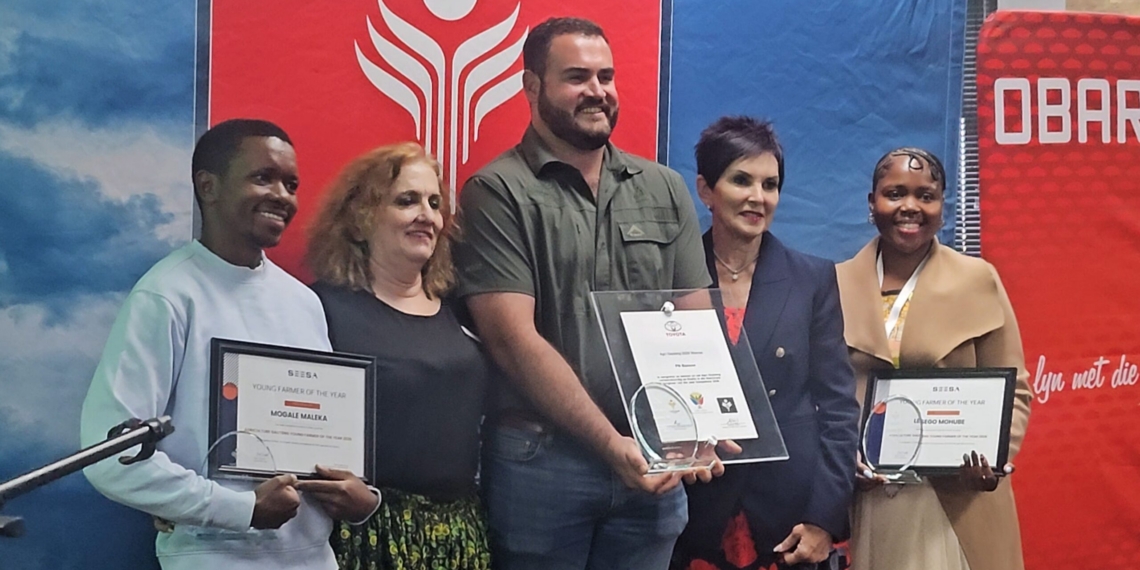
The congress also celebrated Gauteng’s agricultural talent during the Toyota Agri SA Young Farmer of the Year provincial awards.
Petrus Nicolaas Basson was named the Gauteng Young Farmer of the Year, while Mogale Maleka was first runner-up and Lesego Mohube second runner-up.
In the Urban Agriculture Programme 2026, Palesa Seko was the winner, while Zandile Khumalo took first runner-up and Ruben Louwrens second runner-up.
READ NEXT: Water rights alone won’t fix inequality in SA commercial farming