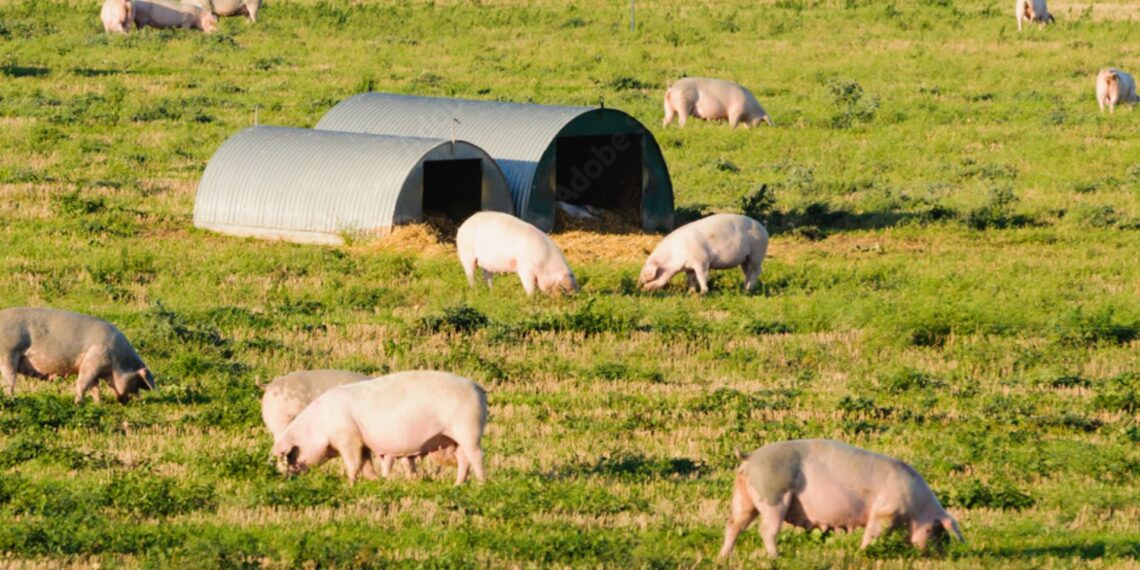
Jeffreys Bay Wind Farm has commissioned groundbreaking pig farming research in the Sarah Baartman District, Eastern Cape. This is to assess conditions, tackle challenges, and map growth opportunities while slashing Siyavuma Piggery’s mortality rates from 80% to 10% for a rural pork boom.
The study builds on several years of support provided to Siyavuma Piggery, a small-scale operation based in Kruisfontein. This support is especially significant given the farm’s previous 80% piglet mortality rate in 2023.
Thanks to a new farrowing house, improved gestation facilities, and ongoing training and mentorship, the farm has made remarkable progress, reducing mortality to 10% by September 2025 and now moving steadily toward the industry-standard target of 8%.
Improving breeding and pork supply
“Thanks to the support, we are now in a better position to plan for growth. Going forward, we aim to expand our herd, improve our breeding management, and increase the amount of pork we can supply to local markets. The support has given us a stronger and more stable foundation to build on,” said Marvin Witbooi, chairperson of Siyavuma Piggery.
Related stories
- Pig farming: How to get started and keep it going
- UFS team nominated for groundbreaking crop research
- SA farmers reflect on 2025: From floods to favourable profits
- Presidential Climate Commission charts path for green future
Such targeted backing aligns with broader regional priorities. “Agriculture is one of the dominant sectors in our municipal area, and we believe that piggery production could become an important subsector.
“With this and the high mortality rate of pigs in the area, largely due to inadequate infrastructure, we have prioritised support for local piggeries through infrastructure investment, skills development, and collaboration with relevant stakeholders,” Witbooi said.
Nonini Makhothe, the economic development specialist at Jeffreys Bay Wind Farm, noted, “This approach helps drive meaningful rural enterprise growth and diversification.”
Building on these efforts, the support has also helped the piggery steadily strengthen its operations, most recently through the renovation of a pig enclosure to enhance animal welfare and production efficiency.
Looking ahead, it is anticipated that the study’s findings will assist local stakeholders in stimulating a more sustainable pork value chain, creating jobs, strengthening food security, and building a network of capable local suppliers, such as Siyavuma Piggery, a strong example of what becomes possible when local agripreneurs receive targeted, long-term support.
READ NEXT: Fake honey threatens SA beekeepers, harms agriculture