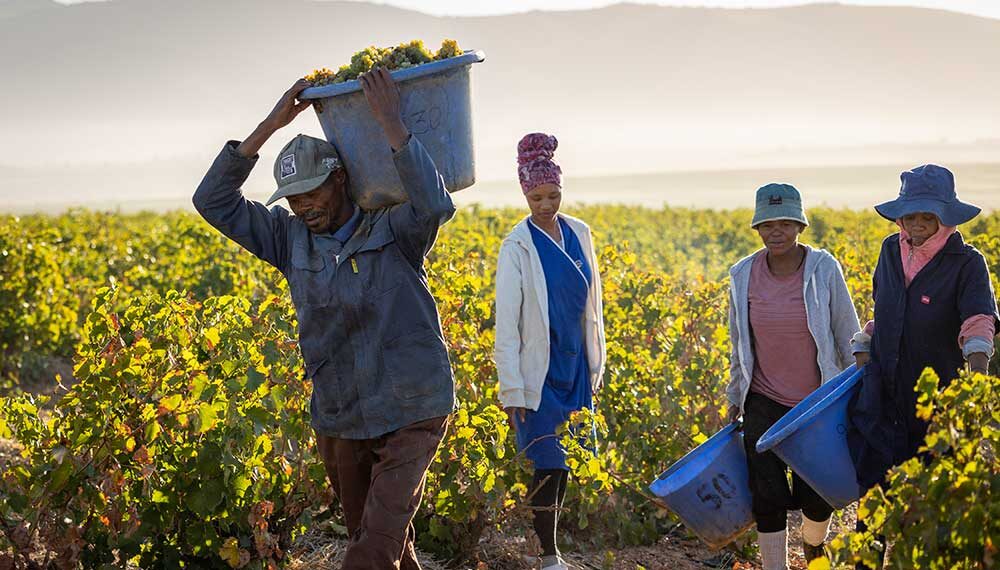
In the vineyards of the Western Cape, dignity was never meant to be a luxury. Yet for decades, it often was. Before the DONUTS programme took root, many farmworkers in South Africa’s wine industry laboured in silence – unsure of their rights, hesitant to speak up, and excluded from decisions that shaped their lives.
The challenges were deep and structural: low wages, limited skills development, weak grievance processes, fear of trade unions, and a legacy of mistrust between labour and management that stretched back generations.
By the time Dignified Opportunities Nurtured through Trade and Sustainability (DONUTS) wine officially launched in the wine industry, the need was urgent and undeniable. What followed between 2022 and 2025 was not a quick fix, but something far more profound: a slow, deliberate rebuilding of relationships on farms, grounded in Fairtrade certification, skills development and, above all, human dignity.
Why DONUTS had to exist
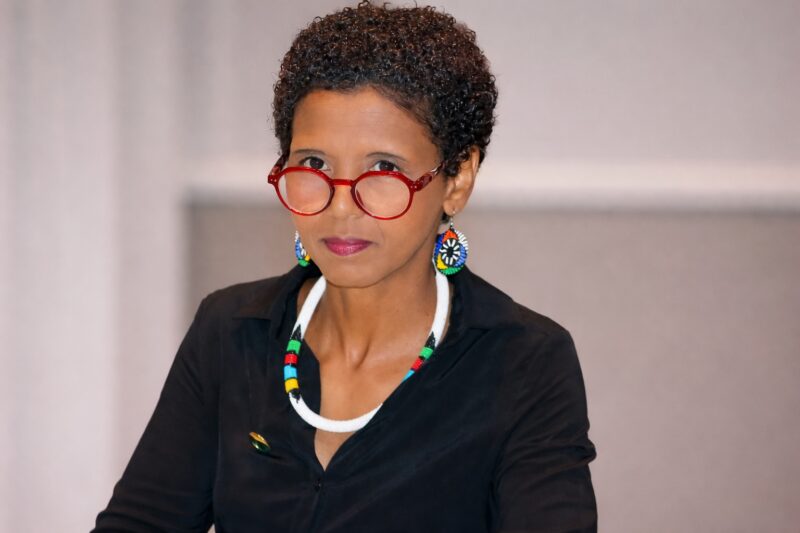
Emerentia Patientia, senior project officer at Fairtrade Africa, speaks about the origins of DONUTS with the clarity of someone who has spent years navigating both government corridors and dusty farm roads.
When she joined what was then called the Dignity for All project, it was struggling to gain traction. Stakeholders were sceptical. Trust was thin. Covid-19 had further exposed the fragility of farmworkers’ livelihoods.
“The challenges were systemic,” she explains. “Workers didn’t know their rights. Employers didn’t always know how to engage constructively with unions. Seasonal and vulnerable workers, especially women, felt unheard and often experienced difficulties in having their concerns addressed.”
DONUTS was designed to confront these realities head-on. With funding secured and a renewed mandate, Fairtrade Africa committed more than R12 million to transforming labour relations in the wine industry. The focus was not only compliance, but capacity: equipping workers, management and unions to engage one another meaningfully.
Related stories
- Donuts wine programme puts farmworkers first
- Farmworker indaba sheds light on social challenges on wine farms
- Koue Bokkeveld farmworkers get equipped to lead and protect
When farms changed from the ground up
At Eenzaamheid Wines in Paarl, manager Dolf Marang remembers how uneasy the early days were. “In the beginning, it was not easy,” he admits. “There was fear. Management was unsure. Workers didn’t fully understand the laws.”
Fairtrade certification, supported by DONUTS, became a turning point. Training sessions demystified labour legislation. Workers learned about health and safety standards, grievance procedures, and the global expectations attached to wines destined for European shelves.
“Now workers understand what they are working with and why standards matter,” Marang says. More importantly, he has seen workers grow into supervisors, team leaders and decision-makers. “Some of them now sit in management meetings. That never happened before.”
At Alweda Boerdery in Rawsonville, Cathleen Lewis tells a similar story, but one deeply personal. Many workers, she says, left school early and struggled with literacy. DONUTS training bridged that gap – not just in the workplace, but at home.
“It empowered people beyond the farm,” Lewis explains. “Workers became confident enough to raise issues, to talk openly with management. Communication is now a two-way street.”
For Lewis herself, the impact was tangible. Through the programme, she gained the confidence to support colleagues facing gender-based violence and earned her truck-driving licence. “That changed my life,” she says simply.
Rewriting the role of unions
Perhaps the most radical shift brought by DONUTS wine was how trade unions were perceived.
For years, unions were seen as disruptors. Joan Dourie from Abantu remembers the historical fear well. “Unions were viewed as troublemakers,” she says. “There was mistrust on both sides.”
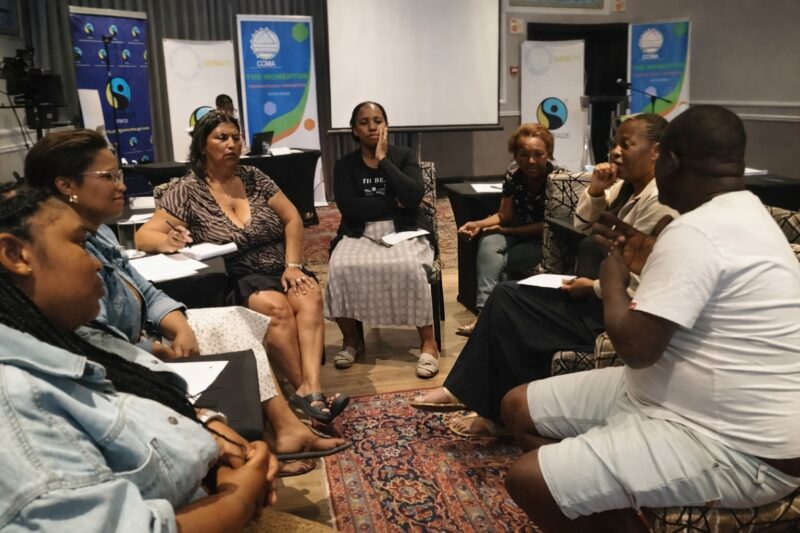
Through DONUTS wine, Fairtrade Africa created spaces where unions, workers and employers could meet without hostility. The establishment of the Precarious Working Group and discussions around a bargaining council were unprecedented in the wine sector.
Charleston Bergsteadt from the Food and Allied Workers Union (FAWU) describes DONUTS as “a key instrument”. It enabled labour and business to sit at the same table, he says, and laid the groundwork for collective bargaining agreements that once felt impossible.
“What came out of DONUTS,” Bergsteadt notes, “is that we started seeing each other not as enemies, but as partners.”
Skills, certification and real opportunity
At Stellenrust Wine Estate, Julian van Wyk embodies the programme’s promise. When DONUTS began, he was a general worker. Today, he is a driver – promoted after completing training offered through the programme.
“Before DONUTS, there were very few opportunities to learn about your rights,” van Wyk says. “Now we know how to raise grievances, how to engage unions, and how Fairtrade premiums can support our children’s education.”
That premium – generated through Fairtrade-certified wine sales – has funded school support, training programmes and worker-led development projects. For families long excluded from opportunity, it has been transformative.
Dignity as a daily practice
For Patientia, dignity at work goes far beyond compliance. “It’s about respect, fairness and humanity,” she says. “It’s about workers knowing they don’t have to remain general workers forever. They can become supervisors, managers, leaders.”
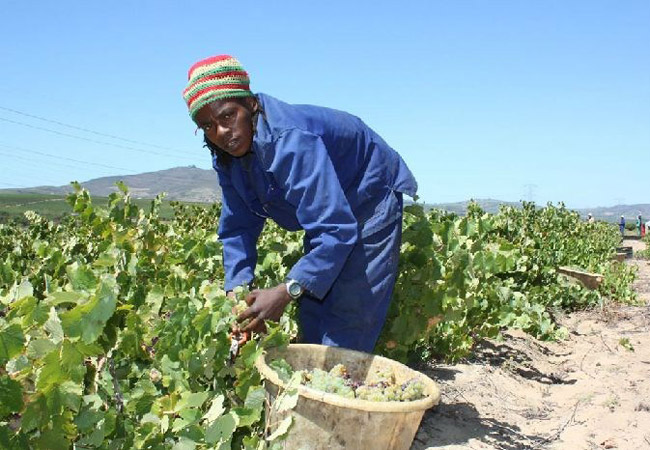
Her approach was never distant. During harvest, she joined workers in the vineyards, scissors in hand, feeling the heat and the strain. That act alone shifted perceptions.
“It showed us she understood,” Marang recalls. “She didn’t just talk about dignity – she lived it with us.”
What remains after DONUTS
As the programme draws to a close due to funding constraints, there is sadness but also resolve. The systems DONUTS wine helped build remain: informed workers, open channels of communication, stronger unions, and farms better equipped to navigate the future.
“The journey is not finished,” Bergsteadt insists. “But DONUTS showed us the way.”
In the rows of vines stretching across the Western Cape, the legacy of DONUTS wine is not a report or a certificate. It is the sound of workers speaking without fear, the sight of managers listening, and the quiet certainty that dignity, once rooted, can continue to grow.
READ NEXT: CPAs urged to fix governance gaps over festive season