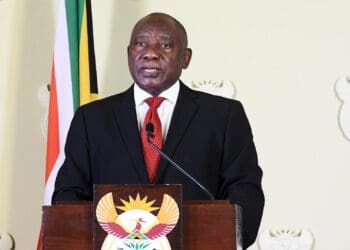
All eyes are on President Cyril Ramaphosa for the seventh opening of parliament following the general elections and forming of the government of national unity. Expectations are high for him to present tangible plans, especially as the agriculture sector urges the new administration to prioritise its concerns.
The chief executive officer of South Africa Wine, Rico Basson, said what the wine industry needs to hear is policy certainty and investment confidence, and the establishment of clear, consistent and long-term policies that provide stability and predictability.
Seeking sustainable solutions
“Ensure transparency in policy-making processes to build trust and encourage investment from local and international stakeholders.
“Prioritise the effective implementation of policies and initiatives, ensuring they are carried out efficiently and as planned, foster strong public-private partnerships (PPPs) based on mutual trust, and well-defined roles to leverage industry expertise and resources,” he said.

Basson expressed their hope that Ramaphosa’s State of the Nation Address (Sona) will touch on legislation and law enforcement, specifically focusing on strengthening law enforcement to combat illegal trade and ensuring that legal stakeholders are protected and can operate securely.
“We need investment in water infrastructure and access to finance. Government need to commit to significant investment in water infrastructure to ensure reliable access to this vital resource.
“To support sustainable practices, guarantee certainty of water licenses and improve access to diverse financing options, including blended finance,” he said.
Related stories
- Farmers demand clearer policies and action from new ministers
- SA fruit industry poised for stronger collaboration with government
Meanwhile, the general manager of the Transvaal Agricultural Union, Bennie van Zyl, said they are looking forward to the Sona and hope the next administration will focus on economic growth.
“The focus must be on overall economic growth rather than just empowering certain individuals. If the state does not create an environment where jobs are generated and people can work independently without relying on social grants, there will be no real progress.
“Empowerment starts with the individual, but the state must create the necessary supportive environment,” Van Zyl said.
He urged Ramaphosa to lead the citizens of South Africa towards responsibility and explain what is necessary to be economically active and contribute to profitable enterprises.
Farmer development and support crucial
“Many functioning institutions have become dysfunctional during this period, and South Africa has suffered as a result. The only way transformation can be successful is by better equipping people for decision-making with quality training and education, and by promoting a culture of saving and building in a safe environment.
“Economic sustainability will only succeed in a truly free market environment with minimal legislation and regulation that stifles entrepreneurship. Therefore, TLU SA looks forward to the “liberation” of the economy,” Van Zyl added.
Saamtrek Saamwerk coordinator Sehularo Sehularo said with the government of national unity the agricultural sector hopes to see a more proactive approach in dealing with challenges farmers face.
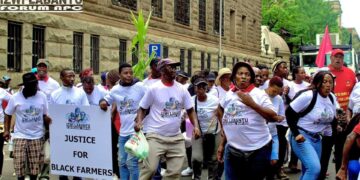
“We want to believe we will see less finger-pointing in terms of getting things done. We want to see infrastructure development, [and] intense collaboration to end farm attacks.
“It will be key for the new government to focus on access to water, [because] without water a farmer cannot do anything. Agriculture and rural development policies, funding and initiatives need to speak to what farmers are facing on a daily basis. We are prepared to give them a chance, however, we need results,” he said.
Sehularo urged the government to develop farmers. He said whoever benefits from government initiatives must be a farmer and not someone not involved in farming.
“Government-funded projects must be strictly monitored because what we are seeing happening is really disappointing,” he added.
Rabelani Nemanilwe, a vegetable farmer from Mooinooi in Rustenburg in North West, said farming is no longer as lucrative as before.
“With the administration and the president delivering the opening of parliament, we are expecting the president to touch more on farmer support. Our farmers are experiencing the worst.
“Farmers are facing more challenges than opportunities. Scientists and meteorologists have been talking about global warming and climate change; we thought it was still far but it is here. We are experiencing extreme temperatures in all our production seasons. We need plans to deal with it.”
ALSO READ: Wine industry calls for policy certainty post-elections
Sign up for Mzansi Today: Your daily take on the news and happenings from the agriculture value chain.