South African farmers are operating in an increasingly complex environment shaped by climate volatility, rising input costs, tightening regulations and shifting global trade dynamics.
Against this backdrop, agricultural input companies are being challenged to rethink how chemical solutions, biologicals and digital tools work together to support sustainable, profitable farming systems.
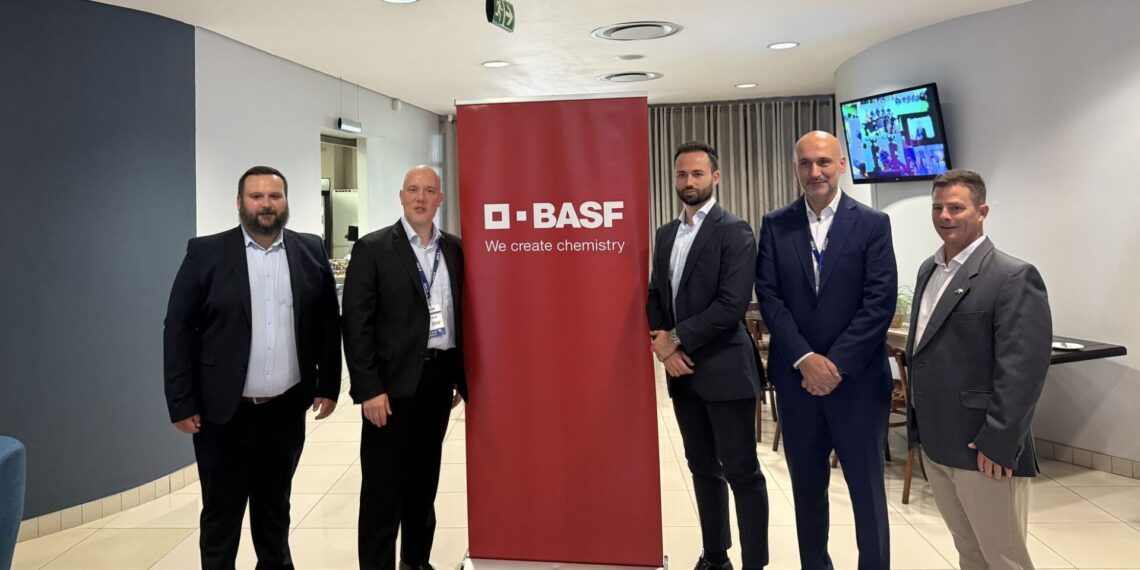
Speaking at a recent industry engagement held in Pretoria, leaders from BASF Agricultural Solutions outlined how innovation in crop protection, seed technology and digital farming is evolving to meet these pressures, both globally and within South Africa.
Farming in a volatile era
According to Gustav Carneiro, senior vice president of Agricultural Solutions, farmers today face a convergence of risks that no longer sit neatly in separate silos.
“Climate change is no longer something we talk about as ‘next year’ or ‘the future’. The real question now is: what is normal weather anymore? Farmers are increasingly forced to manage unpredictable weather patterns and their negative consequences,” Carneiro said.
At the same time, regulatory pressures, particularly in export-driven markets, are steadily reducing the range of chemical tools available to producers. Carneiro noted that these pressures are further intensified by economic uncertainty, geopolitical tensions and growing protectionism, which directly influence farmers’ access to markets, inputs and financing.
“Interest rates and the cost of financing remain some of the most critical challenges in farming,” he said.
Carneiro stressed that no single company can address the full range of challenges facing agriculture, making collaboration with governments, regulators, industry bodies, the media, and farmers essential.
Related stories
- Land reform and rural safety top AgriSA’s 2026 agenda
- Cutting post-harvest losses key to combat food insecurity
- Beyond presentation: Rethinking catering to cut food waste
- SA and Netherlands celebrate milestone in agri e-certification
In response, BASF’s long-term strategy is built around five core priorities: developing climate-friendly solutions, strengthening farm sustainability, improving resilience to climate change, increasing yields and profitability, and promoting safer farming practices for both people and the environment.
“This is not about selling off the portfolio. It’s about creating a more agile, customer-focused agricultural business with greater operational flexibility,” Carneiro explained.
He added that farmers should see no disruption in the short term, but longer-term benefits through faster decision-making and better integration across seeds, crop protection, biologicals and digital platforms.
Meanwhile, Dr Murat Ayaz, vice president for Agricultural Solutions EMEA South, highlighted BASF’s strong global innovation pipeline, valued at an estimated billion in peak sales. South Africa has already seen several early launches, including new citrus and table grape solutions, underscoring the strategic importance of the local market.
Ayaz emphasised that biologicals are not intended to replace chemistry, but rather to complement it as part of integrated pest management (IPM) systems.
“We truly believe integrated pest management will play a vital role in the future of agriculture. That is why we are investing in biological solutions alongside chemistry,” he said.
One example is a co-creation project in processing tomatoes across Southern Europe and Africa, where digital decision-support tools were used to optimise irrigation timing.
“We reduced water use while improving yields and quality. This was done together with farmers, processors and retailers – and that collaboration is key,” Ayaz said.
Bridging the gaps for farmers
Commercial farmer Mbali Nkowo, based in Gauteng, welcomed the emphasis on co-creation but highlighted ongoing disconnects within the food value chain.
“As farmers supplying top retailers and export markets, we often sit between food technologists, buyers and compliance systems. Yet we are the ones who have to grow the food profitably and safely,” Nkowo said.
Nkowo pointed to regulatory misalignment and crop-specific registrations as daily operational risks. “Sometimes the choice is between waiting for regulatory approval or saving a R4 million crop in that moment, that’s the tug-of-war farmers face.”
She also stressed the need for better engagement with retailers and auditors to break down siloed decision-making across the industry.
Responding to these concerns, Ayaz explained that regulatory uncertainty is now a core driver of their research and development strategy.
“It can take 10 to 15 years to bring a product to market, yet regulatory bans can arrive within three or four years. This is not just a company problem; it’s a farming problem. Leaving farmers without solutions is not an option,” Ayaz said.
READ NEXT: ARC rolls out first locally produced FMD vaccine amid industry tensions