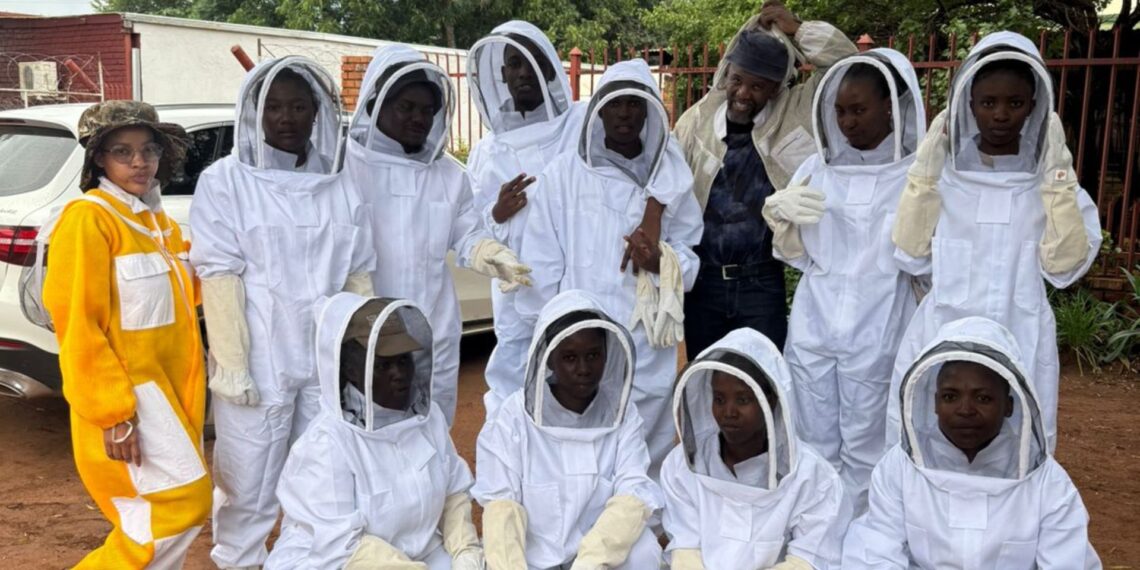
In an innovative effort to equip rural youth with practical skills and unlock new economic opportunities, the department of rural development and land reform has launched its first beekeeping training initiative under the National Rural Youth Service Corps (NARYSEC).
According to the department, NARYSEC is designed to strengthen the character, skills and confidence of young people, enabling them to play an active role in driving development within their own communities. Participants commit to a four-year programme, with the first two years dedicated to skills development and the remaining two years focused on enterprise incubation and access to markets.
Related stories
- Fake honey threatens SA beekeepers, harms agriculture
- Beekeeping sector poised for growth, jobs, and sustainability
- Pesticide poisonings devastate WC honey bees
First beekeeping training in the North West
The North West Province Beekeeping Association approached NARYSEC to initiate beekeeping training for enrolled youth. The programme is facilitated by Koketso Bokaba, with Nontokozo Ngwabe of Faithworks Consultants appointed as the service provider. Lucas Radise, chairperson of the association, is also actively involved in the initiative.
“This is the first beekeeping training offered through NARYSEC. Learners are trained to become professional beekeepers, learning not only how to farm honey but also how to work with bee products such as venom, cosmetics, propolis, and pollen,” Bokaba said.
Bokaba explained that the programme begins with classroom-based theory, giving learners a solid grounding in beekeeping principles and safety. This is followed by practical, hands-on training where participants gain experience in hive management, bee health and honey harvesting techniques. The final phase focuses on market access, equipping participants with the knowledge needed to sell their products locally and regionally and turn their skills into sustainable enterprises.
Learning from the hive: youth voices
NARYSEC participant Dikgang Onkarabile says the training has transformed her understanding of bees and their role in nature.
“What I like most about the programme is that it allows you to connect with nature and observe the structure of a beehive and how bees live. Before joining the programme, I knew nothing about bees. The only thing I understood was pollination,” she said.
Through the training, Onkarabile has gained a stronger understanding of the critical role bees play in both ecosystems and agricultural production. She says the programme has also provided her with practical, hands-on skills, including honey harvesting, beehive management, and an understanding of the regulatory by-laws required to establish and maintain a successful, sustainable apiary.
Looking ahead, Onkarabile already sees herself as a pioneer in her community. “For now, I am the first beekeeper in my village. I would love to have my own apiary and my own business, and to mentor other beekeepers. There are so many products that can be made from bees, including candles.”
Another participant, Phatsimo Radise, part of the 2025 Beekeeping Learnership, describes the programme as an opportunity to explore a largely untapped sector.
“What I like most about the programme is that it introduces us to something unique, an untouched and untapped territory that empowers entrepreneurs and creates opportunities for disadvantaged communities,” Radise said.
He adds that the programme has enhanced his business and financial skills, improving his financial literacy, market understanding, and knowledge of how to distribute products effectively.
Radise says his long-term goal is to continue his studies in the field and give back to others. “I would like to further my studies related to this programme and empower more disadvantaged communities. I understand that this will not be easy, but because this opportunity was given to me, it only makes sense to empower others so that they can be where I am today,” he shared.
Economic and community benefits
According to Bokaba, by equipping youth with specialised skills in apiculture, the programme aims to strengthen both individual livelihoods and local rural economies. Beekeeping offers opportunities beyond honey production, including the development of value-added products and potential access to export markets.
“This programme empowers rural youth to become self-sufficient while contributing to socio-economic development of their communities. It is a step towards building resilient, vibrant rural areas,” Bokaba noted.
READ NEXT: Cattleman Carter: Turning tough terrain into opportunity