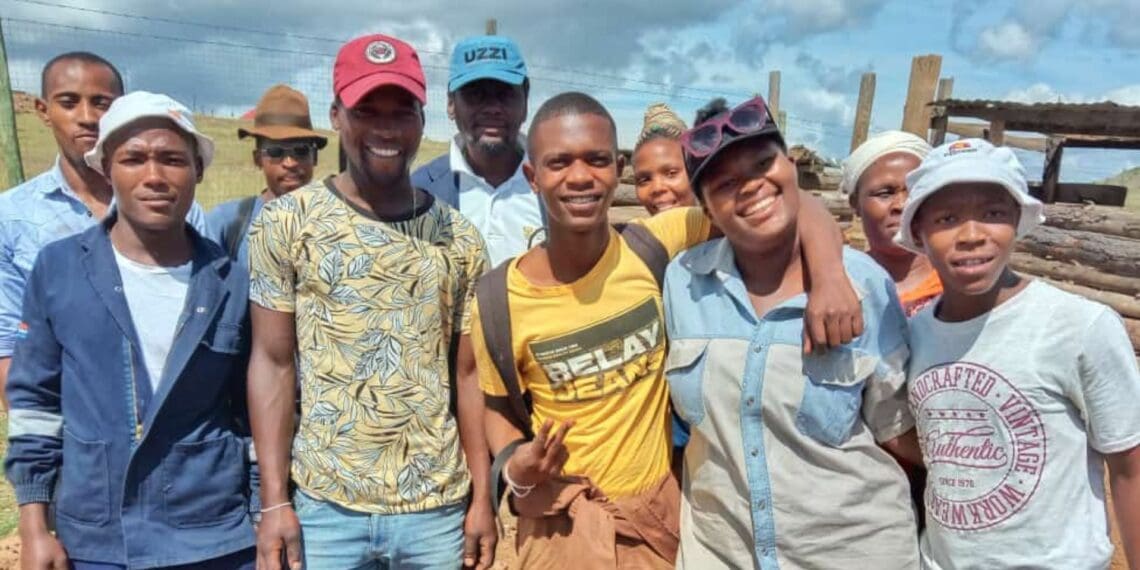
In 2019, seven young individuals, predominantly jobless, united to establish the Kulathi Primary Co-op with the shared goal of earning a livelihood and contributing positively to their community. The cooperative, Luyanda Mantshontsho’s brainchild, is gradually making a difference – one pig at a time.
The Kulathi Primary Co-op emerged in response to unemployment challenges in Cofimvaba, a rural town in the Eastern Cape.
The beginning of a new chapter
In Mantshontsho’s view, unemployment is not just an economic issue, but also a deeply personal one. He says when someone loses their job, they can feel a loss of dignity and self-worth.
Mantshontsho experienced this firsthand when he had to drop out of his engineering course at Walter Sisulu University due to financial difficulties. He was unemployed for four years, prior to the birth of the Kulathi Primary Co-op.
“It hit me that farming might be a good idea,” he says.

To get started, the group members pooled their resources and contributed R2 000. They also received additional funding from a local ally, Benson Ngqentsu.
With this seed money, they were able to purchase three pigs – two large whites and one black pig.
A huge financial boost
In 2020, the co-op sought financial support from the department of social development under the Intsika Yethu municipality. Their successful application secured R340 000 in funding, enabling them to enhance their operations.
With these funds, they initiated the construction of a piggery structure and acquired feed and fencing materials to bolster their activities. This injection of funds not only expanded their capacity but also allowed them to meet the rising demand for locally sourced pork in the area.

Despite facing constraints on where to procure feed imposed by the social development program, the co-op persevered and fulfilled its commitments after receiving the funding, according to Mantshontsho.
“Purchasing feed from these supermarkets resulted in significant financial losses for the co-op, without generating any profit.”
The co-op also received a material cost an R39 000 from the Local Economic Development programme under the Intsika Yethu, which helped to fund the construction of a second piggery structure in 2020.
Frustrated with the gaps
The co-op faced challenges when advised to sell through an abattoir, which increased costs and restricted customer reach, says Mantshontsho. Limited market opportunities worsened their struggles. In the tough two years that followed, most members left due to financial losses, seeking work elsewhere.

“What I have learned from this business experience is that generating income takes time, especially if you haven’t thoroughly researched beforehand.”
In 2021, Mantshontsho recognised the importance of gaining agricultural skills to help the co-op succeed. To do so, they sought out free training from the department of agriculture in the Eastern Cape, which collaborated with Lonanathi training. This provided them with crucial business skills such as the ins and outs of starting a business, record keeping and more.
Post the initial training, the co-op recognised the need for further support. Subsequently, AgriSETA offered an eight-month learnership programme tailored to animal production, providing the additional assistance they sought.
“The training was very valuable, and we gained knowledge about skills such as crop production, budgeting, and animal feed production,” Mantshontsho says.
‘It’s a busy industry, so be patient’
Initially, the Kulathi Primary Co-op focused on selling pig meat, but it proved unprofitable. Recognising the need for a change, they shifted their focus to breeding pigs, leading to increased profits.
Presently, the co-op serves clients from various Cofimvaba towns, including Tsomo, Nqamakwe, Butterworth, Queenstown, and even East London.

To address the high cost of pig feed, the co-op diversified its farming activities. They now cultivate spinach, potatoes, and mealies, reducing expenses by using the crops as pig feed while generating additional income through sales, adds Mantshontsho.
“This diversification strategy is part of a long-term plan to improve the co-op’s financial situation. Our long-term goal is to develop a diverse range of genetic traits.”
Just do it and ‘take that leap of faith’
For those contemplating the entrepreneurial journey, Mantshontsho’s encouragement is simple: Take that leap of faith and embark on your business venture.
He says farmers should embrace the possibility of setbacks, for within them lies the opportunity to learn and grow. “Don’t let the fear of failure hold you back from pursuing your dreams. Remember that each attempt will bring you closer to success. Just keep going and never give up.”
READ NEXT: Fab five: Food For Mzansi catches up with farmers 5 years later
Sign up for Mzansi Today: Your daily take on the news and happenings from the agriculture value chain.