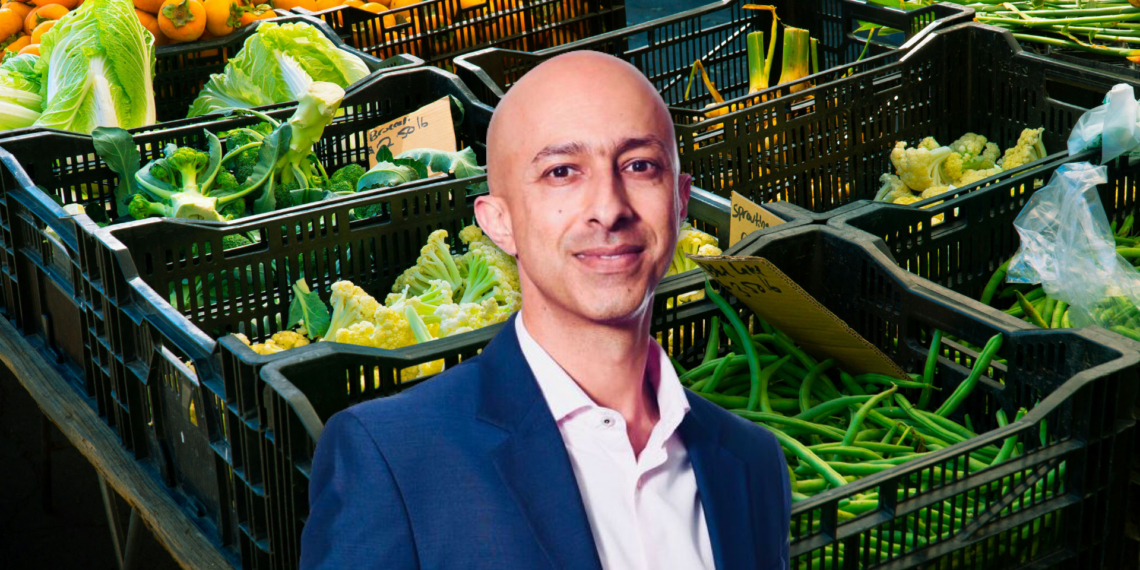
Shiraz Khota, managing director for Emerging Africa at SAP, argues that addressing post-harvest loss requires more than physical infrastructure. He explores how AI and connected data can solve Africa’s post-harvest food loss crisis, bridge the agricultural information gap, and boost farm margins.
Every year, a staggering share of the food Africa’s farmers grow never reaches a plate.
Cereal losses across Sub-Saharan Africa run at roughly 20%. For fruits, vegetables and tubers, the figure climbs to 40–50%. The exact figures vary considerably by crop, country and measurement method. The discrepancy is itself revealing: in many markets, we do not know precisely where losses occur or which interventions would have the greatest effect.
This post-harvest crisis is often presented as an infrastructure problem. Africa does need more warehouses, refrigerated vehicles, processing facilities and reliable electricity, but beneath these physical constraints lies another, less visible problem: an information deficit.
Under the Kampala Declaration, African leaders have set a goal of reducing post-harvest losses by 50% by 2035. Meeting that ambition will require continued investment in storage, energy, transport and processing. But building more infrastructure without improving the flow of information risks reproducing today’s inefficiencies at a larger scale.
Data drought impacts food security
Agricultural value chains frequently lack timely, reliable data about what has been harvested, where it is stored, how quickly it must reach market and where demand exists. Without this visibility, businesses cannot coordinate transport, plan processing capacity or intervene before produce spoils. Infrastructure is essential, but it cannot deliver its full value when decisions are based on incomplete or outdated information.
Related stories
- Cutting post-harvest losses key to combat food insecurity
- How logistics & packaging industries can cut food waste
- Beyond presentation: Rethinking catering to cut food waste
What we often call food loss is therefore also the result of disconnected decisions. A processor may not know that a harvest is arriving early. A logistics provider may lack the information needed to allocate refrigerated transport, and a warehouse operator may identify a temperature breach only after a shipment has deteriorated.
Farmers without access to market signals may sell immediately after harvest, when prices are lowest, because they cannot assess whether storage would produce a better return.
Artificial intelligence can help close these gaps by turning fragmented operational data into coordinated action. Yield forecasts can give processors and distributors earlier visibility of expected supply. Connected sensors can monitor temperature and humidity during storage and transport. Predictive models can identify spoilage risks, while intelligent planning systems can match products with available warehouse capacity, vehicles, processing facilities and buyers.
Building a connected agri value chain
The greatest opportunity, however, comes from connecting these capabilities across the value chain. A temperature alert has limited value if it does not trigger a logistics response. A yield forecast cannot prevent waste if procurement, labour and processing plans remain unchanged. Traceability data will not unlock premium export markets unless it flows into quality management, compliance reporting and financial systems.
Enterprise technology plays a critical role by linking procurement, inventory, manufacturing, quality, logistics, finance and traceability, and intelligent business systems to create a shared operational picture from farm gate to retailer. AI then helps organisations anticipate disruptions, coordinate responses and continuously adjust plans as conditions change.
These systems can support practical decisions: redirecting vulnerable produce to the nearest processor, prioritising a refrigerated shipment, adjusting warehouse labour ahead of a delivery, or identifying a quality risk before goods reach an export customer.
Over time, this moves agricultural supply chains from reacting to losses towards preventing them.
Technology tailored to local conditions
We can already see elements of this model taking shape. Solar-powered, pay-as-you-store cold rooms are making refrigeration more accessible to small-scale producers in Nigeria. Digital sourcing platforms are helping incorporate farmers into formal value chains; one SAP-enabled initiative was designed to connect 850 000 Nigerian maize producers with buyers and services. The next step is to bring infrastructure, farm-level information and enterprise operations together as one connected system.
Local conditions and infrastructure must be considered. Many smallholders do not own smartphones or have dependable connectivity. Successful solutions will therefore need offline capabilities, simple mobile interfaces and trusted intermediaries who can capture information and deliver insights locally.
Technology should accommodate the realities of African agriculture rather than assume that every farmer is continuously connected.
Better visibility over agricultural value chains also offers benefits beyond food security. Traceable, well-managed supply chains can strengthen access to finance, support sustainability reporting and help agricultural businesses meet the quality and compliance requirements of high-value export markets. Reducing losses improves margins without requiring more land, water or agricultural inputs, delivering both an economic and an environmental opportunity.
Africa needs an intelligent, connected value chain capable of seeing problems early and coordinating action across organisational boundaries.
When physical infrastructure combines with trusted data and AI-enabled operations, post-harvest loss becomes a preventable failure that businesses, governments, and technology partners can address together.
- The views and opinions expressed in this article are those of the author and do not necessarily reflect the views or positions of Food For Mzansi.
READ NEXT: Five key priorities shaping the future of SA’s animal feed industry