Farming with livestock comes with rewards and challenges. It is up to farmers to keep themselves informed about diseases that might affect their animals. Dr Didi Claassen, technical support and a vet pathologist at Afrivet, shares her insights into skin disease, prevention, and mitigation.
Staphylococcal infections in farmed livestock species have been studied for many years, particularly in the context of mastitis and, more recently in large animal-meticillin-resistant strains.
What is staphylococci?

Staphylococci is a type of bacteria that affects livestock such as cattle, goats, sheep, and pigs, Claassen explains. This means that staphylococcal skin infections associated with folliculitis and furunculosis may manifest as lesions in almost any location on the body.
Claassen says, “Staphylococci are bacteria that occur on the skin normally, so we call that commensal organism, this just means if you take a swap or the skin of your livestock. You will culture a staphylococci organism. They are very common, especially on the skin and they don’t cause primary skin lesions. It’s usually a secondary condition or infection on the skin following another inciting cause.”
Because it is a commensal organism, it is not outright dangerous, but it can result in an infection that will require medical intervention to cure, on the other hand, it can disappear by itself.
How does skin disease affect different livestock?
Cattle: Staphylococcal infections can cause hair follicle inflammation leading to the common skin ailment known as folliculitis. It’s frequently brought on by a bacterial infection. At first, the tiny pockets where each hair grows may appear to be little pimples (hair follicles). The disorder may be uncomfortable, painful, and unpleasant.
Impetigo is when the lesions come in the form of puss or crusty sores. This is usually seen in cattle on the mammary gland.
“The organisms that they culture areas from folliculitis or impetigo isn’t always the staphylococci but a secondary infection due to another,” Claassen explains.
Goats: In goats, it is usually a primary viral skin infection that breaks the skin, and the staphylococci bacteria residing outside of the skin. cause a secondary bacterial infection.
Sheep: The skin disease is usually seen in the head or around the head. This can be caused by trauma, for example when the animals are feeding in close proximity at the feeding trough can cause damage to the skin.
“If they are feeding on grass or if there are little thorns that can cause small lesions on the mouth and lips, secondary skin infections can arise that could involve staphylococci,” says Claassen
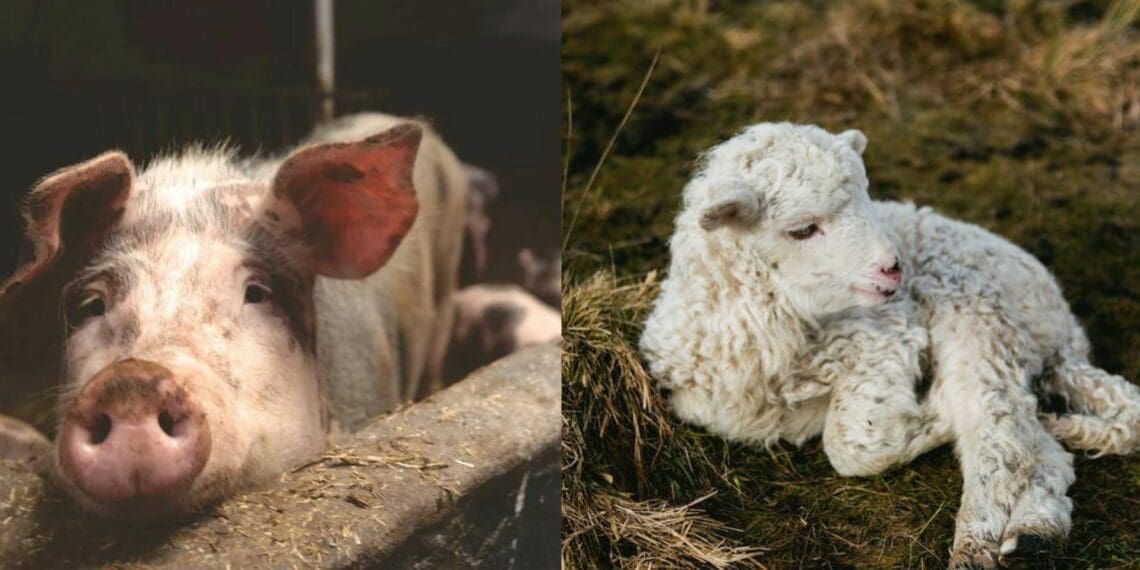
Pigs: In pigs, a common disease is seen which is called “greasy pig”. The bacterial infection causes an exudate which is a secretion during inflammation.
How to mitigate the skin disease
There are various types of staphylococci diseases that occur on the skin of livestock and depending on the damage, it can cause secondary bacterial infections. Each animal carries diseases differently.
“The main thing you can do to mitigate is to remove or prevent or to control the factors that are causing the disease,” she explains.
In this case, if sheep are injuring each other at the feeding trough, provide more space for them. With pigs, it is important to increase hygiene and prevent lacerations if piglets are fighting. As well as cattle, it is important to make sure that the environment is clean.
Getting rid of the primary cause
If the primary cause is not addressed, the skin disease will return.
“If you have goats with secondary staphylococci dermatitis and it’s due to mite infestation, you need to get rid of the mites. Then you will treat them with an appropriate drug or dip them so that you can make sure the mites disappear and once they disappear, the secondary cause will disappear,” Claassen says.
She further explains if the infection/disease does not disappear, you can use antibiotics.
Claassen cautions against using antibiotics because it’s important to gauge how it works in livestock. “This is why it’s really important to work hand-in-hand with your veterinarian.”
In this case, if bacteria are resistant to antibiotics, veterinarians can do antibiograms to identify organisms and treat skin diseases appropriately.
Treating the disease
When it comes to treatment, Claassen explains that there are different options.
“There are quite a couple of variables that can play a role in the capital that you need to give out to treat this. Firstly, it depends on what the in-sighting cause is and if it’s going to be something that will be expensive to deal with.”
- If it is infrastructure, it can be an expensive process to restructure.
- You could dip and treat animals for mites.
- Depending on the severity, It can become medically expensive.
- Wash areas where animals are treated with an antiseptic spray.
- Having a relationship with a veterinarian for animal health and safety.
ALSO READ: Naidoo takes the agricultural space by storm
Sign up for Farmer’s Inside Track: Join our exclusive platform for new entrants into farming and agri-business, with newsletters and podcasts.