Wednesday, October 21, 2026
SUBSCRIBE
22 GLOBAL MEDIA AWARDS
Food For Mzansi
  • News
  • Changemakers
  • Lifestyle
  • Farmer’s Inside Track
  • Food for Thought
No Result
View All Result
  • News
  • Changemakers
  • Lifestyle
  • Farmer’s Inside Track
  • Food for Thought
No Result
View All Result
Food For Mzansi
No Result
View All Result
in Farmer's Inside Track

Podcast: Staying on top of livestock diseases

Skin diseases in livestock can cause animals major discomfort and can turn out costly for farmers when treating them. An expert identifies what to look out for and how to prevent future infections

by Octavia Avesca Spandiel
8th March 2023
Podcast: Staying on top of livestock diseases

Dr Didi Claassen, head of pathology at Afrivet, shares expertise on staphylococcus, a skin disease in livestock. Photo: Supplied/Food For Mzansi

Share on FacebookShare on TwitterShare on WhatsApp

Farming with livestock comes with rewards and challenges. It is up to farmers to keep themselves informed about diseases that might affect their animals. Dr Didi Claassen, head of pathology at Afrivet, shares her insights into skin disease, prevention, and mitigation.

Staphylococcus aureus is a type of bacteria that affects livestock such as cattle, goats, sheep, and pigs, Claassen explains. This means that staphylococcal skin infections associated with folliculitis and furunculosis may manifest as lesions in almost any location on the body.

“Staphylococci are bacteria that occur on the skin normally, so we call that commensal organism. This just means if you take a swab from the skin of your livestock, you will culture a staphylococci organism. They are very common, especially on the skin and they don’t cause primary skin lesions. It’s usually a secondary condition or affection on the skin following another insightful cause,” Claassen says.

How does skin diseases affect different livestock? 

Cattle: Staphylococcal infections can cause hair follicle inflammation leading to the common skin ailment known as folliculitis. It’s frequently brought on by a bacterial infection. At first, the tiny pockets where each hair grows may appear to be little pimples (hair follicles). The disorder may be uncomfortable, painful, and unpleasant. 

“The organisms that they culture in areas of folliculitis or impetigo aren’t always staphylococci in origin but it is a secondary infection due to another in the sighting course,” Claassen explains.

Sheep: The skin disease is usually seen in the head or around the head. This can be caused by trauma, for example when the animals are feeding in close proximity at the feeding trough which can cause damage to the skin. 

In this episode, Claassen also discusses:

  • How the skin disease affects other livestock such as goats, sheep, and pigs;
  • How to mitigate the disease; and
  • And how to treat the disease.

Want to know more? Listen to the full episode of Farmer’s Inside Track. 

Option 1: Click here to listen on Spotify (all mobile and other devices).

Option 2: Click here to listen on any Apple device. 

Option 3: Click here to listen on Google Podcast.

ALSO READ: How to spot foot-and-mouth disease early

Sign up for Farmer’s Inside Track: Join our exclusive platform for new entrants into farming and agri-business, with newsletters and podcasts.  
Octavia Avesca Spandiel

Raised by a close-knitted family who loves her deeply, Octavia believes in the philosophy of ‘I am because you are'. This former news and content editor for radio is now living her best life in the agricultural sector as a commercial journalist at Food For Mzansi. Her soft spot for poetry and passion for life, writing and traveling inspires her to write compelling stories. Apart from being an excellent writer, Octavia has an educational background in youth work and loves working with people. 

Tags: Afrivetlivestock diseasesstaphylococcal infections
Inspiration

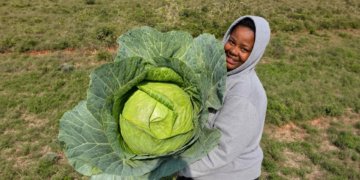
Reluctant farmer scales EC cabbage enterprise to supply Spar

by Lisakanya Venna
19th October 2026

Eastern Cape grower Sibahle Sifo went from resisting family farm duties to running Imbewu YeThemba Agricultural Projects. Overcoming total flood...

Read moreDetails
Reality check: What SA agri interns really experience on the farm

Reality check: What SA agri interns really experience on the farm

19th October 2026
This week’s agri events: 19 – 23 October

This week’s agri events: 19 – 23 October

19th October 2026

Stop the rot: Four steps to slash post-harvest losses

18th October 2026
A standing ovation for agriculture’s incredible talent! The Agri’s Got Talent 2026 top three celebrate their achievements: winner Honey Katoo of Endulini Fruit in Patensie, alongside runner-up Clareece Vlotman of Wolfpack in Wolseley and finalist Lwandile Nantsi of Laastedrift in Ceres. Photo: Supplied/Food For Mzansi

Patensie claims Agri’s Got Talent crown for second year running

17th October 2026

Laastedrift Agri leads with BigBucks Gala success

Potatoes and tomatoes plunge while avocado prices soar

By-laws vs. livelihoods: Barriers facing WC smallholder farmers

Patensie claims Agri’s Got Talent crown for second year running

CPAs urged to register for free governance support toolkits

Join Food For Mzansi's WhatsApp channel for the latest updates!

JOIN NOW!
Next Post
GDP: Agricultural sector shows mixed results

GDP: SA agricultural sector shows mixed results

THE NEW FACE OF SOUTH AFRICAN AGRICULTURE

With 21 global awards in the first six years of its existence, Food For Mzansi is much more than an agriculture publication. It is a movement, unashamedly saluting the unsung heroes of South African agriculture. We believe in the power of agriculture to promote nation building and social cohesion by telling stories that are often overlooked by broader society.

Smart irrigation: Precision tools boost crop yields while cutting costs

By-laws vs. livelihoods: Barriers facing WC smallholder farmers

CPAs urged to register for free governance support toolkits

Potatoes and tomatoes plunge while avocado prices soar

Becoming bankable: How to get your farm ready for finance

Fixing SA’s agricultural visa system to protect seasonal harvests

  • Awards & Global Impact
  • Our Story
  • Contact Us
  • Cookie Policy
  • Privacy Policy
  • Copyright

Contact us
Office: +27 21 879 1824
News: info@foodformzansi.co.za
Advertising: sales@foodformzansi.co.za

Contact us
Office: +27 21 879 1824
News: info@foodformzansi.co.za
Advertising: sales@foodformzansi.co.za

  • Awards & Global Impact
  • Our Story
  • Contact Us
  • Cookie Policy
  • Privacy Policy
  • Copyright

Chat Options

About this assistant

This feature generates automated answers summarised from Food For Mzansi articles. By using it, you are interacting with an AI system (provided by Google), not a human. AI can make mistakes. Please refer to the source articles for verification and citation purposes.

Our staff do not check or moderate Lerato’s answers in advance, but may review some later. Our journalists continue to write and edit all the articles Lerato uses as sources.

To estimate unique and returning web users, we store a random browser ID in this browser. WhatsApp users are counted by phone number. The same person using both channels may be counted twice.

I'm Lerato, your AI assistant!
No Result
View All Result
  • News
  • Changemakers
  • Lifestyle
  • Farmer’s Inside Track
  • Food for Thought

Copyright © 2026 Food for Mzansi