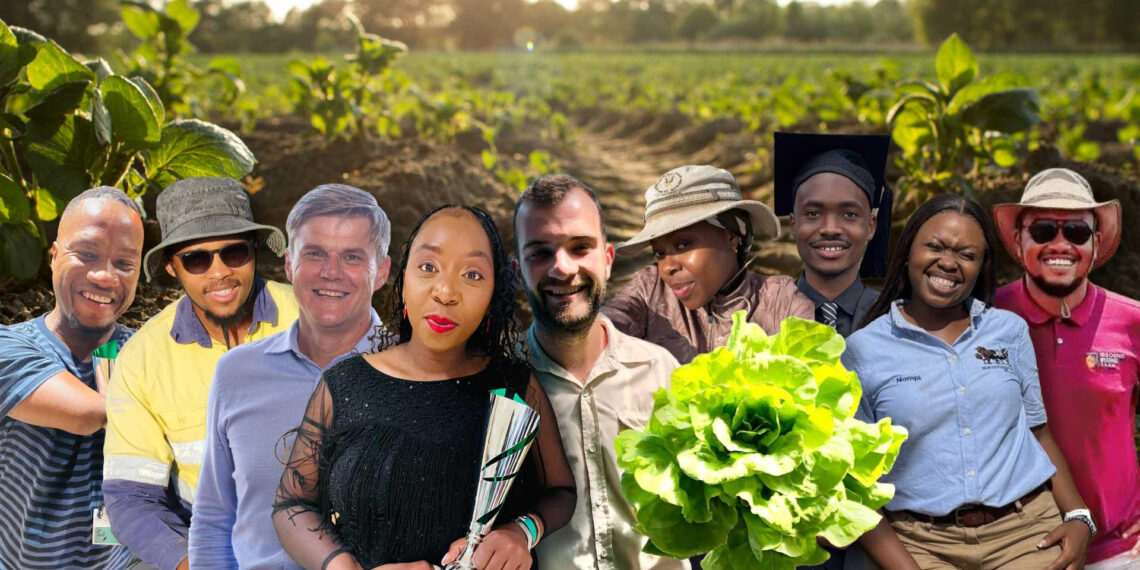
For some farmers, 2025 started with great planning, but was shattered by challenges such as tariffs, heavy rains, crime, and policy uncertainty. However, for others, it has been a great year, which has led to new opportunities and increased profit margins. Food For Mzansi spoke to farmers about their highs and lows of the year.
Small start reaps rewards
Nonkululeko Ximba, a goat dairy farmer from Ladysmith, KwaZulu-Natal, who started livestock farming in 2022, shared that the year has been a great lesson, as they have managed to grow from seven to 12 goats and 16 kids.
“We introduced goat milk kefir to our clients, and they love it. Also, making it to the final in two categories for the agri awards means so much to us. We are extremely grateful to the South African Agricultural Awards for the recognition and exposure, as now more people want to know about kefir.”
However, her biggest challenge remains the slow support from the government in obtaining the necessary tests and certifications for retail. This would help to improve milk production from 2 to 5 litres.
New markets deliver the goods
Sibusiso Mogale, a mixed farmer from Nelspruit, Mpumalanga, has been farming vegetables and poultry without hands since 2014. This year, his highlights include growing fresh produce like bell peppers, tomatoes, spinach, cucumbers, baby marrows and expanding into new markets with cherry tomatoes and eggplant.
His challenges this year involved reconnecting electricity after theft, losing chickens to snakes and theft, and animals breaking fences to eat his crops, all worsening due to limited funds for repairs and replacements.
But he did not let it stand in his way. Mogale now supplies Checkers, Roots Butchery, Food Lovers, and Pick n Pay, supported by a South African Good Agricultural Practice (Sagap) certification valid for a year, broadening his trading opportunities nationwide.
Learning from life’s curveballs
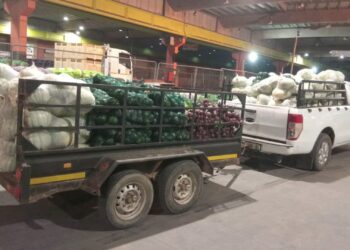
Thulani Magida, owner of Juta Agritech in the Eastern Cape, said they had a good potato harvest on the land ready to be lifted in January. However, they had big logistical challenges. His bakkie and small car broke down, forcing him to rent a bakkie for R60 000 over 42 days to harvest.
“The heat and a broken air conditioning system caused 4 tonnes (400 bags) of potatoes to rot. Selling unwashed potatoes at R32 per 10 kg bag, against a production cost of R27.30 per bag, hurt profits despite improving yields from 22 to 46 tonnes per hectare over three years.”
Related stories
- US tariffs add pressure as global markets face rising uncertainty
- Farmers welcome rains amid weather warnings
- SA secures landmark stone fruit deal with China
- SA food inflation: Why groceries became so expensive
For Free State crop farmer Kealeboga Rapulana, the first half of the year felt almost charmed. Fresh from graduation, she says everything seemed to fall into place.
“One of my biggest highlights was harvesting on my birthday; it genuinely felt like the soil was wishing me well, giving me these large, green, high-fives,” Rapulana said.
Her business reached a new milestone when it supplied its first retailer, one of the Hypermeat deli outlets, and her industry profile grew further after being featured by Food For Mzansi, a spotlight that significantly boosted her credibility.
“My emotional highs were when other successful startup farmers told me I inspire them. Me? Inspiring you? And you’re doing so well! That meant everything.
“Big talks didn’t materialise, and I hit rock bottom. I learnt quickly not to see it as failure but as a pivot. The dream hasn’t changed, only the strategy. We are never denied, only redirected,” she said.

Job creation is a win for all
In Gauteng, crop farmer and co-founder of Fresh Flow Farms, Nhlawenhle Rapodile, described the year as good overall, despite heavy pressures.
“The biggest challenge was the recent rainfall; the floods damaged our plants, and afterwards, the insects came in full force. The farm had to spend significantly on pesticides within weeks.
“That one was tough. We had to increase our produce prices, and some clients weren’t happy. We even lost a client who couldn’t adjust, but I’m confident they’ll be back. Everyone is charging similar prices now, if not higher,” Rapodile said.
Limpopo aquaponics farmer and founder of Sable Creeks Farms, MJ Nunes, describes 2025 as a year of blessings, both in production and business expansion.
“We were very blessed this year with strong management, good sales in both crops and herbs, and continued demand for aquaponics system installations. The start of the rain season has also been fantastic.”
MJ Nunes
For Nunes, job creation stands out as his proudest milestone. “We created more jobs on the farm this year. That’s a huge high for me being able to provide opportunities for people.
“Yes, there are lows on the farm and in business, but I believe everything happens for a reason. What matters is how you react. That reaction determines the outcome,” he said.
Stresses and successes
Nombulelo Dhlamini, a mixed farming farmer in Pretoria, said 2025 has been a year filled with great wins and losses, but above all, there have been many lessons that she has learned. Going into the year 2026, she will know and do better.
“My year was a year of new things; it was also a year of hardship. I have received all that I wanted for the year 2025, but I have built on what I got, no matter how small. Banking with new clients has also been what has put a smile on my face during hard times in the year under review. I have lost hair because of the stress of 2025; I even had to cut my hair short.”
For Dibesho Serage, a fruit farmer in Limpopo, 2025 has been the best year for his farming operations because of favourable weather conditions.
“Another thing that made the year 2025 good was that cold front that hit the Western Cape, delaying growers in that part of the country, which meant we had an upper hand in selling our stock because rains had helped us a lot here in the north. We sold at a decent price with a good size, and we also were able to sell a lot of volumes. This was one of the best years for us.
“We are looking forward that this favourable weather will persist and continue in the new year. Over and above, we are looking ahead to the rollout of the agreement that was signed by the government with China with regard to stone fruit. So that means without a doubt we can increase our plantation on stone fruit because there is a market that is now open,” Serage said.
Cheers to a full year
Rico Basson, the chief executive officer of South Africa Wine, said 2025 was an interesting year for them as they had to implement new strategies in terms of exports, tourism, domestic market and sustainability.
“There has been rethinking about the future. We started off the year with some shocks on tariffs, and it made us rethink some of the things that we can do. In general, the year has been full of turmoil and uncertainty, but against that, I want to commend our producers and marketers for staying focused.
“We also have had a good crop early in the year, and now we are preparing for the next harvest, which at this stage is looking very promising. And consumer sales were down, but the value was up.”
- Team Food For Mzansi that contributed to the article: Lisakanya Venna, Patricia Tembo and Tiisetso Manoko
READ NEXT: Systemic failures stall SA’s land reform progress