Discover how technology is driving innovation in the red meat industry, ensuring quality, safety, and sustainability while giving South African consumers the confidence to enjoy every bite.
Technology and innovation are rapidly transforming the red meat industry, addressing longstanding questions about product quality, safety, and environmental responsibility. As consumers seek clearer assurances about what they are eating, the industry is stepping up with new tools and practices that rebuild trust and bolster sustainability.
This evolving story reveals how forward-thinking approaches are reshaping meat production from farm to table.
Across South Africa, the red meat industry is making serious strides through technology and innovation to build trust, ensure sustainability, and deliver better quality meat.
It’s no secret that consumers want to know three basic things:
● Is what they are buying truly what it claims to be?
● Is it produced in an environmentally responsible way?
● Is it safe for their families?
Meeting these expectations requires a combination of factors.
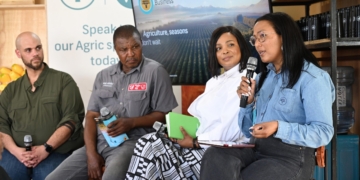
According to Michaela Pretorius, a technical manager at Cavalier, feed additives for cattle and sheep, responsible for breed improvements with the necessary controls to ensure consistent quality, strong animal welfare standards, and emerging practices like regenerative agriculture, all
play a critical role.
Trust through traceability and ethical sourcing
An essential element in establishing consumer confidence is traceability and ethical sourcing throughout the red meat value chain
Pretorius explains that “traceability throughout the red meat value chain basically cements the trust that you are buying what you get,” stretching from the farm right through to the final product on the consumer’s plate.
Related stories
- Red meat’s new story: Healing land through grazing
- Why red meat producers can’t afford to ignore sustainability
- Eskort invests millions in robotic meat slicing technology
This has become even more crucial in managing risks such as disease outbreaks, including the foot-and-mouth disease challenges currently affecting the country. Pretorius notes that “DNA analysis is gaining attention as an important tool to promote openness and integrity in the value
chain.”
But trust doesn’t stop at the supply chain; it extends to the consumer’s experience after purchase. “Once they’ve [consumers] bought it, they need to know that what they are buying is right,” she says. “They need to be able to consciously buy from retailers or shelves they feel the
most comfortable with and with whom they have built trust.”
Prioritising environmental responsibility
Beyond consumer choice, the industry must also address its environmental impact. Pretorius points out that “regenerative agriculture is not just about reducing emissions; it’s about removing carbon from the atmosphere and putting it back into the soil.”
This approach focuses on producing more efficiently on smaller plots of land while improving ecological health. Rather than increasing the number of animals per hectare, the focus is on enhancing soil quality and biodiversity, which in turn supports healthier grazing systems.
In fact, Pretorius notes that some farmers have managed to double their productive capacity simply by shifting from conventional methods to regenerative practices—significantly boosting grass species diversity and soil resilience.
Data-driven improvements
Data-driven innovation is also reshaping the industry. Pretorius highlights how new tools are improving every stage of the value chain, from animal nutrition to reducing antibiotic use.
“You can’t treasure what you can’t measure,” she says. For example, Cavalier uses a tendernometer, an instrument that measures meat tenderness bite by bite. This data is then sent back to farmers, helping them make practical adjustments that improve meat quality. It’s this kind of insight that empowers farmers to take smarter, more sustainable steps forward.
Furthermore, one of the most exciting developments this year is the traceability platform launched by RMIS – a milestone many in the industry describe as long overdue and transformational.
For years, South Africa’s red meat value chain has wrestled with fragmented systems, inconsistent record-keeping, and a lack of shared data. The new platform signals a decisive break from that past, offering a unified framework where farmers, feedlots, auctioneers, transporters, abattoirs and processors can all participate with confidence.
What makes this platform particularly groundbreaking is not only its decentralised architecture but also its farmer-first philosophy.
As RMIS COO Phillip Oosthuizen highlighted, “Whatever we develop must create trust from the start. We cannot force compliance; we have to build confidence. And when it comes to data, your data remains yours.”
By ensuring that producers retain ownership and control of their information, RMIS has addressed the single biggest barrier that stalled previous traceability attempts: mistrust.
Early adopters who participated in pilot phases say the system is intuitive, respectful of on-farm realities, and built to integrate seamlessly with existing workflows rather than replace them with bureaucratic hurdles. Its potential impact stretches far beyond compliance.
With global markets increasingly demanding proof of origin, disease control, and ethical production practices, South Africa’s ability to demonstrate credible, transparent traceability has become a competitive necessity.
The RMIS platform positions the sector not only to protect domestic credibility but to expand export opportunities, especially for emerging farmers who have historically been excluded from high-value markets. Industry experts agree that this is not just a tech upgrade; it represents a cultural shift. For the first time, the livestock value chain is rallying around a shared vision rooted in collaboration, accountability and long-term sustainability.
Experts agree that the RMIS traceability system could become one of the most important agricultural innovations of the decade. This reshapes how livestock is tracked, how disease outbreaks are managed, and ultimately how consumers trust the meat they buy.
This story is part of a special series in partnership with the Red Meat Producers’ Organisation (RPO) – a tribute to the farmers feeding our nation, one meal at a time.

READ NEXT: Trash to triumph: Sukazi transforms wasteland into farmland