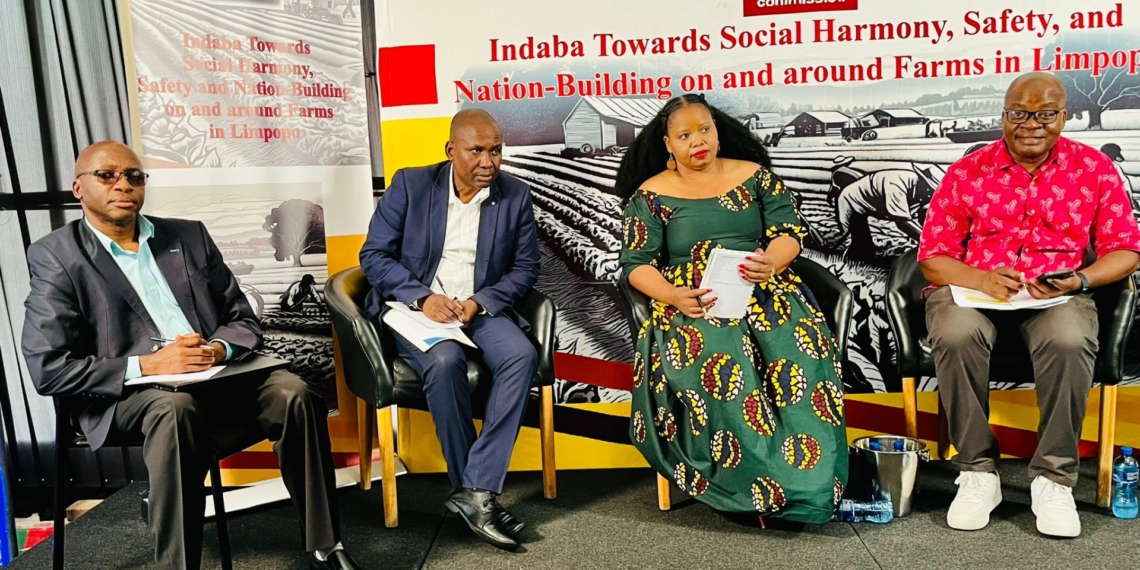
Limpopo has come under the spotlight for how farmworkers and dwellers are being treated. The South African Human Rights Commission (SAHRC) uncovered acts of violation of human rights and a lack of government intervention to curb the rising crisis the farming community faces.
The commission recently held an indaba in Limpopo with several stakeholders to find ways to remedy the situation. This comes after two women were found dead on a farm in the province.
The indaba was aimed at fostering dialogues on the current landscape, sharing experiences, and best practices to collaborate on strategies to combat violence in farming communities.
Farm violence breeds instability
In addressing the session, the speaker of the Limpopo provincial legislature, Makoma Makhurupetje, said it was concerning that 30 years into democracy the country was still talking about farm murders and farm attacks.
“We need all of us, black and white, to work together towards ending attacks of farmworkers and farm owners. Those involved in these crimes should face the full might of the law.
“The province of Limpopo, like other provinces, still experiences unacceptable levels of intolerance, incidents of violence, torture and murder incidents. It becomes very painful to hear some of the incidents taking place within our province,” she said.
Makhurupetje noted that some cases where a farmer and farmworkers disagreed and ended in violence in the province, could bring instability in the agricultural sector, which is one of the key economic drivers and job creators.
Related stories
- 240 farmworkers honoured, empowered at Robertson Lenteskou
- Aunty Bettie’s lifelong mission to fight for women farmworkers
- Minimum wage boosts farmworkers, lowers poverty – study
Commissioner Aseza Gungubele said the ill-treatment of farmworkers is a concern for the entire country, with some incidents on the West Coast in the Western Cape, where a farmer denied ambulance access to the farm to assist a worker.
Meanwhile, the Independent Electoral Commission assistant manager in Limpopo, Motsiri Ramadan, said some of the challenges they encountered in the past were concerning the right to vote, where some farmers did not allow them to use the farms as voting stations.
Collaboration is key
“Another challenge is that we struggle to get voters’ roll and details of people living in the farming community. It is a big challenge which we believe as stakeholders we need to come [up] with a solution to resolve it,” he said.
Ramadan said despite a prior agreement for access to farms during the May provincial and national elections, their agents were not allowed on the farms.
“Some farmers do not allow their employees to participate in elections-related matters, their workers are refused leave to go and vote,” he said.
The experimental farm manager from the faculty of science, engineering and agriculture at the University of Venda, Thifheli Kutama, said stability in the farming communities with food production in South Africa is critical and all stakeholders need to find a common ground on how better to work together and not against each other.
“It is essential for all stakeholders in the agriculture sector to work together in a cohesive and harmonious manner,” she said.
READ NEXT: Court slams municipality with R160m fine for polluting water
Sign up for Mzansi Today: Your daily take on the news and happenings from the agriculture value chain