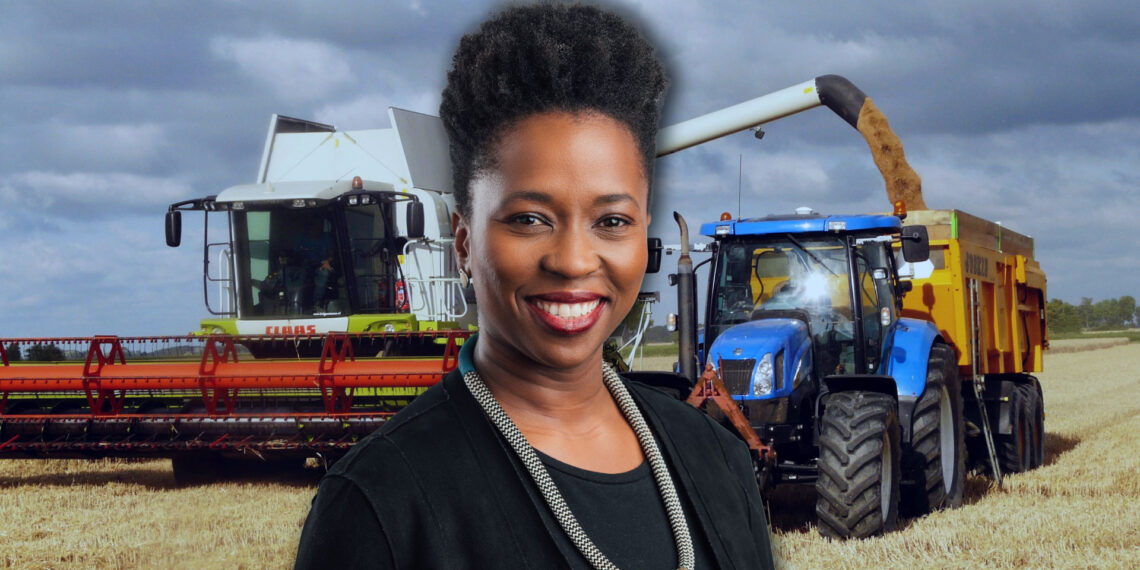
Over 100 days ago, the Gauteng government for the seventh administration was formed, bringing new faces to lead government departments. One of the newbies was Vuyiswa Ramokgopa, who was appointed to lead the agriculture ministry in the province of gold.
Food For Mzansi’s Tiisetso Manoko caught up with Ramokgopa to hear what she has been up to since taking office and what her priorities are.
Tiisetso Manoko: Since taking over the reins as the MEC of agriculture, what has been keeping you busy for the past 100+ days?
Vuyiswa Ramokgopa: The first 100 days, when we started one of the things I said was that I do not want to make assumptions about the industry. There is often a rush to do things without a full sense of what needs to be done. So my first four months was to do a full tour across the province of Gauteng to understand what the dynamics are in each region.
It has been a listening session for me and my team, and also learning for me. There have been important learnings that have informed our thinking of the strategy we need to pursue and what we need to focus on.
We also declared that we will be focusing on three main priorities, being ending hunger, commercialisation of small-scale farmers and agro-processors, as well as sustainable job creation. So in all those interactions we had, the aim has been to adhere to these priorities.
What are the challenges the sector still faces and what do you think needs to be done to overcome them?
One of the things that come is the issue of red tape, the high barriers and cost of compliance, accessing support programmes, and requirements of documents needed to get assistance from government. These are the things that the people need to beat and it is frustrating.
Sometimes people will be given land, but the process of getting the title deed or whatever rights are needed takes time and makes the move impossible. Access to markets also is one of the challenges farmers in the entire value chain face.
Access to finance and resources is another big challenge for one to invest in farming operations. But also, this speaks to business training because people are good in farming but that does not mean they are good in business which makes it difficult for them to operate. So it is a space we are also looking into tapping into.
We have engaged financial institutions like Land Bank, commercial banks and Industrial Development Cooperation (IDC) because access to funding is one issue we need to tackle.
Related stories
- Gauteng MEC reveals budget to end hunger and support farmers
- Gauteng MEC hails women farmers, vows to tackle rural safety
Gauteng has seen a growth in agro-processing, a rise in hydroponic farming, and the steady emergence of traditional farmers. What help does the government of Gauteng give to these farmers?
I want to disagree that Gauteng is not an agricultural province, yes we are an urban province but there are a lot of agricultural activities taking place here. One of the biggest carrot farmers is from Gauteng, [and] we produce 25% of the eggs in the country.
Yes, technology farming like vertical farming, [and] hydroponics is on the rise in Gauteng. To add on that 16 million people are in Gauteng, so ultimately the product that is being grown in other destinations will come to Gauteng either for agro-processing or sale.

We have funded urban farming initiatives which have been successful. We are also playing in the cannabis space and the maize commodity, so we [are] doing a lot.
What opportunities are there for farmers that you think the sector is not tapping into and why are there such hindrances?
I think agro-processing in all its variations is a massive opportunity area for the province, as well as for farmers. There are huge opportunities for processing. Also, what is important is that capacitating farmers should be done fundamentally differently. This will only be done correctly if we partner with commercial farmers and banking institutions.
The third point will be leveraging the procurement of food by the state. The state is buying a lot of food but it is being done in a lot of disjoined ways. Departments of health, correctional services, education, and social development all buy food but farmers are not benefiting from that. Access to markets actually sits with us as the state.
We [are] doing an assessment of that from a provincial level and understanding what are the key crops and commodities that government is producing at a large scale and we invest in that.
What is your message to the sector and role players, looking ahead to 2025?
I think the commitment of this administration, the words we often use is responsiveness, accountability, and transparency; that is what underpins this administration and that is what we are trying to drive as the culture shifts within the department.
So I want to say whenever anybody interacts with this department, that they should experience all those three things. Our perspective is that we are not here for one person or one group, the agricultural sector in Gauteng is one industry and it needs to work together.
NEXT READ: Land Bank launches Agro-Energy Fund to power SA farmers
Sign up for Mzansi Today: Your daily take on the news and happenings from the agriculture value chain