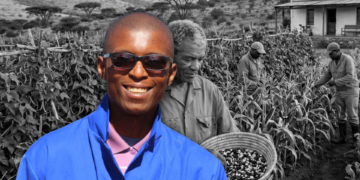
Climate change is here to stay and impacting farmers all over South Africa. A study by climate specialist Mashford Zenda reveals how shifting temperatures and rainfall over 33 years have affected smallholder farmers in Belfast, Mpumalanga.
Zenda, from the Cornerstone Institute, produced a paper which focuses on the impact of climate variability on the livelihoods of smallholder farmers in an agricultural village in Belfast. His study also shows the urgency of supporting smallholder farmers with adaptive strategies.
Food For Mzansi caught up with Zenda to understand his findings and actionable points needed to secure agriculture in Belfast.
Tiisetso Manoko: How did specific shifts in temperature and rainfall over the past 33 years directly impact farmers in the Belfast area?
Mashford Zenda: Over the past 33 years, the Belfast area has experienced significant shifts in temperature and rainfall patterns, which have directly impacted crop yields and farming practices. This warming trend has led to more frequent and intense heatwaves, which can adversely affect crop development and reduce yields.
The increased temperatures have necessitated the adoption of early maturing crop varieties and climate-resilient agricultural practices to mitigate the risk of heat stress and drought conditions. This decline poses a significant challenge for rainfed agriculture, as it directly impacts water availability for crops, leading to potential reductions in agricultural productivity.
This shift in rainfall patterns has prompted farmers to consider alternative water management strategies and the cultivation of drought-tolerant crops to sustain agricultural productivity.
Related stories
- Climate change deepens Africa’s water crisis
- Climate change: African nations face 30% loss in crop revenue
- Collaboration and fighting climate change are key to quality seed
What adaptive strategies do smallholder farmers currently use in response to extreme weather events, and how effective have they been in mitigating losses?
Farmers in the Belfast area have to adapt by adjusting planting schedules, selecting more heat-tolerant crop varieties, and implementing water conservation measures. These adaptive strategies are crucial for maintaining crop yields and ensuring the sustainability of farming practices in the face of ongoing climate variability.
One of the key strategies involves the use of climate-smart agricultural practices, which include the adoption of drought-tolerant crop varieties and adjusting planting schedules to align with changing climatic conditions.
Another adaptive strategy employed by smallholder farmers is the implementation of soil conservation techniques, such as mulching and cover cropping. Mulching helps conserve soil moisture, prevent erosion, and improve soil health by increasing organic matter content.
Improved access to reliable climate data and early warning systems could further enhance the effectiveness of these strategies, enabling farmers to make more informed decisions and better manage the risks associated with climate change.
Can the implementation of digital technologies for real-time weather monitoring significantly improve farmers’ ability to respond to climate variations?
The implementation of digital technologies for real-time weather monitoring can significantly enhance farmers’ ability to respond to climate variations by providing timely and accurate data that informs agricultural decision-making.
However, integrating these technologies into rural communities presents several challenges. One significant barrier is the limited access to consistent weather data, which exacerbates the vulnerability of smallholder farmers to climate-related events. Many rural areas lack the necessary infrastructure, such as reliable internet connectivity and electricity, to support the deployment and maintenance of digital weather monitoring systems.
To overcome these challenges, it is crucial to develop affordable and accessible solutions tailored to the specific needs of rural communities. Collaborative efforts involving government agencies, non-governmental organisations, and private sector partners.
What are the social implications of climate-induced migration in smallholder farming communities?
As climate change exacerbates extreme weather events and alters agricultural productivity, many smallholder farmers are forced to migrate in search of more viable livelihoods. This migration can lead to a loss of agricultural labour in the communities left behind, which in turn affects local economies that are heavily reliant on agriculture.
The impact on food security is also significant. As smallholder farmers migrate, the reduction in local food production can lead to increased dependency on imported food, which may not be as readily available or affordable. This shift can exacerbate food insecurity, particularly in regions where access to external food sources is limited.
As a result, addressing the root causes of climate-induced migration and supporting adaptive capacity in smallholder farming communities is crucial for sustaining local economies and ensuring food security.
What role should local and national government play in crafting the policy supporting smallholder farmers’ adaptation to climate?
Public-private partnerships should be encouraged to enhance smallholder farmers’ access to markets, financial services, and insurance schemes that mitigate climate-related losses. Collaborative research initiatives between academic institutions, government agencies, and non governmental organisations can further drive the development of locally tailored solutions.
By fostering cooperation between multiple stakeholders, policymakers can ensure that adaptation strategies are not only effective but also inclusive, taking into account the diverse needs of smallholder farmers across different regions.
Ultimately, a well-coordinated policy approach that combines national vision with local action will strengthen farmers’ resilience and improve their long-term sustainability in the face of climate variability.
READ NEXT: Eskom’s rising tariffs push farmers to the brink
Sign up for Mzansi Today: Your daily take on the news and happenings from the agriculture value chain.