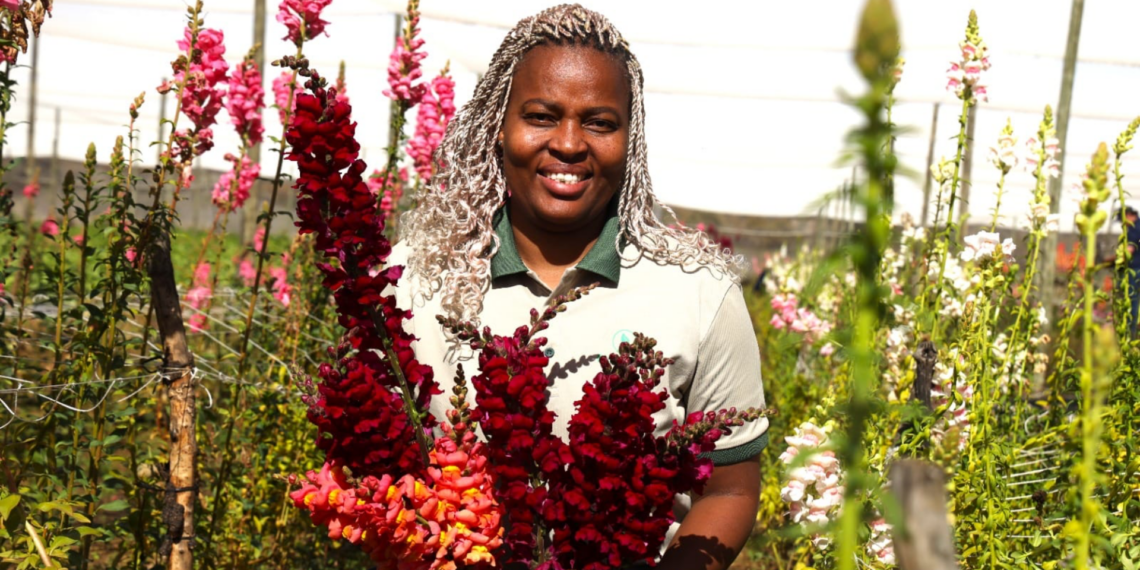
From a farmworker’s granddaughter to a commercial producer and tech innovator, Koketso Mofokeng’s journey with Diatla Tshweu Group is a testament to unshakeable resilience. Her groundbreaking work earned her second place at the Agricultural Development Agency (Agda) awards, where she developed farm management systems for their incubator programmes.
Overcoming severe personal and financial hardship, she built a multi-farm enterprise spanning livestock, flower, and seedling production while employing local youth.
Raised in De Wildt and later Mmakau in North West, her agricultural roots trace back to her grandmother, Agnes Baloyi. For 37 years, Agnes laboured as a farmworker at Skeerpoortfontein to keep the family afloat. When Mofokeng’s mother, Flora, passed away in 2005, Agnes stepped back from farm work to care for her grieving grandchildren.
“My grandmother and her sisters were farmworkers, but I never thought I would be a farmer. I thought farming was for the rich, and I felt limited by my background and the loss of my mom,” Mofokeng reflects.
Related stories
- Eastern Cape farmer bets on poultry and grows a diverse business
- Palesa proves small-scale farming can feed communities, retailers
- Rising from storm loss: Sinethemba Gebashe’s egg triumph
- Pivot to poultry: Jennifer Gazide swaps boardroom for broiler house
Overcoming adversity and a second chance at education
Mofokeng’s early school years spanned Tlhopane Primary, Sensation Primary, and Sepholabanatso Middle School. However, at 16, while in grade 9, she fell pregnant with her first son, John. Struggling under financial pressure, she dropped out for two years.
The turning point arrived on her birthday in 2010, when her grandmother asked what gift she desired. Mofokeng had only one wish: to return to school. Agnes promised to raise her great-grandson if Mofokeng could find a placement by the end of the day.
“I stood up immediately and went to Malatse Motsepe High School,” she recalls. “I cried to the principal, Mr Phiri, and teacher Mrs Motshweni, saying I wanted to come back to school, but I had a child and no uniform.”
Her plea was answered. She returned to grade 9 equipped with donated books and a uniform, matriculating in 2013.
Seeing her passion for photography develop in grade 10, Phiri introduced Mofokeng to his daughter, Kagisho Phiri, an established photographer, to mentor her. Phiri and Motshweni provided funds for her to apply to Tshwane University of Technology (TUT) and covered her transport costs.
Mofokeng was accepted for a national diploma in photography. Though financial constraints forced her to drop out during her third year, she launched her own photography side hustle, opening a garage studio and shooting weddings.
The pivot to agriculture
In 2021, following the birth of her daughter, Tlholo, Mofokeng suffered severe postpartum depression. She decided to make a dramatic career shift.
She asked her husband, Katiso Mofokeng, to divert funds saved for her lobola and their wedding into starting a farm. However, the land she bought in Mmakau lacked critical infrastructure like boreholes and fencing.
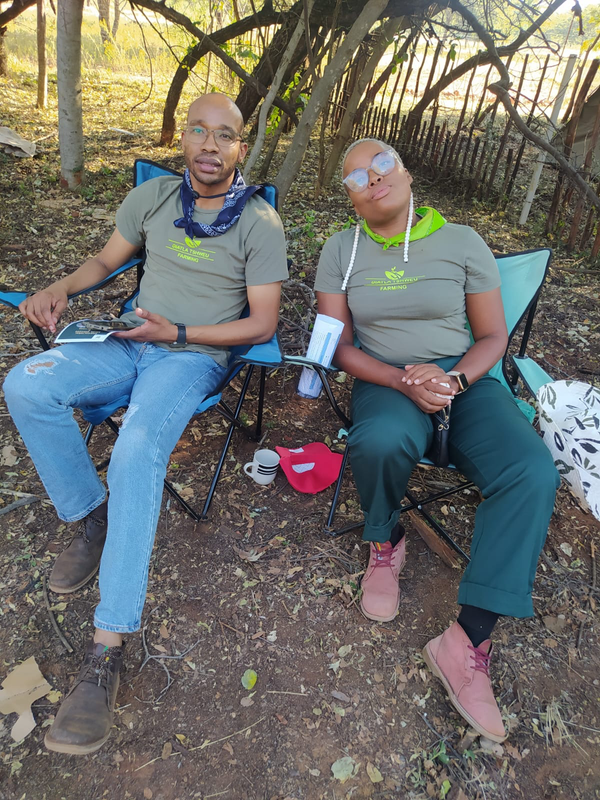
Then she leased a one-hectare plot from local farmer Olga Nkwana in Mamogaleskraal to start immediately, while selling the Mmakau plot back to the local chief to fund infrastructure.
Her path required immense perseverance. Leasing land at the Agricultural Research Council (ARC) in early 2022 resulted in a devastating loss of 110 000 cabbages due to a broken water pump.
Transitioning to an 18-hectare lease in Sonop later that year, she formally registered Diatla Tshweu Group. However, after investing R300 000 to repair infrastructure and turn a vandalised house into a packhouse, continuous theft and vandalism caused severe stress that led to hospitalisation.
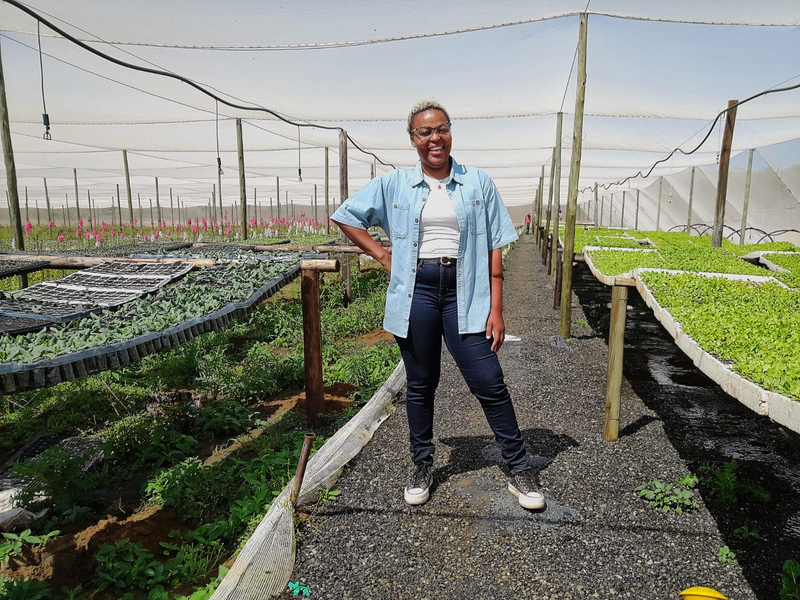
Refusing to give up, Mofokeng and her husband sold their home to purchase a farm in Elandskraal, Mooinooi. When they discovered the land bordered a nature reserve whose wild animals damaged open-field crops, they secured a 0% loan from Anglo American to install greenhouses and shade nets, enabling their business to stabilise and grow.
Diversification, code, and sustainable growth
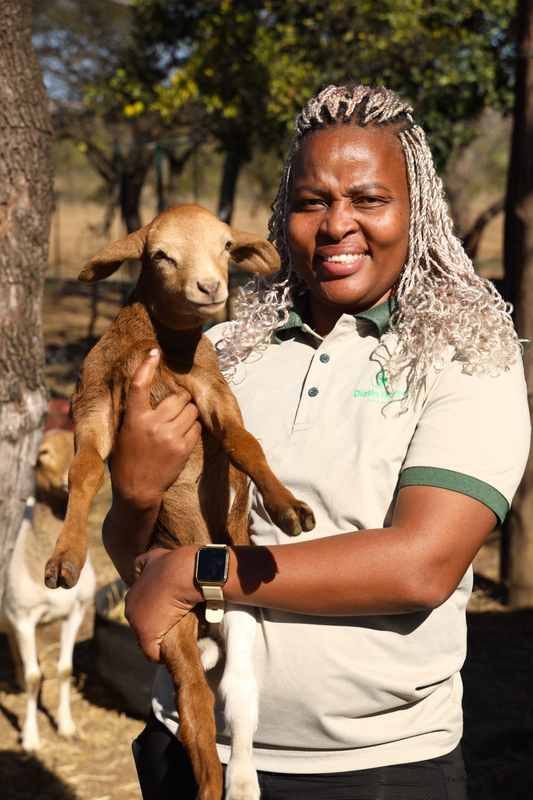
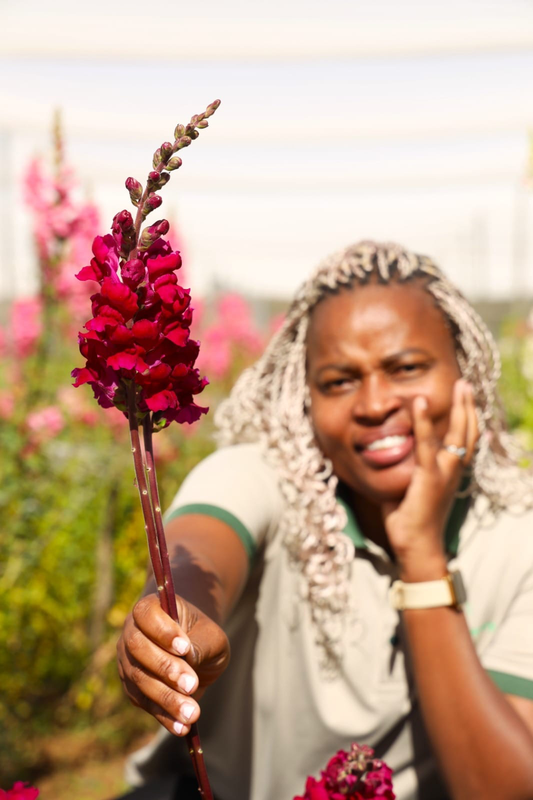
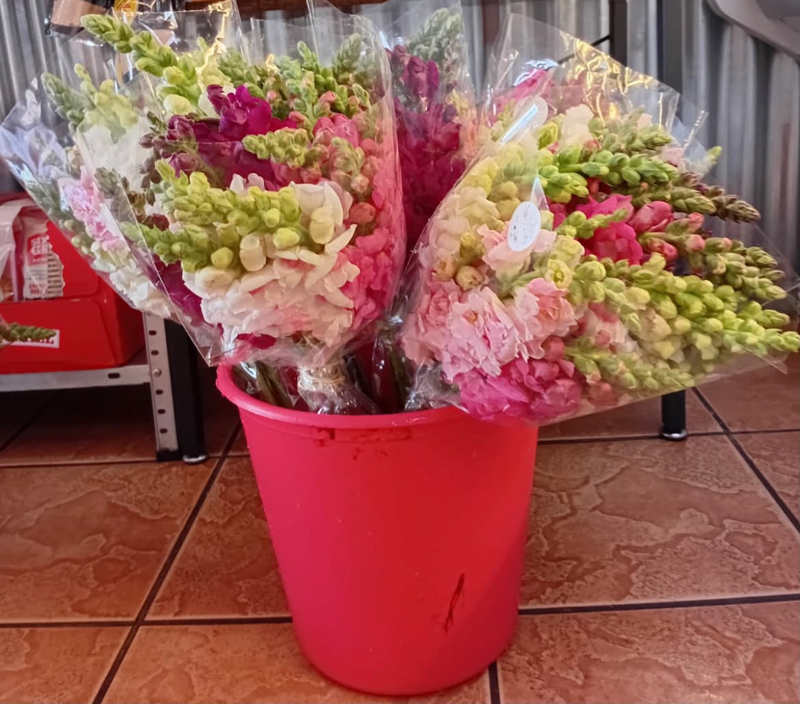
Today, the mother of three – John, Tlholo, and her youngest son, Lehumo – runs an enterprise that owns two commercial farms: one dedicated to livestock and another focused on small-scale vegetables, flowers, and vegetable seedlings.
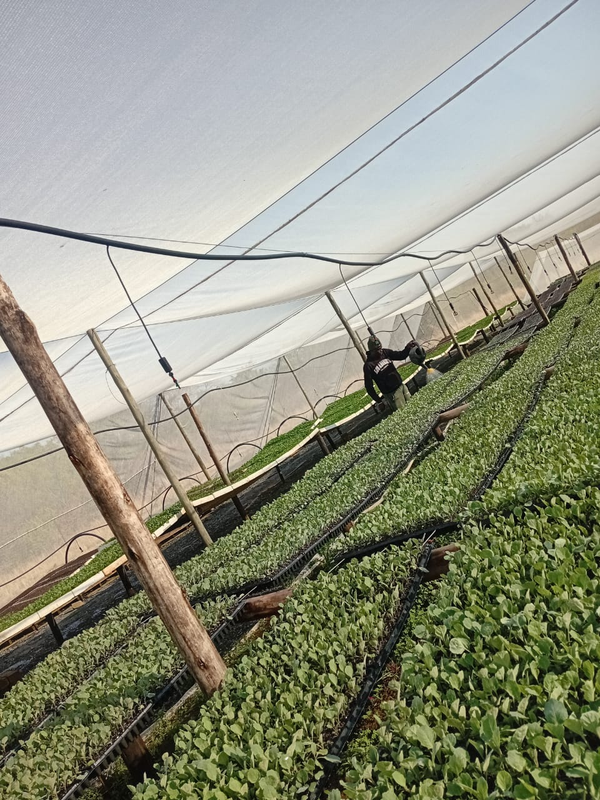
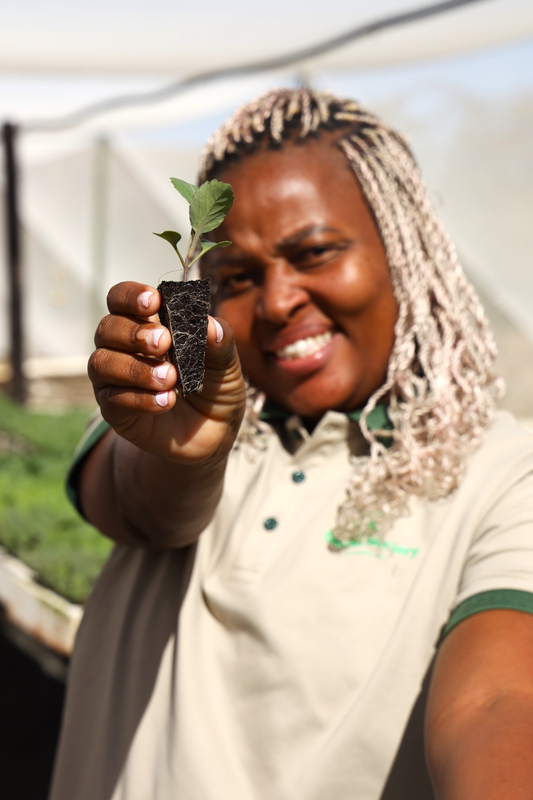
Her nursery produces 3 500 trays every six weeks, yielding 650 000 seedlings. Starting with just 100 trees in 2025, she expanded her inventory to 3 500 trees within a year by reinvesting crop sales back into seeds and inputs.
Her enterprise currently employs six full-time women in the nursery and 12 sales agents for flowers. She also enrolled her younger brother, Mpho Baloyi, in agricultural school in the Northwest and hired him as her farm manager.
Mofokeng’s innovation extends deep into technology. “I was struggling to get a good app to do my day-to-day recording, so I decided to build one for myself,” she explains. “I then pitched it to Agda, they loved it, and I built two systems for them for their incubator programmes with Nedbank and Sasol.”
Fruitful connection with Agda pays off
Her connection with Agda runs deep. After first discovering an opportunity on Facebook, Mofokeng spent three years working alongside the organisation. In 2023, while participating in their Nedbank Incubator Programme, her commitment to youth empowerment earned her the Nedbank Green Economy Award for Best Job Creator. When Agda launched its annual awards, competing felt like a natural continuation of her journey.
Taking second place overall at the Agda awards was a powerful moment of validation. “I felt incredibly honoured and humbled,” Mofokeng shares. “Starting from nothing and having your hard work recognised on such a huge platform proves that every challenge was worth it.”
Recognising her natural aptitude for technology, Mofokeng took her ambition a step further by enrolling in software engineering at Stellenbosch University to formalise her coding skills. She is currently building a dedicated farmers’ market app where farmers can sell their produce directly to buyers (currently undergoing internal farm testing before a public release on the Play Store).
Her business currently serves 164 client farmers who purchase seedlings and use her management app, with 78 returning as regular clients.
“Start farming with what you have,” Mofokeng advises. “Do not wait for assistance. Start from what you have and use what you have to grow.”
READ NEXT: Food For Mzansi celebrates 9 years with new #FFM magazine