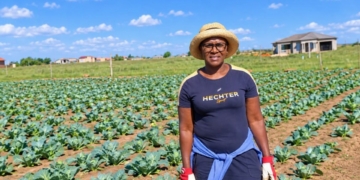
Boshof Solar Power has launched a three-year Emerging Farmer Development Programme backing 12 small-scale farmers in the Boshof region of the Free State.
Grounded in a local baseline study, the initiative combines hands-on mentorship, infrastructure upgrades, livestock recapitalisation, and business training to build climate-resilient, commercially viable farms for the next generation. With farm sizes ranging from roughly 350 to 1 658 hectares, it aims to build the resilience, productivity and intergenerational continuity that turns a struggling farm into a lasting local business.
“The farmers face real headwinds: drought, limited access to finance, and rising production costs, but the report highlights strong farmer commitment and resilience despite these conditions and points to a solid foundation for continued development, including available grazing resources, strong family involvement, and identified successors.
“Eleven of the twelve farmers have identified a family member as a successor, a strong intergenerational thread running through the programme,” said Harrisinah Theka, enterprise development manager at Boshof Solar Power.
Related stories
- Minister launches R1.2b land reform programme to support farmers
- Youth agri programme graduates the first cohort of young farmers
- Minister vows to fast-track land reform, axe bad CPAs
- National Dialogue: ‘Fix land reform, restore trust’

A phased three-year rollout built on mentorship
Building on these findings, the programme will focus on foundational work in the first year, incorporating training and priority infrastructure. Year two shifts toward productivity, through livestock recapitalisation, water infrastructure development and herd development.
The final year moves into commercialisation, with market development, shared mechanisation and youth development, bringing the programme full circle.
The study found mentorship to be the single most important intervention for unlocking sustainable farming practices and long-term economic participation, alongside a clear need for infrastructure development.
While a handful of farmers have achieved diversification successes, others have experienced herd or flock declines since 2024, linked to drought, financing constraints and infrastructure gaps, a pattern the report frames as expected at this stage of a multi-year programme, with clear next steps identified for every farmer involved.
“Mentorship sits at the heart of the early phases because it builds farmers’ capacity to put funding, infrastructure and other resources to effective use.
Harrisinah Theka
“It helps farmers translate training into practical action, avoid costly mistakes in areas such as production planning, pest management, record keeping and finances, and build confidence in their own decision-making, while also helping ensure future investment is well-targeted and productive,” Theka said.

Local farmers welcome infrastructure support
Hilary Ferris of Wag ’n Biekiespan, who has 31 years’ experience farming livestock and crops in the Boshof community and employs seven local workers, welcomed the focus on infrastructure.
“Having the proper infrastructure will create a strong foundation for the farm if I invest in it. It will increase livestock numbers and animal health. If I have the proper implements, I will be able to produce better crops,
“I hope to develop my farming into a sustainable, productive and profitable business, increase my livestock numbers and the quality of my animals, and gain the knowledge and practical skills to manage my farm successfully. My goal is to employ more people from the local community,” Ferris said.
Another farming veteran in the area, Oupa Joseph Morake, said he is looking forward to infrastructure support.
“For the 17 years I have been farming, I have never been privileged enough to have any resources that can assist me to become a commercial farmer. I hope to grow my farming business to a point where I can supply goods and food to retail companies and enter the international market,” Morake said.
Small-scale farmers can play an important role in strengthening food security and creating jobs in Boshof. By producing fresh, affordable food close to local communities, they can reduce reliance on food transported from elsewhere and help build a more resilient local food system.
These farmers also support jobs across the wider agricultural value chain – from transport and processing to packaging, marketing and retail – while keeping agricultural income circulating within the local economy.
READ NEXT: SA agriculture sheds 34 000 jobs as input costs squeeze farmers