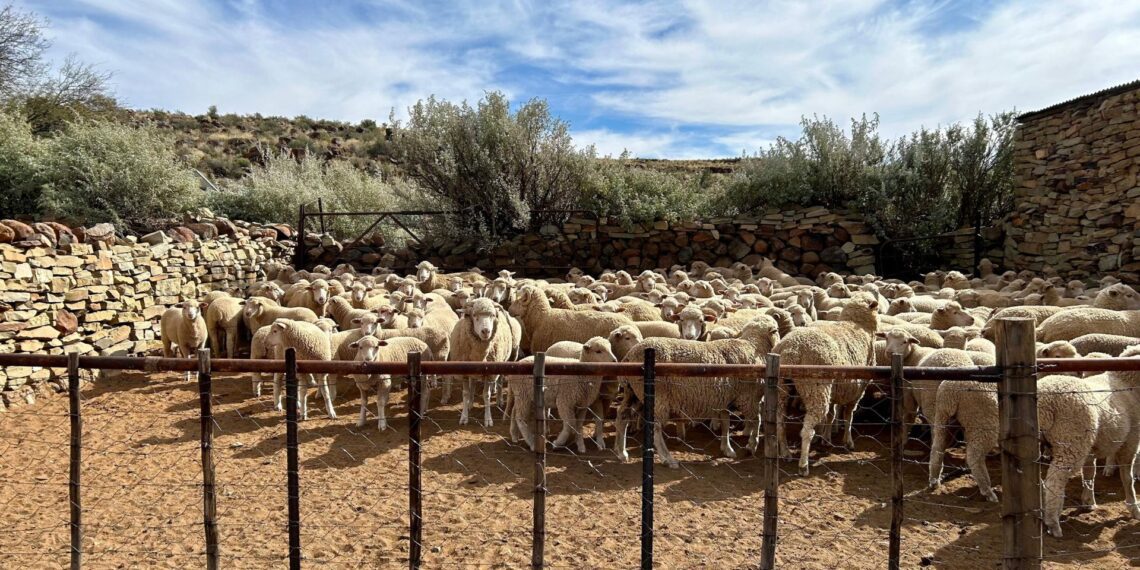
In the rugged and mountainous Drakensberg grasslands of South Africa’s Eastern Cape province, farmers rear sheep for food, cultural practices and financial security.
The steep slopes, cold winters, frost and seasonal droughts shape everyday farming life. In contrast to commercial farms with large fenced properties and hundreds of animals, families in the area’s communal villages typically own small flocks of around 10 to 50 sheep.
The animals are usually kept overnight in simple kraals (enclosures) near family homesteads, to protect them from theft, predators and harsh weather. During the day, they are herded onto communal rangelands, where households share grazing areas.
These communal grazing systems are rooted in local traditions and social arrangements. Farmers rely on natural pastures, seasonal rainfall and indigenous knowledge to manage their flocks.
But this is under pressure from climate change. Rising temperatures, prolonged droughts, erratic rainfall and extreme weather events are changing how livestock farming works in some of South Africa’s most climate-sensitive landscapes. The consequences are already visible: reduced pasture availability, more livestock diseases and increasing loss of lambs.
Related stories
- Climate change resilience: Practical strategies for farmers
- Collaboration and fighting climate change are key to quality seed
- ‘Include livestock farmers in climate change talk’
- SA’s pistachio industry targets 8% of global export market
We are a team of researchers working on climate change, livestock systems and rural livelihoods in South Africa. Recently, we set out to understand how smallholder sheep farmers in three villages – Mabua, Tothaneng and Madlangala in the Drakensberg grasslands – experience climate risks and what they are doing to adapt.
We worked directly with 89 smallholder sheep farmers, holding focus group discussions and community meetings. The farmers shared their experiences of droughts, heatwaves, livestock diseases, pasture shortages and changing weather patterns. They also discussed the ways they were adapting to climate change.
We found that climate change was already shaping everyday farming decisions.
Our findings matter because they show that climate change is already threatening the livelihoods and food security of vulnerable rural households. To protect farmers and their sheep, government departments, extension services, researchers, and development organisations need to strengthen early warning systems and provide veterinary support.
They also need to help foster climate-smart grazing practices and fund community-based adaptation programmes.
Farmers face multiple climate threats at once
The sheep farmers we worked with identified drought and heatwaves as the most severe climate hazards. Frost, heavy rainfall, floods, veld fires and storms were also frequently reported. Importantly, these hazards often occur together or in close succession. This increases pressure on livestock systems.
One farmer explained:
During drought, there is no grass, and our sheep lose weight and die.
Sheep farming in communal systems depends heavily on natural grazing resources. When grasslands deteriorate because of drought or poor rainfall patterns, the effects spread quickly through the entire production system.
Drought and harsh winters reduced the amount of grass and shrubs available. This was one of the most serious problems, affecting animal growth, reproduction and survival. One farmer from Tothaneng explained:
When the drought comes, the grass disappears and the sheep become very weak. Some die before the rains return.
Parasites, foot rot and other diseases were also linked to changing weather conditions. As one farmer in Mabua told us:
We now see more sickness after heavy rains and sudden weather changes. The sheep struggle more than before.
Many animals were kept in open kraals (enclosures with no roofs). This gave them little protection from extreme weather conditions, leading to lamb mortality, abortions and declining flock productivity. As a farmer from Madlangala said:
During cold winters and storms, the lambs suffer the most because we do not have proper shelters.
Communities are adapting – but support is uneven
Our study found that the farmers were not passive victims of climate change. They’d developed adaptive practices:
- Rotational grazing – Farmers move sheep between grazing areas to reduce pressure on overused pastures and allow grasslands time to recover.
- Veld (grassland) resting – Some grazing areas are temporarily left unused so that vegetation can regenerate, especially after drought or overgrazing.
- Finding food to supplement the sheep’s diets – During dry periods and winter months, farmers fed the sheep maize stalks and leftover crop parts.
- Crossbreeding and breed selection – Farmers bred hardy indigenous or crossbred sheep that are better able to survive harsh weather conditions and disease.
- Rehabilitation of eroded land – Community members, particularly youth groups in some villages, took part in activities to restore dongas (gullies or ravines) and restore degraded grazing areas.
- Community knowledge-sharing – Farmers regularly shared their experiences and local knowledge about weather patterns, disease outbreaks and livestock management practices.
- Indigenous weather forecasting – Many farmers rely on environmental signs, seasonal patterns and indigenous knowledge to anticipate weather changes and prepare for climate-related risks.
As one farmer explained:
We depend on experience and signs from nature to know when weather will change. For example when cattle become restless, birds fly low, winds shift direction, and clouds build up in the west.
We also found that communities with stronger social networks were better able to cope with climate stress. People shared resources, exchanged information, and supported each other during feed shortages and drought periods.
For example, in Madlangala village, the farmers had active associations to organise grazing plans, share knowledge, and respond quickly during difficult seasons.
By contrast, Tothaneng village farmers had fewer safety nets and less support when conditions became difficult. We found them to be the most vulnerable. They had limited access to agricultural extension and development programmes and fewer resources available to adapt to droughts and feed shortages.
This finding is important because it shows that vulnerability to climate change is not uniform, even among neighbouring communities in the same ecological region.
What needs to happen next
Climate adaptation in smallholder livestock systems cannot rely entirely on farmers’ coping strategies. Farmers need government departments, extension services, researchers and development organisations to help provide these things:
- early warning systems so that they can prepare for extreme weather
- extension support and veterinary services
- infrastructure such as shelters on higher grazing grounds to help sheep survive sudden cold spells, heavy rain, and heat stress
- reliable water systems such as gravity-fed troughs, spring-fed collection points, and small portable water tanks placed along grazing paths
- disease management services
Strengthening farmer organisations and supporting community-based adaptation efforts would also improve resilience.
Young people also need stronger incentives to participate in agriculture. Only this will help sustain rural livestock systems over the long term.
- This story was first published on The Conversation. Mhlangabezi Slayi and Admire Rukudzo Dzvene are researchers at the University of Fort Hare, Hlekani Muchazotida Kabiti and Shadreck Muchaku are researchers at the Walter Sisulu University, and Simbarashe Ndhleve is a researcher.
READ NEXT: New Bayer and Khula partnership to boost funding for 50 farmers