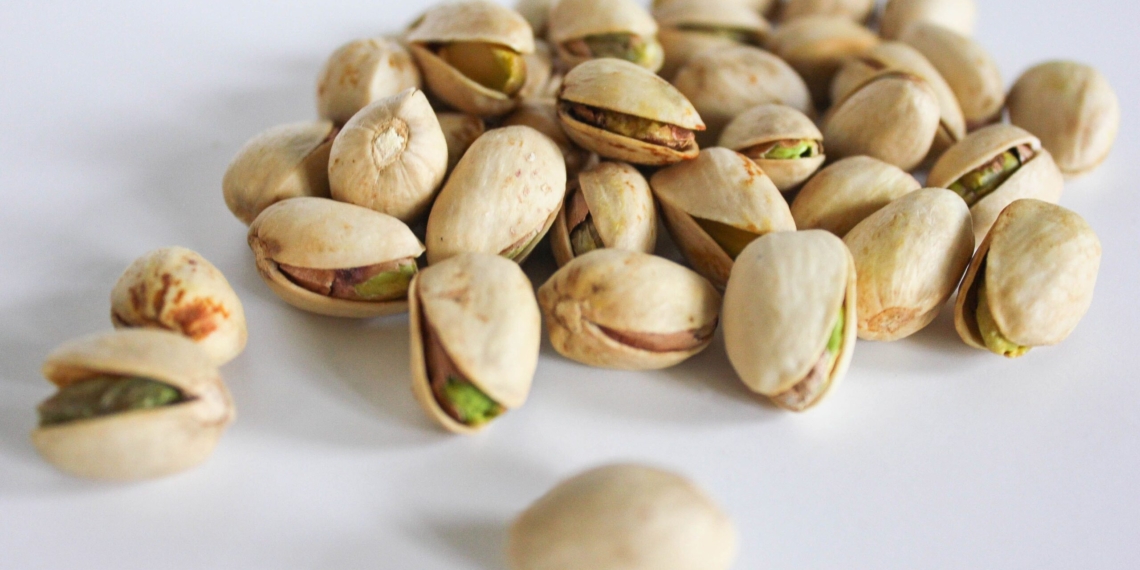
South Africa’s pistachio nut industry has entered a highly publicised expansion era, with industry stakeholders targeting up to an 8% share of the global export market.
Driven by soaring global prices and a severe Northern Hemisphere supply deficit, local ventures are moving decisively to position the semi-arid Karoo and Northern Cape regions as a major new global export hub.
According to the official production roadmap outlined by Karoo Pistachios, South African commercial ventures are moving to exploit this supply gap by aggressively scaling domestic output.
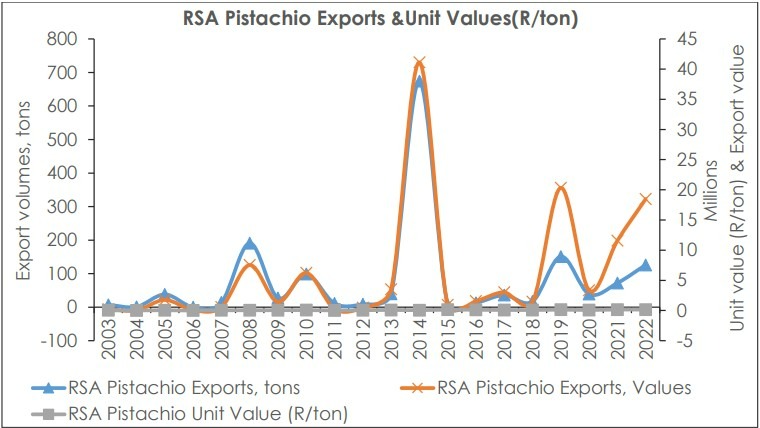
The industry is targeting an annual production of up to 60 000 metric tonnes by the end of the next decade, a massive leap from 20 metric tonnes recorded last year. This targeted boom aims to capture between 5% and 8% of the global export market share.
Related stories
- US tariff hike could crack SA macadamia exports
- Macadamia prices soar: Stronger demand fuels 2025 harvest
- Millions spent, future uncertain as EC macadamia farm fails
- Unlock the secrets to growing nutritious peanuts
A counter-seasonal goldmine along the Orange River
The report further outlined how the unique climatic conditions of the Northern Cape, particularly around the remote town of Prieska, have proven an ideal match for pistachio nuts’ notoriously rigid demands.
However, translating these ideal climate briefs into daily farm operations requires navigating distinct on-the-ground realities. Rina Coetzee, co-owner of Wercon Boerdery, a pioneering agricultural operation based in Prieska that has been cultivating the crop since 1998, told Food For Mzansi that long-term market consistency remains the key priority behind the current excitement.
“I hope the boom is going to last. But as we have had customers from the very beginning, we are not part of the boomers, and we had a small increase in price for this season,” she said.
Coetzee explained that while the market is highly lucrative, managing a successful pistachio operation requires meticulous attention to environmental factors and crop diversification.
“The challenges are the climate. Our winters are not long and cold enough. Our rainy season is also at the wrong time; we love rain, but pistachios don’t want rain then,” Coetzee said.
Adapting global expertise to local conditions
While microclimates present natural variations for individual growers, larger industry players are finding that localised research is turning those challenges into consistent results.
David Muller, chief executive of Karoo Pistachios, noted that the recent spotlight on the industry comes as no surprise, given that global production in traditional regions is increasingly constrained by water scarcity and geopolitical uncertainty.
“The biggest challenge is that pistachios are not a crop that can be grown successfully just anywhere.
“While there is an extensive body of international research available from countries such as the United States, that knowledge still needs to be adapted and translated to local Karoo conditions. What works in California does not necessarily work in Prieska.”
Despite early production hurdles that required years of careful observation and experimentation, Muller explained that the industry has crossed a technical threshold.
“The encouraging news is that we are now consistently producing good yields of exceptionally high-quality pistachios. We believe the industry has now reached a point where it is both technically proven and commercially bankable, which gives us confidence that the sector is ready for accelerated expansion.”
A high-value potential crop
Rather than wiping out traditional field crops like maize or wheat, the expansion is taking shape as a strategic, high-value addition to existing farming setups.
According to Muller, maintaining annual crops ensures steady cash flow while orchards mature, bridging a notoriously difficult non-bearing phase.
“Pistachios require significant upfront investment during the establishment phase, from land preparation and irrigation infrastructure to trees, labour and ongoing orchard management.
“This capital investment is incurred from year one, yet commercial yields and meaningful revenue typically only begin to materialise in years five to six.”
Ultimately, the long-term push for pistachios in the Karoo is being redefined not by how much land a farmer has, but by how efficiently they use water.
“In arid regions such as the Karoo, the conversation is increasingly shifting away from value per hectare and towards value per millimetre of water applied.
“Pistachios have the potential to generate significantly more value per cubic metre of water than many traditional field crops, making them an important component of a diversified, long-term profitable farming system,” Muller said.
READ NEXT: Wine summit tackles climate, trade and consumer pressures