Monday, November 23, 2026
SUBSCRIBE
22 GLOBAL MEDIA AWARDS
Food For Mzansi
  • News
  • Changemakers
  • Lifestyle
  • Farmer’s Inside Track
  • Food for Thought
No Result
View All Result
  • News
  • Changemakers
  • Lifestyle
  • Farmer’s Inside Track
  • Food for Thought
No Result
View All Result
Food For Mzansi
No Result
View All Result
in Farmers

‘Everything you need to produce is in your hands’

For Mantombi Madona farming is about much more than earning a salary. She believes she is called to help ensure that people always have food on their table. And she has great advice for unemployed agriculture graduates

by Zolani Sinxo
25th March 2022
Add FFM on Google
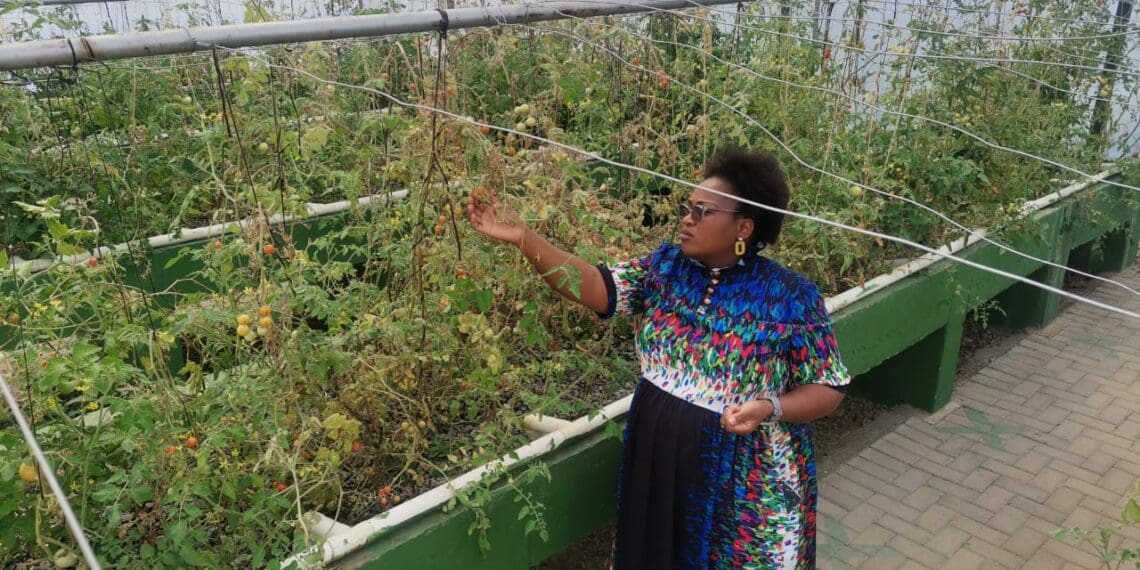
Mantombi Madona proudly follows in the footsteps of her father. Photo: Supplied/Food For Mzansi

Mantombi Madona proudly follows in the footsteps of her father. Photo: Supplied/Food For Mzansi

Share on FacebookShare on TwitterShare on WhatsApp

She was raised by a father who sold his cattle to afford his daughter the best education, and to see that she never goes to bed on an empty stomach. This is how farmer and trainer Mantombi Madona describe the man who inspired her farming journey.

Besides being a farmer in her own right, Mantom Madona is also an aquaponics trainer for a group of disabled up-and-coming farmers in the Free State. Photo: Supplied/Food For Mzansi
Farmer Mantombi Madona is also an aquaponics trainer for a group of disabled up-and-coming farmers in the Free State. Photo: Supplied/Food For Mzansi

Today, she proudly follows in his footsteps. Not only does she grow and sell pumpkins in and around Wesselsbron in the Free State, but she also leaves no stone unturned to help those in need to put bread on their tables.

“My father was a farmer,” reminisces Madona. “He sold milk on the streets to make a living. Growing up was not easy. I would watch my father sell his cattle for us to go to school. He inspired me to be where I am today. Growing up was not easy at all, but because of him we survived.”

After matriculating, Madona embarked on further studies in agriculture, but dropped out after a while to return back to the farm.

“Although I grew up on a farm, I was not that into agriculture. I think the love of it [only] started to kick in after I dropped out from college. While at home, I got a bursary to study agriculture at Glen Agricultural College in Bloemfontein. This is where I obtained my crop production diploma.”

Thereafter, Madona furthered her studies at the University of the Free State.

Passionate about agriculture development

Besides being a farmer, Madona is also an agriculture facilitator and trainer at Inmed South Africa. She works on a project that teaches disabled people about aquaponics, mentoring them to become self-sustainable farmers.

Aquaponics is an innovative and highly intensive food production technique that combines fish farming and soilless crop growing.

Madona admits that working with the disabled can be rather challenging since they need special attention and loads of patience.

“It’s very difficult, but because I love what I am doing [it] makes me have patience with them. We understand each other.

“I think the most important thing is that I get to transfer my skills to them, which is something that my father always taught me; to help others.”

Her passion for working the land goes beyond merely earning a salary, says Madona. She wants to ensure that people always have food on the table. Furthermore, aquaponics stretched her abilities as a farmer. “I didn’t do aquaponics at university, so for me it was something new. I continue to learn every day with my students, and I think this is what makes it exciting.”

She believes aquaponics is ideal for disabled people because physical labour is fairly limited.

Looking to the future

Meanwhile, Madona and her students are selling their produce to local communities.

“We are getting a lot of support from the community. They come to our project sites to buy our products and our farmers also take some veggies to cook at home. With the money we make, we are able to reinvest it in our project.”

Madona hopes to continue growing pumpkins and watermelons on her two-hectare land while expanding to other crops.

“Despite receiving heavy rainfall which destroyed my watermelons [earlier], I am not giving up. I see myself making it big one day and proving that women in this industry can also make it big,” she says.

And her advice for agriculture students who are struggling to find work?

Start planting.

“If you have studied agriculture, don’t wait and expect a job at the department of agriculture. Do something and start working for yourself because you have all the knowledge you need. Why not start farming? You have everything in your own hands, so you can produce.”

ALSO READ: Wild Coast go-getters ‘love seeing lives transformed’

Get Stories of Change: Inspirational stories from the people that feed Mzansi.

Add FFM on Google Follow FFM on Google News

Zolani Sinxo

Zolani is an award-winning journalist and holds a National Diploma and a B Tech in journalism, he is a journalist at heart with a particular interest in developmental journalism, politics, African development stories, environment, and global and national current affairs. He started to develop an interest in writing and storytelling at a young age after he co-authored a folk tales children’s book in 2005 titled Our Stories, Amabali Ethu. After graduating, Zolani worked at various government institutions where he worked in the marketing and communication departments specialising in media liaison and editorial management. His passion for developmental journalism saw him being a co-founder of a community newspaper in Stellenbosch, Umlambo News. He has also worked for the Group Editors as a journalist for the George Herald and is also the editor of Idinga community newspaper. Zolani loves books, especially on Africa’s politics, history, stories, and biographies of African leaders who have made a significate contribution to the continent’s socio-economic wellbeing.

Tags: AquaponicsFree StateVegetable farmer
A smiling bearded man walks along a rural path surrounded by a large flock of white goats.
News

Business-first mindset drives success for EC mohair farmers

by Vateka Halile
19th November 2026

In the heart of the Eastern Cape, emerging farmers are turning Karoo-grazed Angora goats into world-class mohair. Backed by the...

Read moreDetails
A farmer in a plaid shirt and cap standing in a wheat field while reviewing data and charts on a digital tablet.

You’ve collected the data. Now what?

19th November 2026
Karin Kleinbooi, executive director for inclusion and development at South Africa Wine; Berene Sauls of Tesselaarsdal Wines; Denzel Swarts of Zoetendal Vineyards; and Mahalia Kotjane of Three Quarters Wines at South Africa Wine’s Inclusive Growth Indaba 2026. Photo: Food For Mzansi

Six hard-earned lessons from black-owned wine brands

19th November 2026
A young woman crouches in a community garden, holding a green tomato to show an older man standing beside her in an apron.

Why giving farmers seedlings isn’t enough to beat the next drought

19th November 2026
Neat rows of green crops stretch across a vast field toward rolling hills under a cloudy sky.

AgriSA, IFC partner to streamline sustainable farm finance in SA

19th November 2026

AgriSA, IFC partner to streamline sustainable farm finance in SA

Six hard-earned lessons from black-owned wine brands

Value chain collaboration key to building climate-resilient farming

Agri Western Cape slams 15% agricultural water cut

How Alkelp is turning seaweed into biostimulants that deliver value on the farm

Join Food For Mzansi's WhatsApp channel for the latest updates!

JOIN NOW!
Next Post
South Africans love kotas! This hollowed out quarter loaf of bread was filled with a variety of delicious ingredients prepared by chef Siya Kobo who is featured on Homegrown Tastes South Africa, a new DStv show. Photo: Supplied/Food For Mzansi

Recipe: Chef Lorna’s kota that went to private school

THE NEW FACE OF SOUTH AFRICAN AGRICULTURE

With 21 global awards in the first six years of its existence, Food For Mzansi is much more than an agriculture publication. It is a movement, unashamedly saluting the unsung heroes of South African agriculture. We believe in the power of agriculture to promote nation building and social cohesion by telling stories that are often overlooked by broader society.

This week’s agri events: 23 – 27 November

When to plant fodder radish for better livestock feed in droughts

Private partnerships unlock millions for land reform beneficiaries

African markets offer fresh growth opportunities for SA rooibos

Supplying Joburg Market: Phumla Qwabe grows her next chapter

How Alkelp is turning seaweed into biostimulants that deliver value on the farm

  • Awards & Global Impact
  • Our Story
  • Contact Us
  • Cookie Policy
  • Privacy Policy
  • Copyright

Contact us
Office: +27 21 879 1824
News: info@foodformzansi.co.za
Advertising: sales@foodformzansi.co.za

Contact us
Office: +27 21 879 1824
News: info@foodformzansi.co.za
Advertising: sales@foodformzansi.co.za

  • Awards & Global Impact
  • Our Story
  • Contact Us
  • Cookie Policy
  • Privacy Policy
  • Copyright

Chat Options

About this assistant

This feature generates automated answers summarised from Food For Mzansi articles. By using it, you are interacting with an AI system (provided by Google), not a human. AI can make mistakes. Please refer to the source articles for verification and citation purposes.

Our staff do not check or moderate Lerato’s answers in advance, but may review some later. Our journalists continue to write and edit all the articles Lerato uses as sources.

To estimate unique and returning web users, we store a random browser ID in this browser. WhatsApp users are counted by phone number. The same person using both channels may be counted twice.

I'm Lerato, your AI assistant!
No Result
View All Result
  • News
  • Changemakers
  • Lifestyle
  • Farmer’s Inside Track
  • Food for Thought

Copyright © 2026 Food for Mzansi