While minister Thoko Didiza has made rural development her key priority for the next financial year, a number of pressing issues faced by the agricultural sector are also being dealt with by her department and stakeholders.
This is according to agriculture, land reform and rural development minister Thoko Didiza. During an exclusive interview with Food For Mzansi in Parliament, she explained why her department would place a stronger focus on the revitalisation of rural economies through agriculture. The minister also gave an update on South Africa’s vaccine shortages, the state-owned entity, Onderstepoort Biological Product (OBP), and animal disease control.
Duncan Masiwa: Minister, you have just delivered your landmark budget and policy speech in Parliament. From this moment forward, what is your top priority?
Thoko Didiza: My first priority will be rural development. Some of the lands in rural areas are being used for grazing and crops but at a very minimal scale.
We asked ourselves what would we get out of investing in rural areas. Our team of economists at the National Agricultural Marketing Council (NAMC), working with our special planning unit, looked at the scenario of using agriculture as a stimulus in revitalising these areas. In terms of both cropping and grazing, if you give input support and mechanisation, what would that result in, in economic terms?
By just turning 10% of that land, their analysis indicates to us that you can actually get about R59 billion contribution to our GDP if everything remains equal, of course.
So in our view, the revitalisation of those rural areas, anchored in agriculture will be able to contribute to the revitalisation of rural economies. If we have a deliberate focus on these areas, there are a lot of economic spin-offs that we can achieve.
Mzansi’s animal vaccine production is facing several challenges. How is this being addressed?
Fixing the [issues of] vaccine production at the Onderstepoort Biological Product is my second priority and we are looking at various areas of intervention.
Ensuring that we allow for registration of those players who are able to produce some of the vaccines will allow for production.
We have been engaging with Asfen who produces human vaccines, however, they have knowledge and capabilities of producing vaccines. They have been able to assist us technically and advise us on what are the things that we need to do to fix the engineering capacity on policy review and some of the issues that we need to deal with.
That collaboration and advisory services from Asfen have really been helpful in addressing some of the constraints.
The Agricultural Research Council (ARC) is also now able to produce, even if at a limited scale, food-and-mouth disease (FMD) vaccines. They are ramping up their production. That is important because it is going to intervene in those red-line areas so that we contain FMD instead of it spreading like in the previous years.
We have to protect our animal herd in the country, so animal vaccine production is important.
What are the weaknesses in animal disease control?
There are some weaknesses highlighted by the task team on animal disease outbreaks in the country. Some of the weaknesses don’t even need money; it is about clarifying the command and control between us and the provinces.
If you look at African Horse Sickness, some of the things that our veterinary services in provinces should be doing in terms of advocacy and enabling farmers to have the basic knowledge about animal health and how to manage that, have been found lacking. So strengthening those command and controls are very important.
Agriculture is no easy sector. What is your message to young, future farmers looking from the outside?
Agriculture, as much as it is one of the oldest sectors, continues to innovate and remains relevant in terms of its contribution to the economy but also food security.
For me, what is important is identifying a niche and a gap and appreciating that agriculture is a multi-faceted sector. So you don’t have to enter the sector by only being a farmer. You can enter the space by being a processor or getting involved in agro-logistics. So there are many points of entry.
We need agricultural engineers, mechanical engineers, bio-technologists, and more.
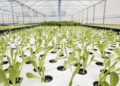
For me, building the cohort of the future, and young people seeing themselves as that future is important. My message to young people is to come to agriculture. It’s a place where you can even farm in heels, or farm without touching the soil. Haha.
READ NEXT: Grab indaba tickets before they’re gone!
Sign up for Mzansi Today: Your daily take on the news and happenings from the agriculture value chain.