Thursday, December 18, 2025
SUBSCRIBE
21 GLOBAL MEDIA AWARDS
Food For Mzansi
  • News
  • Changemakers
  • Lifestyle
  • Farmer’s Inside Track
  • Food for Thought
No Result
View All Result
  • News
  • Changemakers
  • Lifestyle
  • Farmer’s Inside Track
  • Food for Thought
No Result
View All Result
Food For Mzansi
No Result
View All Result
in News

Fake honey threatens SA beekeepers, harms agriculture

Fake honey hurts local beekeepers and threatens pollination. In a high-profile crackdown, the department of agriculture and police seized large volumes of mislabeled, fake honey from both major chains and spaza shops in the Eastern Cape

by Lisakanya Venna
18th December 2025
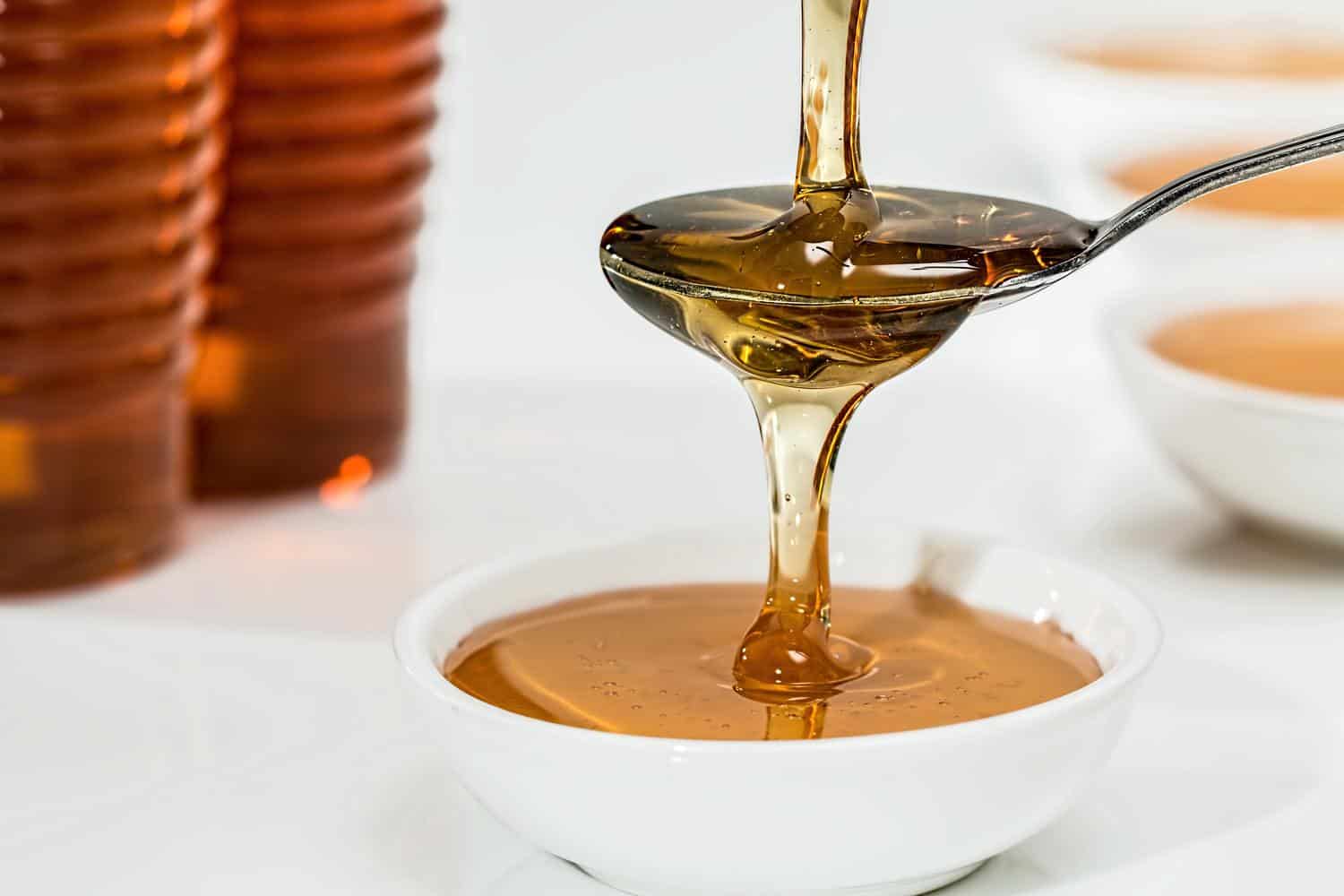
While counterfeit honey floods the market, supporting local beekeepers is key to ensuring quality and authenticity. Photo: Supplies/Food For Mzansi

While counterfeit honey floods the market, supporting local beekeepers is key to ensuring quality and authenticity. Photo: Supplies/Food For Mzansi

Share on FacebookShare on TwitterShare on WhatsApp

The agriculture department, backed by the South African Police Services (SAPS), recently raided Buffalo City Metro stores in the Eastern Cape, seizing mislabeled counterfeit honey from spaza shops to chains. Beekeepers warn that fakes undercut sales, erode trust, and threaten pollination-dependent agriculture.

The department’s social media updates on the high-profile initiative revealed checks on everything from tiny informal outlets to major chain stores, with large volumes of wrongly tagged counterfeit honey being seized.

The University of Cape Town’s research contracts and innovation noted that the demand for honey on a global scale has significantly increased in recent decades, with global honey exports doubling from 373 000 tonnes in 2004 to 751 000 tonnes in 2022.

Demand fuels counterfeit honey

This is especially true for the South African market, which has become dominated by imports, leaving local beekeepers and genuine honey producers struggling.

According to Danelene Dampies of the Dee’vine Honey brand, counterfeit honey harms the entire honey industry in several ways.

“In many South African households, honey is viewed as a luxury rather than a necessity. This means that when people see extremely cheap ‘honey’, which is often counterfeit or adulterated, they are more likely to buy it without realising it is not real honey,” Dampies explained.

She noted that genuine beekeepers experience lower sales and face unfair competition from artificially cheap, fake products.

📢 Stand Up, Be Seen, Be Counted

We want to provide you with the most valuable, relevant information possible. Please take a few minutes to complete this short, confidential survey about your farming practices and challenges. Your feedback helps us tailor our coverage to better support the future of agriculture across Mzansi.

What is your main commodity farmed?
CAPTCHA image

This helps us prevent spam, thank you.

How to spot fake honey

Dampies said authentic, locally produced honey is made naturally by bees and has a rich, complex flavour, a natural aroma, and a texture and colour that vary depending on the flowers the bees forage on, often crystallising over time as a sign of purity.

“Counterfeit honey, however, is typically diluted with sugar syrups or produced artificially, resulting in a very sweet but flat taste, little to no aroma, and an overly clear, uniform appearance that rarely crystallises,” she said.


Related stories
  • Beekeeping sector poised for growth, jobs, and sustainability
  • Pesticide poisonings devastate WC honey bees
  • MEC champions beekeeping boom in North West

Additionally, counterfeit honey is: 

  • Very low price compared to other honey products. 
  • Overly clear, uniform appearance with no natural variation.
  • Never crystallises, even after long periods.
  • Thin, runny texture that pours like syrup.
  •  Without a natural aroma or having an unusually weak scent.
  • Flat, overly sweet taste with no depth or floral notes.
  • Vaguely labelled, with terms like “blended honey,” “honey syrup”, or missing beekeeper and region information.
  • Labelled with ingredients other than honey, such as syrups or flavourings.

“What to also look at is the product of origin. If I see on the label it shows more than one country, for example, RSA/Uganda/Kenya, then I am suspicious already,” Dampies added. 

Call to buy local

According to Dawn Noemdoe, founder of HoneyatDawn, counterfeit honey hurts everyone, not just producers, but consumers, too. 

“For beekeepers like myself, it undercuts the real value of the work that goes into producing authentic honey. It makes it harder to build trust with customers and forces honest producers to compete with products that are cheaper because they’re not real. For the industry, it chips away at the integrity of South African honey, which has always been known for its purity and quality.

“Firstly, the only way to really know is to have the honey tested,” she said.

Noemdoe added that transparency is usually the first giveaway. If a product has no clear producer, no batch information, or the price feels “too good to be true,” that’s a red flag. 

“Consumers should also look at labelling, traceability, and buy directly from trusted beekeepers where possible,” she advised.

Regarding the seizure of counterfeit honey, she said that it’s encouraging to see action being taken. “It gives me some confidence that there’s recognition of how serious this issue is, especially for small producers who rely on a fair and transparent market. But it also shows that we still have a long way to go. For me, the focus remains on scaling responsibly and staying committed to quality, even while the market adjusts. 

“Every jar sold directly from a beekeeper strengthens the local industry,” she said.

READ NEXT: North West launches game-changing goat farming programme

Sign-up for the latest agricultural news delivered straight to your inbox every day with Mzansi Today!

Lisakanya Venna

Lisakanya Venna is a junior journalist and content coordinator with varied multimedia experience. As a CPUT journalism alumni, she finds fulfilment in sharing impactful stories and serving as a reliable source of information.

Tags: BeekeepingCommercialising farmerDawn Noemdoehoneyillicit tradeInform me

Related Posts

Innovation meets collaboration at Agri X Fusion 2026! This first-of-its-kind event will unite farmers, researchers, processors, and policymakers to solve key red meat challenges. Photo: Wikimedia Commons

Agri X Fusion 2026 to strengthen red meat value chain

18th December 2025
Even if you shop in bulk, being mindful of quantities during the festive season matters.
Photo: Freepik

Shop smart, support Mzansi farmers this festive season

17th December 2025

Spekboom revival: Thicket restoration creates thousands of jobs

Agbiz outlines outlook for grain and fruit industries

This week’s agri events: 15 – 19 December

Healing the land: How 11 farmers gave the Agulhas Plain new life

Citrus industry pays tribute to visionary Deon Joubert

AgriSETA honours SA’s top agricultural skills champions

Nedbank
Inspiration

Finance guru helps farmers sow seeds of growth

by Lisakanya Venna
15th December 2025

Financial management is more vital than ever for farmers battling rising costs and unpredictable weather. Desry Lesele, a chartered accountant...

Read moreDetails
Agbiz

Agbiz outlines outlook for grain and fruit industries

15th December 2025
Farmers, industry experts, and local growers are invited to explore the future of farming at the inaugural Cannabis Conference & Expo in KwaZulu-Natal. The event offers a unique opportunity to delve into innovative techniques, regulations, and economic prospects shaping the province’s cannabis and hemp industry. Photo: Supplied/Food For Mzansi

This week’s agri events: 15 – 19 December

15th December 2025
Jacobs’ festive cherry and chocolate coffee Charlotte is a showstopping holiday treat, layered with mascarpone cream, juicy cherries, and a drizzle of rich dark chocolate. Photo: Supplied/Food For Mzansi

Recipe: Festive cherry and chocolate coffee Charlotte

14th December 2025
Lindelwa Mthembu runs her business, Chef Lindy, with her daughter, Xolelwa, as her executive chef. Photo: Capsicum

Mother-and-daughter duo dish up culinary success

14th December 2025

Innovations in red meat industry: Technology shaping the future

This week’s agri events: 15 – 19 December

Agri X Fusion 2026 to strengthen red meat value chain

Citrus industry pays tribute to visionary Deon Joubert

Shop smart, support Mzansi farmers this festive season

Join Food For Mzansi's WhatsApp channel for the latest updates!

JOIN NOW!
Next Post
Michaela Pretorius shares how forward-thinking approaches are reimagining meat production from farm to table. Photo: Gareth Davies/Food For Mzansi

Innovations in red meat industry: Technology shaping the future

THE NEW FACE OF SOUTH AFRICAN AGRICULTURE

With 21 global awards in the first six years of its existence, Food For Mzansi is much more than an agriculture publication. It is a movement, unashamedly saluting the unsung heroes of South African agriculture. We believe in the power of agriculture to promote nation building and social cohesion by telling stories that are often overlooked by broader society.

Innovations in red meat industry: Technology shaping the future

Fake honey threatens SA beekeepers, harms agriculture

Agri X Fusion 2026 to strengthen red meat value chain

Go green & Greek: Recipes for the perfect summer salad

Shop smart, support Mzansi farmers this festive season

Spekboom revival: Thicket restoration creates thousands of jobs

  • Awards & Global Impact
  • Our Story
  • Contact Us
  • Cookie Policy
  • Privacy Policy
  • Copyright

Contact us
Office: +27 21 879 1824
News: info@foodformzansi.co.za
Advertising: sales@foodformzansi.co.za

Contact us
Office: +27 21 879 1824
News: info@foodformzansi.co.za
Advertising: sales@foodformzansi.co.za

  • Awards & Global Impact
  • Our Story
  • Contact Us
  • Cookie Policy
  • Privacy Policy
  • Copyright
No Result
View All Result
  • News
  • Changemakers
  • Lifestyle
  • Farmer’s Inside Track
  • Food for Thought

Copyright © 2024 Food for Mzansi

This website uses cookies. By continuing to use this website you are giving consent to cookies being used. Visit our Privacy and Cookie Policy.