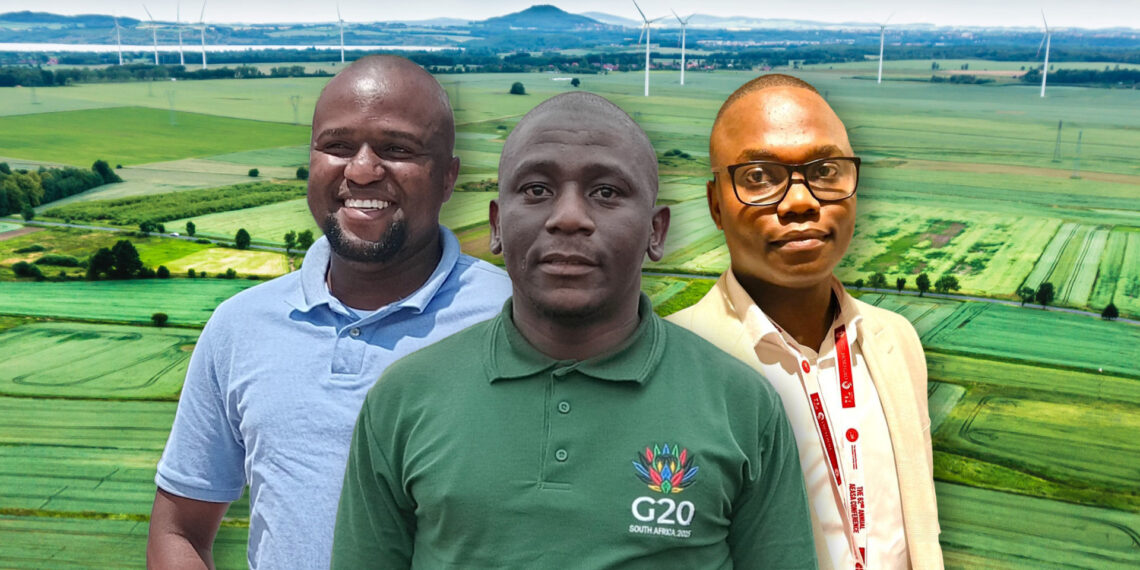
From the Free State to Gauteng, extension officers are the vital link turning smallholder farms into commercial successes. The ARC’s Dr Walter Shiba, Light Ngobeni and Trevor Morepje visited farms across Mzansi and shared that by providing technical expertise and market access, these officers help farmers thrive despite systemic challenges.
Agriculture remains the backbone of South Africa’s rural economy, yet many land reform beneficiaries struggle to transition from subsistence to commercial farming. The missing link? Effective extension services.
With fewer than 3 000 extension officers serving over 2.3 million smallholder farmers, these professionals are the backbone of agricultural transformation. They provide technical advice, market linkages, and access to resources, bridging the gap between policy and practice. Mantombi Mbongo, deputy manager of the Lejweleputswa District, linked us to extension officers in Welkom and Sasolburg.
Across South Africa, extension officers have played a pivotal role in turning challenges into opportunities for growth. In the Free State, Uitkyk Farm in Wesselsbron illustrates how even experienced farmers need ongoing support.
Bridging the gap
Despite decades of farming experience, the owners faced outdated machinery and volatile commodity prices. Extension officer Matthews Mohoang connected them to government programmes like CASP and PLAS and facilitated market linkages through Grain SA and SAFEX.
The second farm we visited was Erfpag (DEE-Y Dairy), where the responsible extension officer is Puleng Mokitimi. Erfpag Farm, leased by Disebo Makatsa under the PLAS programme, spans 386 hectares and focuses on dairy and vegetable production.

Picture taken during a farm visit in Welkom. Photo: Supplied/Food For Mzansi
Despite strong family involvement and institutional support, the farm faces challenges such as low milk yields due to inadequate feed, limited mechanisation, and structural issues in the milking parlour.
Strengths include diversified production, formal and informal market linkages (Tip Top and Boxer Supermarket), and training in business management and feed handling. Lessons learned highlight the need for sustained investment, modern technology, and technical oversight to transform progressive smallholder enterprises into commercially viable businesses.
Related stories
- Extension officers: Farmers’ lifeline, but they need support too
- Agricultural extension services must evolve or be left behind
- More resources, empowerment needed for extension officers
- Farm extension services key to inclusive agricultural success
The key to unlocking land reform potential
Similarly, Nooitgedacht Farm demonstrates the transformative power of extension services. With guidance from Thabiso Masekoa, Happy Letsitsa accessed mechanisation support, training, and blended finance, enabling him to adopt precision agriculture and implement an innovative equity-share model for employees.
Furthermore, in Ventersburg, Doorndraai Farm, supported by extension officer Samuel Matlale, showcases how institutional backing and family involvement drive success. Managed by Tracy, the 526-hectare farm operates primarily as a livestock enterprise.
DALRRD funding enabled the purchase of pregnant heifers, fencing, and mobile infrastructure, while Sernick provided training and boreholes. Despite strong market access and a clear growth vision, challenges include the absence of a title deed, environmental risks like veld fires and flooding, and incomplete funding packages.
Key lessons emphasise the importance of holistic support, education, and relationship-building for sustainability.
The Mooilaagte Farm, led by a determined woman near Deneysville, overcame challenges of poor crop quality due to climate change and a lack of proper mechanisation. Restrictive lease agreement terms from the department of land reform and rural development (DLRRD), not allowing farmers to take blended finance loans while on recap finance, as well as delays in lease agreement and incomplete funding packages, remain barriers to growth.
This leads to farmers being left with minimal options to sustain their farming activities. However, through extension and advisory services, training, and different departmental funding facilitated by extension officer Siphokazi Simama through the department of agricultural and rural development (DARD). Mooilaagte, Excelsior and Slangheuwel farms have benefited from funding and technical training.
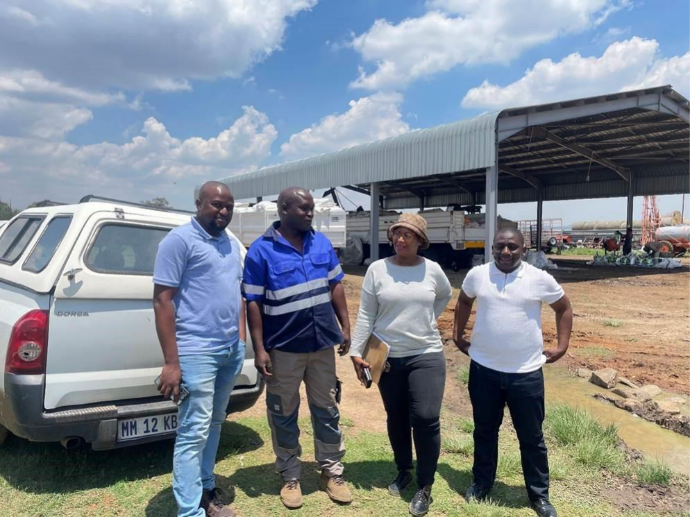
Pictures taken during the farm visit in Welkom and Sasolburg. Photo: Supplied/Food For Mzansi
In Gauteng, extension officers have been equally instrumental. Bakwa-Hlabedi Farm showcases how passion and generational transition can drive success when supported by targeted capital investment and formal market access. Extension officer Paseka Motshetshe helped secure resources that enabled the farm to expand maize and soya production and build a Bonsmara herd.
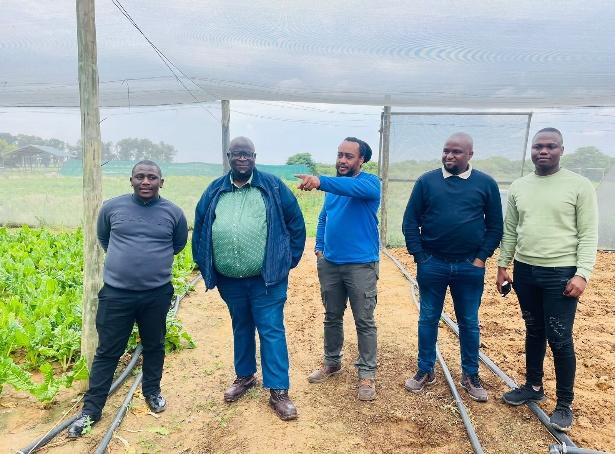
Pictures taken during the farm visit in Welkom and Sasolburg. Photo: Supplied/Food For Mzansi
Kwaso-Mnandi Farming, under the guidance of Bulelani Manyakanyaka, stands out as a high-performing, diversified enterprise with secure markets and strong succession planning.
Tamuluka Farm tells a story of resilience and determination, where intergenerational knowledge and adaptive strategies sustain operations despite climate shocks and capital constraints.
Kings Farmers Agric Co-Op demonstrates the power of diversification, combining livestock and vegetable production to stabilise income and spread risk, though growth is limited by a lack of expansion capital.
These cases reveal a common truth: extension officers are strategic enablers of success. They provide technical expertise in crop and livestock management, facilitate market access, unlock resources for mechanisation and training, and advocate for policy reforms to address systemic challenges like restrictive leases.

Picture taken during a farm visit in Midvaal, Gauteng. Photo: Supplied/Food For Mzansi
To fully realise the potential of South Africa’s land reform programme, investment in extension services must be prioritised. Policymakers should expand extension capacity, integrate digital tools, reform lease agreements to enable financing, and provide holistic funding packages.
Farmers, in turn, should engage actively with extension officers, diversify enterprises to spread risk, and adopt precision agriculture and digital solutions.
Why do extension officers matter?
These cases show that extension officers are strategic enablers of success. They:
- Provide technical expertise in crop and livestock management.
- Facilitate market access and secure buyer relationships.
- Unlock resources and training for mechanisation and financial literacy.
- Advocate for policy reforms to address systemic challenges like restrictive leases.
- Promote sustainable practices.
- Data collection and reporting to improve the standards and the image of extension
- Linkage between research and the farming communities to improve productivity, practices and livelihoods.
Actionable recommendations
For policymakers:
- Expand extension capacity and digital tools.
- Reform lease agreements to enable financing.
- Provide holistic funding packages, not fragmented support.
For farmers:
- Engage actively with extension officers.
- Diversify enterprises to spread risk.
- Adopt precision agriculture and digital solutions.
Conclusion
Extension officers are the gateway to farmers’ success. Strengthening collaboration between farmers, government, and private stakeholders will unlock the full potential of land reform farms, transforming them from survival mode to thriving commercial enterprises.
- Dr Walter Shiba, Light Ngobeni and Trevor Morepje are from the Agricultural Research Council (ARC). The views and opinions expressed in this article are those of the authors and do not necessarily reflect the views or positions of Food For Mzansi.
READ NEXT: SA farmers reflect on 2025: From floods to favourable profits