Since the decriminalisation of cannabis in 2019, South Africa’s cannabis industry has rapidly evolved, creating lucrative opportunities for farmers. Stuart Spooner, director at The Lamphouse, highlights how advanced technologies like energy-efficient LED lighting from Fluence are revolutionising indoor cultivation.
The cannabis industry is rapidly becoming a major player in South Africa’s horticultural landscape, opening up exciting opportunities for local farmers. Since the decriminalisation of cannabis in 2019, interest in cultivating cannabis for medicinal purposes has skyrocketed, with over 100 medical cannabis licenses now granted.
According to Stuart Spooner, director at The Lamphouse, the exclusive South African distributor of Fluence horticultural lighting products in the country, this regulatory shift signals a promising future.

Spooner believes the industry is on a positive trajectory despite some delays in regulation, adding that one of the most significant trends in cannabis cultivation is the shift towards controlled environment agriculture (CEA).
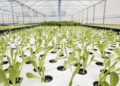
This is where farmers manage every aspect of the growth cycle to maximise output. This move to climate-controlled indoor spaces or high-tech greenhouses allows growers to control factors like temperature, humidity, light, and water availability – all crucial for consistent, high-quality crops.
“In South Africa, we’re seeing a substantial push towards CEA. For cannabis, it’s essential for meeting export quality standards, especially since the industry’s focus here is largely on the medical export market,” says Spooner.
Controlled environments offer several advantages, especially when compared to outdoor farming. With unpredictable weather becoming the norm, indoor facilities shield plants from adverse conditions such as drought, excessive rainfall, and temperature extremes.
In an indoor or greenhouse setup, Spooner explains, farmers can “manipulate crop cycles”, enabling up to six harvests per year as opposed to one or two in an outdoor setting. This boost in production frequency allows farmers to meet demand consistently, a significant advantage in a competitive market.
Precision in environmental control
Indoor cannabis cultivation’s strength lies in the ability to precisely regulate environmental factors, leading to consistent, high-quality yields. By controlling humidity and temperature, for instance, growers can avoid the spread of mould and pests, common threats in outdoor farming.
Additionally, managing light exposure is critical. “Lighting is one of the five most important elements in indoor farming,” Spooner explains, “because it directly influences photosynthesis and the plant’s growth rate.”
Fluence’s LED lighting solutions play a crucial role in this controlled setup. Not only do they provide the optimal light spectrum for cannabis plants, but they also run at a lower wattage, reducing both energy consumption and heat output.
This energy efficiency is particularly important in South Africa, where power shortages and high energy costs are ongoing concerns.
“With our LED lights, farmers can use up to 40% less energy than traditional high-pressure sodium (HPS) lights, which is a considerable reduction given that lighting can make up 30-40% of a facility’s total energy use,” says Spooner.
Lower heat output is another advantage of LED lighting, reducing the burden on climate control systems such as HVAC units and wet walls. By producing less radiant heat, LED lights allow these systems to focus on maintaining optimal growth conditions without having to counteract the excess heat generated by traditional lights.
This efficiency contributes to a more stable and manageable environment for cannabis cultivation.

Why cannabis farmers should embrace LED lighting
For cannabis farmers, the right lighting can significantly impact yield and quality. Spooner highlights the importance of spectrum choice, explaining that the correct spectrum can enhance both the appearance and chemical composition of cannabis flowers.
“Fluence’s research into light spectrum has demonstrated that while all plants need light, cannabis responds especially well to a precise balance of spectrum and intensity,” he notes.
Fluence’s LEDs are designed to provide that balance, optimising terpene and cannabinoid profiles, which are crucial for medicinal cannabis quality.
Related stories
Spectrum flexibility is also key, as different cannabis strains, or cultivars, have varied light needs. With LED technology, it’s possible to tailor light levels to suit each stage of growth.
“We’ve seen success with broader spectrums that work well across multiple cultivars, reducing the need for constant adjustments,” Spooner says.
This adaptability is essential for commercial setups, where changing the spectrum for each cultivar would be impractical.
Additionally, LED lights enable farmers to experiment with higher light intensities. Extensive work by the Fluence research team has shown that a 1% increase in light can lead to a 1% increase in yield.
Stuart Spooner
With LED technology, growers can safely push this limit without excessive heat, achieving intensities up to 1,500 micromoles per square metre, enhancing yield while preserving energy efficiency. This approach allows farmers to explore new productivity heights, paving the way for the cannabis industry’s growth potential.
Addressing energy and sustainability challenges
In an era of frequent load shedding, the South African cannabis industry faces unique challenges. Indoor farming requires considerable energy, and power disruptions can be detrimental to crop cycles.
Using energy-efficient LED lighting, however, mitigates some of these issues. Spooner points out, “LEDs are simply more logical in terms of energy usage – they help offset the high costs associated with indoor cannabis production and lessen the strain on South Africa’s already burdened energy grid.”
Fluence’s lighting systems not only consume less energy but also support environmental sustainability by producing a lower carbon footprint compared to traditional lighting.
With South Africa’s growing emphasis on sustainable agricultural practices, the cannabis industry is positioned as a model of efficiency and resource-conscious cultivation.

Future prospects for the South African cannabis market
As the cannabis sector grows, it presents a valuable diversification opportunity for South African farmers. With demand for high-quality medicinal cannabis on the rise, particularly in export markets, local producers can tap into a profitable niche.
Additionally, the controlled environment technology used in cannabis cultivation can be applied to other crops, offering farmers a year-round production solution that could alleviate some of the impacts of climate change and water scarcity.
However, there are barriers to entry. Setting up an indoor cannabis facility requires substantial initial investment, and regulatory compliance adds another layer of complexity. Despite these hurdles, the potential rewards are considerable.
Controlled environment agriculture can generate year-round income streams, and by capitalising on international demand for medicinal cannabis, South African farmers have an opportunity to become significant players in the global market.
The cannabis industry’s growth has encouraged technological advancement across horticulture, particularly in lighting and climate control. Spooner believes that with continued investment in innovation and an adaptable approach, South Africa’s cannabis sector could become a global leader.
“We’re already seeing world-class facilities emerge, driven by scientific research and advanced technology. With time, our local industry will be able to match and compete with the best in the world.”

A bright future for controlled cannabis cultivation
South Africa’s cannabis industry holds great promise, but success hinges on adopting the right technology and adapting to new market dynamics.
With controlled environment agriculture, South African farmers can secure consistent, high-quality cannabis yields that meet global standards. Energy-efficient LED lighting, like that provided by Fluence, offers an effective way to balance the challenges of indoor cultivation, reducing both energy consumption and environmental impact.
As the cannabis industry matures, it could become a major economic contributor, transforming South Africa’s agricultural landscape and offering a viable diversification path for farmers. Spooner says, “The industry is expanding, and we’re moving in the right direction.”
By embracing new technologies and staying responsive to market trends, South African cannabis cultivators are well-positioned to harness the full potential of this rapidly evolving industry.
READ NEXT: Brink and Magida take top honours at 2024 AWSA Awards
Sign up for Mzansi Today: Your daily take on the news and happenings from the agriculture value chain