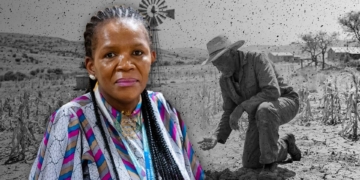
The months of January and February have seen two extreme types of weather conditions South African farmers have had to contend with. It has been either too hot because of heat waves or too cold with heavy rain because of cold fronts moving into the country.
The South African Weather Service (SAWS) announced that the heavy rains from last week would continue for the rest of this week, worsening the already flooded conditions in some parts of KwaZulu-Natal, Mpumalanga and Limpopo.
Farmers are advised to brace themselves for a wet few days but they can also prepare for the worst-case scenario. Food For Mzansi spoke to a few farmers who shared their previous flooding experiences and how they managed to recover afterwards.
No longer a crop farmer
KZN farmer Gugulethu Mthembu used to be both a livestock and crop farmer, but South Africa’s summer rains were the reason for her change to livestock farming. She explained that when the heavy rains hit at the end of last year, January and the beginning of February, life changed.
“Three of our bridges were washed away and we couldn’t access our tractors and implements,” she said, “We stopped planting last year.”
“We have livestock as well and we’re focusing mainly on it because our tractors are no longer working.”
Mthembu said because of the heavy rains and flooding last year, she’s had to reach out to the department of agriculture who visited her farm after the rains stopped. They promised to assist with fixing her bridges and compensating her for her broken tractors.
“We had the first bridge fixed last year in December. They promised to fix it two months after the incident, but they only came in December. The second bridge and implements are still not finished,” she said.
She told Food For Mzansi that the only way of surviving was her change to livestock. Her 60-ha farm was ordinally divided between crops and livestock and 20ha was given to her animals.
“One has to adjust,” she said, “What helped me was having both businesses at the same time. If I wasn’t like this, I would have had to shut the farm down and got rid of the workers.”
Repairing damages is expensive
Meanwhile, a KZN farmer who has requested to keep his identity hidden, told Food For Mzansi that when flooding happens, his biggest and most expensive challenge is the damage to his dam walls. He explained that two of his dam walls broke in the last two rainy seasons and he has not been able to pay for the damage.
“The water comes down too fast and then the wall breaks. Rebuilding a dam wall cost me R 140 000, and I have not been able to fix the second wall.”
“We’re about to enter the winter season and it’s going to be the dry season. If the dam wall is not fixed by then, then there will be no water in the farm,” he said.
Possible ways to recover
The recovery process might be difficult, long and expensive, but we have researched tips and tricks to recover from heavy rain and flooding for both livestock and crop farmers:
- Assess the damage: The first step in recovering from flooding is to assess the damage to crops, livestock, and infrastructure. This will help farmers determine the extent of the damage and the resources needed to recover.
- Clean-up: Once the damage has been assessed, farmers should start the clean-up process as soon as possible. This may involve removing debris, repairing damaged structures, and disinfecting affected areas to prevent the spread of disease.
- Replant crops: If crops were destroyed by the flood, farmers should replant as soon as the soil has dried out enough to allow for proper planting. In some cases, farmers may be able to plant cover crops to help prevent soil erosion and improve soil health.
- Reestablish livestock operations: If livestock were affected by the flood, farmers should focus on re-establishing their operations as soon as possible. This may involve relocating animals to higher ground, providing clean drinking water, and providing feed and medical care to animals that have been affected.
- Seek financial assistance: Many farmers may be eligible for financial assistance to help recover from the damages caused by the flood. This may include government programmes, insurance payouts, or disaster relief from non-profit organisations.
- Plan for the future: After the immediate aftermath of the flood, farmers should start thinking about how to prevent future damage from flooding. This may involve investing in flood-proof infrastructure, improving drainage systems, and planting crops that are better suited to handle flooding.
ALSO READ: Farmers share tricks to overcome load shedding
Sign up for Mzansi Today: Your daily take on the news and happenings from the agriculture value chain.