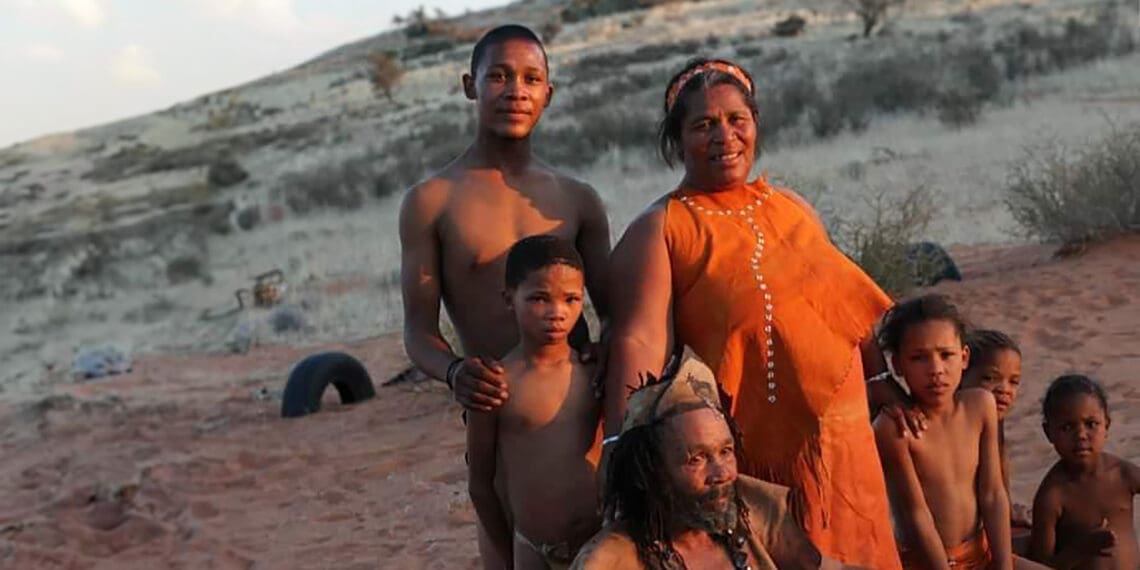
Land reform remains one of the biggest tasks the South African government has on their hands to enhance social cohesion and accelerate land ownership. In one of a few good land claims stories, following years of back and forth, the Khomani San inhabitants in Kgalagadi in the Northern Cape received their land.
This shows how collaboration, concise planning, and visionary leadership came into play, where the land will now be used to better the lives of the community.
Community comes first
Dirk Pienaar, the tourism and conservation officer of the Khomani San community in the Kgalagadi Transfrontier Park, said there was a need for different stakeholders to work in uniformity to ensure that indigenous landowners can yield the benefits of their land.
The Khomani San community are in the Kgalakgadi Transfrontier Park and surrounds, and owns 45 000 hectares of land within the park and six farms south of the park totalling about 370 000 hectares.
“While balancing community and conservation interests may seem extremely challenging, we have found that it’s crucial to involved entities that understand how to navigate these relationships to meet the needs of all stakeholders, and this is an important lesson to the restitution process.
“We have been able to reap some benefits from our land and to be able to speak out about how we want things to run on our land, has been truly liberating for our people,” Pienaar said.
Land steeped in culture
According to Pienaar, there is a need to ensure that communities benefit more in leadership and management roles on the businesses that they set up through partnerships on their land. This is one area that the community is working on improving.
Pienaar added that the community has also benefitted from various skill development initiatives and training to equip them with the skills they need to become employable in Khomani San-owned facilities and other external facilities.
“Our community is known for our close interactions with nature and being traditional healers who use medicinal plants, so access to the park is vital.
“In addition, we can commercialise our culture on our terms. We decide what we want to commercialise and what parts of our traditions we don’t want to share with tourists, and this is truly what the restitution process should be about,” he added.
READ NEXT: Land reform: Why post-settlement support is key
Post-settlement support
Meanwhile, the Vumelana Advisory Fund a non-profit organisation that facilitates partnerships between land reform beneficiaries and private partners, played a key role in ensuring that the post-settlement agreement with SANParks, the conservation custodian of the land, was implemented fairly.
The post-settlement support that the Vumelana Advisory Fund provided for the community is but one of the many interventions the organisation has undertaken to facilitate sustainable partnerships between claimant communities and private sector investors to drive the productive use of land and ensure the long-term financial viability of the land enterprise.
“As part of this partnership, the Khomani San community, working together with SANParks is currently developing a 28-bed lodge, named after the late David Kruiper, one of the leaders who were instrumental in the community’s land claim,” Pienaar said.
The community anticipates that the David Kruiper Lodge will play an important role in revitalising the local economies and supporting emerging businesses in a desolate area that is far removed from mainstream economic opportunities.
ALSO READ: ICYMI: Gloves are off as govt, farmer clash over land reform
Sign up for Mzansi Today: Your daily take on the news and happenings from the agriculture value chain