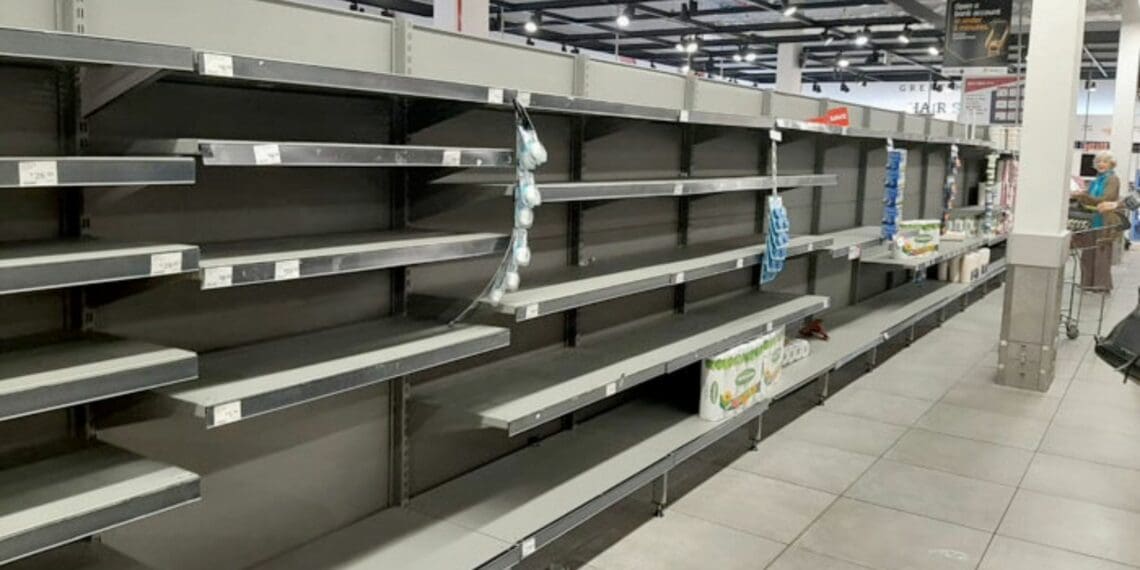
Amid widespread concern that South Africa could soon be confronted with a food insecurity crisis, agricultural economists say South Africans have nothing to worry about. But while the country’s challenges are not that of insecurity, affordability remains a major problem.
According to Sifiso Ntombela, a senior agricultural economist at the National Agricultural Marketing Council (NAMC), production in the country has doubled in volume and size in the past 18 years. The sector has also grown by 25% in the past three years, he said.
Food security, Ntombela explained, comprises four elements: availability, nutrition, affordability, and access. By the look of things, South Africa is struggling with affordability issues, while access has also been compromised by persistent load shedding, he said.
“What remains a challenge is the affordability of food in the country which is a function of weak economic growth and high unemployment, as people can’t afford to buy food,” Ntombela explained.
According to him, dwindling roads connecting farms to markets are part of the structural constraints that could affect South Africa’s food security status. This could also lead to waste on farms.
High production costs at risk
High diesel and electricity costs also compound the challenge of farmers, which leads to some farmers scaling down their production.
“It is important to note SA has the capability and means to produce sufficient food, but the affordability is a challenge due to issues such as high diesel and electricity prices costs.
“As well as the fact that SA food prices are affected by global factors like the geopolitics between Russia and Ukraine, and weather conditions in some parts of America and Europe,” said Ntombela.
Building the country’s capability to produce fertiliser to reduce production costs and promote local production and value addition, could improve matters.
What leads to shortages?
Meanwhile, agricultural economist Willem van Jaarsveld said food security means that a country has sufficient foodstuffs available for households.
To have sufficient food available, there needs to be a demand and consumers must have spending capacity.
“Thus, we see two major pillars food security rest upon: availability and purchasing power. If one or both pillars are shaky, food insecurity must be considered. In South Africa, we are seeing a deterioration in purchasing power.
“Unemployment, cost of energy, and rising consumer prices due to a weakening rand, linked with higher interest levels, all work together to weaken consumer buying power,” he explained.
“Although we do not experience a lack of supply, the consumers’ ability to buy it, is a growing concern. Therefore, we must consider the reality of food insecurity in our country,” he said.
Risks that lead to availability
These are possible threats to availability in a country:
- Politics imposing instability and insecurity amongst farmers in the country.
- World trends pushing global agendas to limit agricultural production.
- Instability in energy availability.
- Rising unemployment.
- Increasing levels of crime.
- General deterioration of our social economic structures.
According to Van Jaarsveld, when the above is considered, solving a potential food security crisis is possible.
The role of load shedding
KwaZulu-Natal goat farmer Mpendulo Mbatha agreed that South Africa has enough food and world-class agricultural infrastructure. However, external shocks posed a threat.
“As much as we have the potential to be a self-sustainable country, there is a huge struggle due to influencing socio-economic problems. One in five people do not have access to basic food,” said Mbatha.
“Due to huge measures of dependence in the population, the high cost towards accessing resources, and limited support for local small-scale farmers, there is not much to sustain the whole country.”
Signs of food insecurity
Grain SA senior economist Corne Louw told Food For Mzansi that South Africa is showing signs of food insecurity.
“For most of our grain commodities, we are food secure, and it is only wheat where we would work hard to meet our demand. For the rest of the grain and oilseed crops, we are self-sufficient,” Louw said.
“If load shedding continues and we experience ineffectiveness, then we can easily become food insecure like the rest of Africa.”
READ NEXT: Water regulations garner mixed agri response
Sign up for Mzansi Today: Your daily take on the news and happenings from the agriculture value chain.