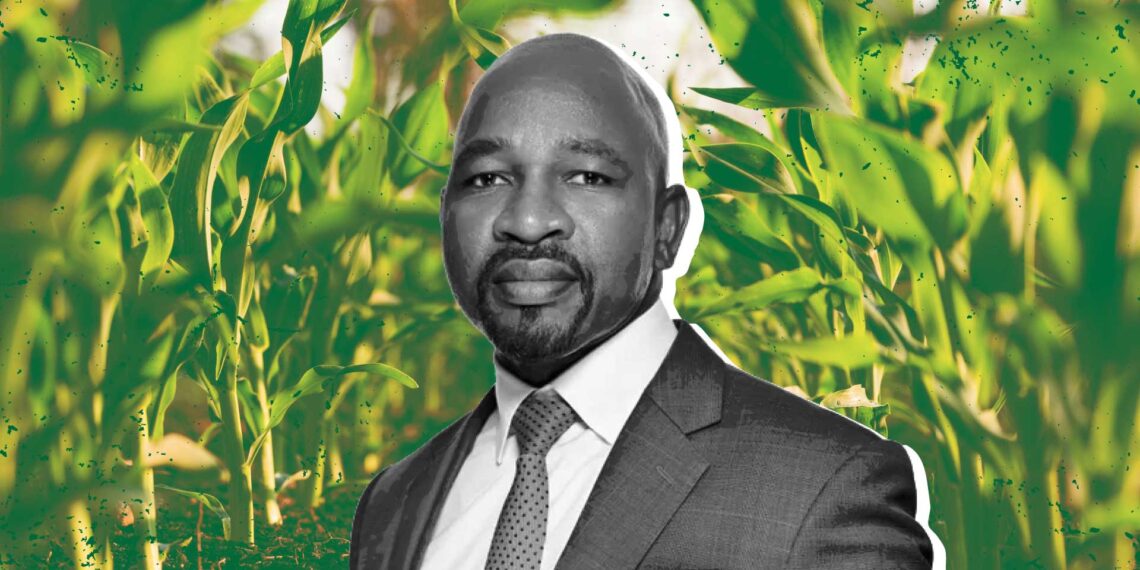
This evening, Land Bank confirmed the resignation of its chief executive officer, Themba Rikhotso – widely regarded as the man who pulled South Africa’s troubled agricultural lender back from the brink.
Food For Mzansi has learned from three reliable sources that Rikhotso will be joining one of South Africa’s major commercial banks in a senior role, continuing a career that spans more than 25 years in financial services.
Known for his sharp executive management skills, Rikhotso brings extensive experience in retail and corporate banking, as well as in funding agricultural projects across the continent. His previous roles include executive head of sales, transaction banking and investment banking at Standard Bank, and head of transactional banking at CFC Stanbic Bank in Kenya.
Rikhotso joined Land Bank in April 2023, stepping into a CEO role at a moment of crisis. The bank was still reeling from a four-year debt default, with lending frozen and confidence among farmers and financiers badly shaken.
By September 2024, under Rikhotso’s leadership, Land Bank had officially emerged from default. Its total debt was slashed from around R45 billion to roughly R16 billion – a feat few thought possible.
Central to the turnaround was the “liability solution”, a restructuring plan that cured the default, reset relations with lenders, and introduced a repayment schedule running through to March 2028. Immediate capital reductions of R4 billion were implemented, with the remainder restructured over four years.
From crisis to stability
Rikhotso’s approach went beyond spreadsheets. More than 60% of the bank’s debt was cut through a mix of asset sales, loan book reductions, and government support. With its finances stabilised, the bank resumed limited lending in October 2022 via a blended finance scheme with the department of agriculture.
This move was designed to restore its relevance to farmers, especially emerging producers.
The turnaround was paired with a strategic reset. The bank is shifting from a primarily commercial lender to a development finance institution, aiming to rebuild market share from 12% to at least 20% while deepening its developmental impact across agriculture. The recovery has been structured in three phases: stabilisation (2023–2024), consolidation (2025–2027), and growth (2028 onwards), including a diversified funding model and expanded developmental outcomes.
Challenges, however, remain. Land Bank last year faced criticism over aggressive debt recovery practices. National Treasury has imposed stricter governance rules and tighter debt covenants to prevent future crises.
Still, by the time Rikhotso announced his resignation, Land Bank was no longer a lender in freefall. It was lending again, stabilised, and slowly regaining the trust of a sector that had been on edge for years.In a statement released late on Friday evening, Land Bank confirmed that Rikhotso will remain in his role until April 2026, giving the bank time to ensure a smooth leadership transition.
“On behalf of the board, we extend our sincere appreciation to Mr Rikhotso for his commitment, leadership, and valuable contribution during his tenure at Land Bank. We take this opportunity to wish him every success in his future endeavours,” said Mcebisi Skwatsha, chairperson of Land Bank’s board of directors.
Land Bank Board says it remains committed to keeping its strategic objectives on track. Plans are underway to ensure leadership continuity and organisational stability, with details on interim arrangements and future executive appointments to be announced in due course.
READ NEXT: Provinces battle it out as #FFMIndaba26 countdown heats up