Saturday, July 25, 2026
SUBSCRIBE
22 GLOBAL MEDIA AWARDS
Food For Mzansi
  • News
  • Changemakers
  • Lifestyle
  • Farmer’s Inside Track
  • Food for Thought
No Result
View All Result
  • News
  • Changemakers
  • Lifestyle
  • Farmer’s Inside Track
  • Food for Thought
No Result
View All Result
Food For Mzansi
No Result
View All Result
in Inspiration

Trading law for livestock: Mtshali finds freedom in pig farming

What happens when a young entrepreneur applies business logic to traditional farming? Sinqobile Mtshali found out by launching Mtshali Livestock Butchery. Despite early struggles with feed management and infrastructure, his commitment to learning has turned a small piggery into a growing business

by Vateka Halile
6th February 2026
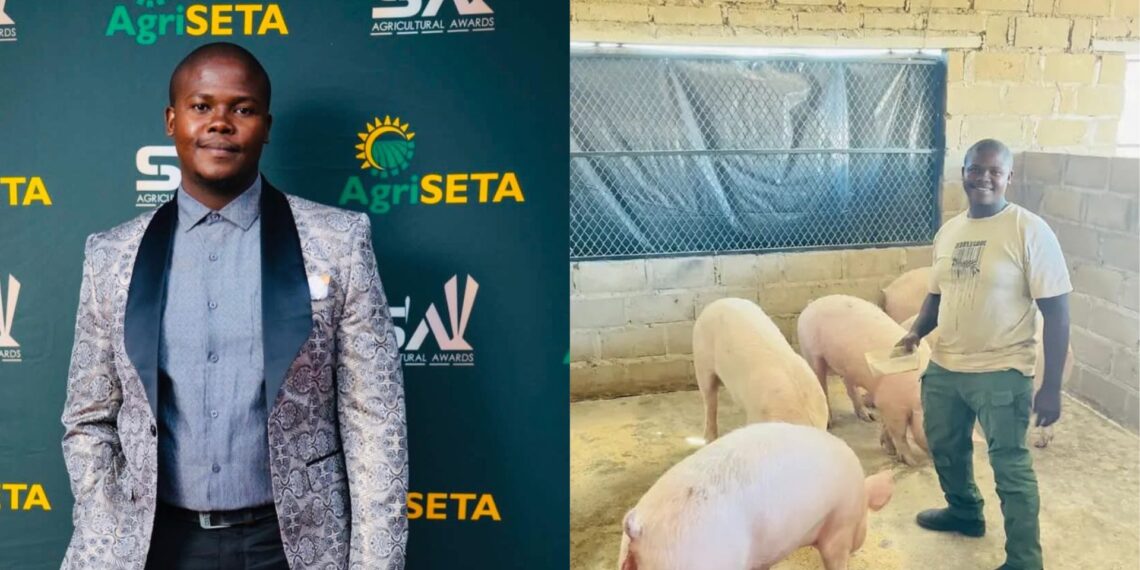
Armed with a degree in business law and management, Sinqobile Mtshali found his calling in pig farming. Photos: Supplied/Food For Mzansi

Armed with a degree in business law and management, Sinqobile Mtshali found his calling in pig farming. Photos: Supplied/Food For Mzansi

Share on FacebookShare on TwitterShare on WhatsApp

Moving around with his family taught Sinqobile Mtshali more than just new places and people. It also gave him skills he uses in adulthood, and now helps him as a pig farmer. 

Mtshali loves raising animals, being independent, and building himself into the young businessman he always wanted to be.

Although his father influenced his interest in business, he still wasn’t sure which direction to take. 

He started his degree in business law and management at the Durban University of Technology in 2019. His studies helped give him direction, and that is when he realised that farming could be his entry point. 

Answering the call of farming

By his honours year in 2023, he started looking closely at business ideas that did not need a lot of capital and that he could relate to. Farming kept coming up. It was familiar to him because he grew up around it. 

With a better understanding of how business works, he could now see how to turn farming into something sustainable.

“I always loved farming. I was encouraged to start, and I began watching videos on Facebook. That is where my interest in animal farming really grew,” he says.

In 2024, he started Mtshali Livestock Butchery, focusing on Large White and Duroc pigs. “Pigs grow fast, and that helps when it comes to profits,” he explains. 

He started with R14 000, which he used to buy livestock and build a basic piggery structure. He says he was fortunate to find a former pig farmer who was closing down and selling livestock. That is how he managed to start with pregnant sows and one Large White boar.
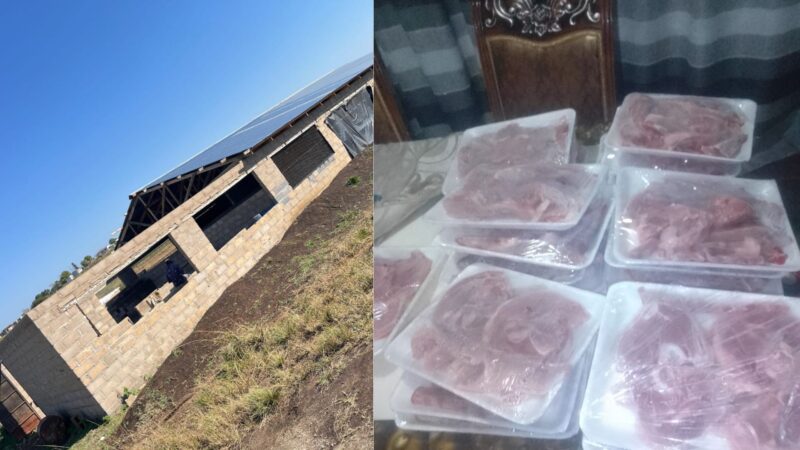
Sinqobile Mtshali says building a piggery is costly and requires learning many aspects before it can be properly maintained. Photos: Supplied/Food For Mzansi

“At the beginning, things were not good. I struggled with feed management, and I did not understand the theory behind pig farming,” he admits.

He believed he could learn everything on the ground, but quickly realised that structure and knowledge were important.

“Now things are better. My management and maintenance have improved. I understand the importance of organising feed on time and watching out for diseases.”

Sinqobile Mtshali

Currently, he has about 15 pigs, including seven piglets, three sows, one boar, and six crossbreeds, a mix of Hemingburg and Duroc.

Diversification keeps the business afloat

Mtshali says he decided to take a chance and add vegetable trading as part of his niche, working as a street vendor alongside his piggery business. He buys produce from local vegetable farmers and resells it to make a profit and keep cash flowing.


Related stories
  • HR graduate ditches desk for piggery: Zintle builds thrivingfarm
  • University student’s small piggery brings home the bacon
  • Three little pigs pull ex-prisoner from the depths of despair

His day-to-day work at the piggery includes cleaning the structures and feeding the pigs.

“They usually eat in the morning and again in the afternoon or evening. Cleaning takes most of the time, especially when I do not have anyone to help me.” 

He adds that pig farming becomes more labour-intensive when there are piglets or when pigs are sick. “I feed my animals pig grower feed from a local supplier. I try to manage feed costs, but I struggle during the dry season.” 

He says he once tried to produce his own feed but could not continue because of the financial costs involved. “I wish that one day I could make my own feed. I believe that would improve my situation.”
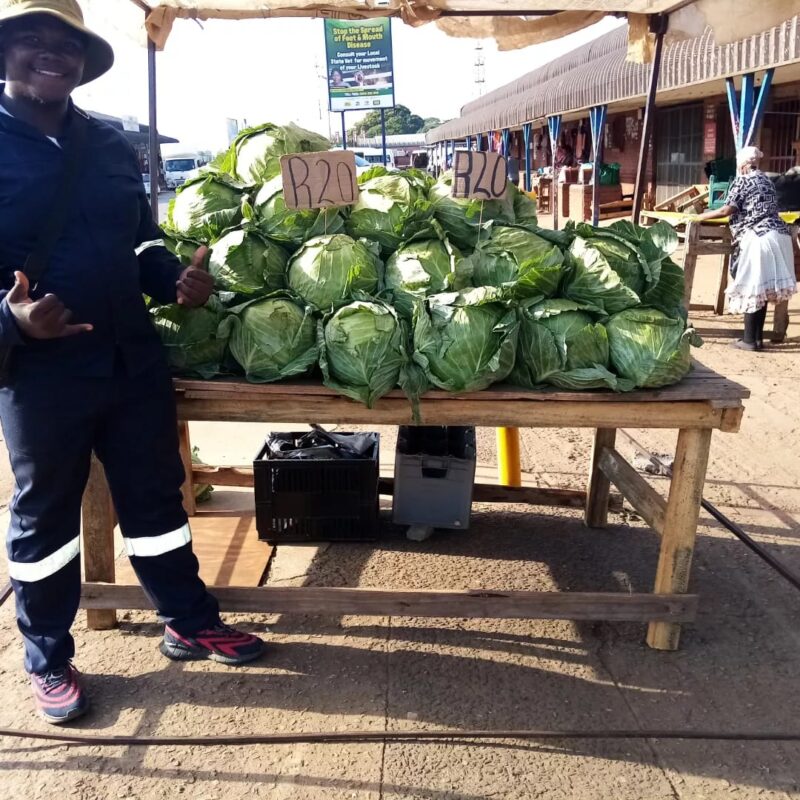
To maintain cash flow, Sinqobile Mtshali also buys vegetables to sell in town as a street vendor. Photo: Supplied/Food For Mzansi

When it comes to medication, Mtshali says regular deworming has worked well, and he gives iron supplements to piglets. However, some stronger medication he would like to use is expensive.

He also points out that feeding equipment, such as water pans, is costly. Although he has a water well and manually fills water for the pigs, he understands that this is not the healthiest long-term solution.

“My biggest infrastructure challenge is fencing. I am on three hectares, and this has also slowed down my plans to add crop farming,” he says.

Challenges remain, but his vision grows

Mtshali says funding for livestock farmers remains a major challenge for him. There are days when farming feels draining, but he says going back to the drawing board helps him refocus.

Mtshali Livestock and Butchery is now making sales through packaged pork products. Most of his customers are based in Mtubatuba. 
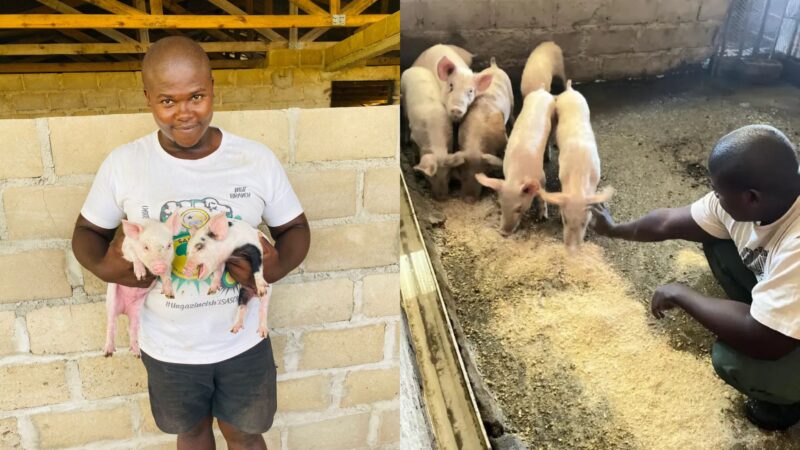
Sinqobile Mtshali says that at one point, he lost his livestock due to a lack of knowledge. Today, he never stops learning and dreams of expanding into agroprocessing. Photo: Supplied/Food For Mzansi

His next big goal is to venture into agritourism, attracting visitors from other countries to learn about young farmers making a difference in addressing food insecurity.

He is also looking into agroprocessing, including the production of sausages, polony, salami, dried meat and other processed foods. 

Mtshali adds that he hopes to secure funding so he can move forward faster with his plans. That will set him on the path to sustainable success.

READ NEXT: Engineering graduate takes shot left to farming in North West

Sign-up for the latest agricultural news delivered straight to your inbox every day with Mzansi Today!

Vateka Halile

Vateka Halile grew up in rural areas of Cofimvaba in the Eastern Cape. She was raised in a traditional family setting and found writing to be a source of comfort and escape. Vateka participated in an online citizen journalism course through Food For Mzansi, and her passion for health and medicine-related stories was born. Her dedication to community work and love for social justice and solidarity spaces is evident in her quality time with the community when she isn't working.

Tags: Commercialising farmerInspire meKwaZulu-NatalPig farmer
Majodina calls for collective action to protect SA’s water resources
News

Majodina calls for collective action to protect SA’s water resources

by Tiisetso Manoko
23rd July 2026

As climate change threatens South Africa’s rainfall, water security has become a crucial pillar for national food security. At the...

Read moreDetails
FMD milestone: North West vaccinates over one million cattle

FMD milestone: North West vaccinates over one million cattle

23rd July 2026
No one-size-fits-all: Liane’s lessons on leaving the land better

No one-size-fits-all: Liane’s lessons on leaving the land better

22nd July 2026
Shoprite hits 300th food garden milestone in Bredasdorp

Shoprite hits 300th food garden milestone in Bredasdorp

22nd July 2026
Tech and solar upgrades drive growth at Ceres Fruit Growers

Tech and solar upgrades drive growth at Ceres Fruit Growers

22nd July 2026

SA poultry industry calls for urgent bird flu vaccine rollout

Treat food processing as essential national infrastructure – Khoury

SAWIPB launches opportunity to formalise wine industry skills

Ample grain stocks shield SA consumers from impending El Niño

Majodina calls for collective action to protect SA’s water resources

Join Food For Mzansi's WhatsApp channel for the latest updates!

JOIN NOW!
Next Post
From tough questions on eNCA to the stage of the 2026 Mzansi Young Farmers Indaba. Tumelo Mothotoane takes the mic as moderator, ready to lead a bold conversation. Image: Gareth Davies/Food For Mzansi

Provinces battle it out as #FFMIndaba26 countdown heats up

THE NEW FACE OF SOUTH AFRICAN AGRICULTURE

With 21 global awards in the first six years of its existence, Food For Mzansi is much more than an agriculture publication. It is a movement, unashamedly saluting the unsung heroes of South African agriculture. We believe in the power of agriculture to promote nation building and social cohesion by telling stories that are often overlooked by broader society.

Agriculture’s leading ladies unite: Get ready for Soul To Soil 2026

Ample grain stocks shield SA consumers from impending El Niño

Protected agriculture takes centre stage at Nampo Cape seminar

No limits: Charlotte Mosena builds farm-to-table legacy in Gauteng

Smart logistics and pricing vital for SA’s potato industry

SA pork prices plunge amid local market surplus

  • Awards & Global Impact
  • Our Story
  • Contact Us
  • Cookie Policy
  • Privacy Policy
  • Copyright

Contact us
Office: +27 21 879 1824
News: info@foodformzansi.co.za
Advertising: sales@foodformzansi.co.za

Contact us
Office: +27 21 879 1824
News: info@foodformzansi.co.za
Advertising: sales@foodformzansi.co.za

  • Awards & Global Impact
  • Our Story
  • Contact Us
  • Cookie Policy
  • Privacy Policy
  • Copyright

Chat Options

I'm Lerato, your AI assistant!
No Result
View All Result
  • News
  • Changemakers
  • Lifestyle
  • Farmer’s Inside Track
  • Food for Thought

Copyright © 2024 Food for Mzansi

This website uses cookies. By continuing to use this website you are giving consent to cookies being used. Visit our Privacy and Cookie Policy.