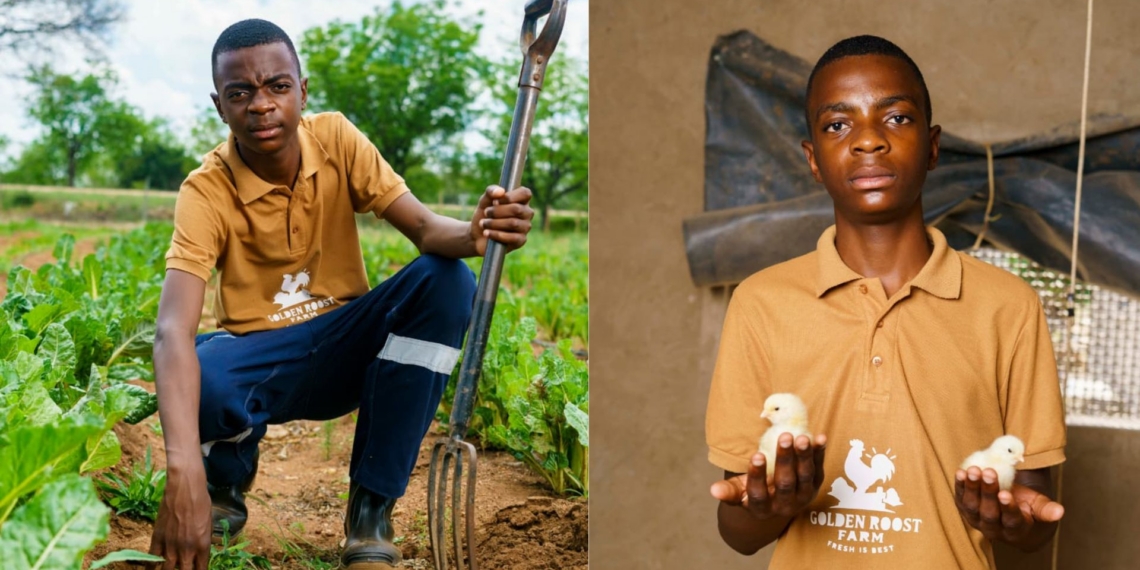
In 2025, at just 13-years old, Njombo Chabangu approached his father for funding to turn his farming dream into reality. Having grown up watching his father run businesses, he had seen what it took to build one. He wanted to forge his own path.
His father, Moses Chabangu, gave him the support he needed to establish Golden Roost Farm in Lulekani, Phalaborwa, Limpopo.
The R10 575 from his father covered his first batch of about 100 chicks, equipment, transport and other start-up costs. He has since grown his broiler operation to 400 chicks per cycle.
“My first 100 chickens were my real training ground, where I learned through experience, including the challenges and mistakes I faced,” he says.
Learning the ropes and seeking support
Chabangu, now age 14, also learned from other farmers on social media, especially TikTok and YouTube. He says he followed farmers such as Makwala Agri, Shopa and J Farmers, whose content helped him learn about poultry farming and improve his skills.
As the business grew, Chabangu needed more equipment but could not afford to buy it. After registering his business in 2025, he approached Poltek Poultry Equipment for sponsorship. The company assisted him during his second broiler cycle.
“Their assistance has helped me access equipment I needed to manage and grow my farm,” he says.
The sponsorship included three large chicken feeders, two drinkers for older chickens, four small feeders, four drinkers for younger chicks, a heat lamp and its holder, four anti drowning rings and legs for the poultry equipment.
Related stories
- Limpopo farmer finds peace, purpose in the harvest
- Cultivating crops is second nature to Morodi
- Farminist founder blends farming skills with smart business
- 16-year-old organic farmer has big dreams
Balancing schoolwork and poultry
The teenager, who is currently in grade 8 at All Saints College in Phalaborwa, tells Food For Mzansi that during school holidays and weekends, he wakes up at around five in the morning to begin his daily farming routine.
He opens the side curtains for ventilation, cleans the farm and checks the water and feed levels. At around 7am, he observes the chickens’ movement, behaviour and breathing, looking for signs of illness.
An hour later, he usually has breakfast and waits for the water truck to fill his JoJo tank before paying. Water shortages remain a challenge, adding to his operating costs.
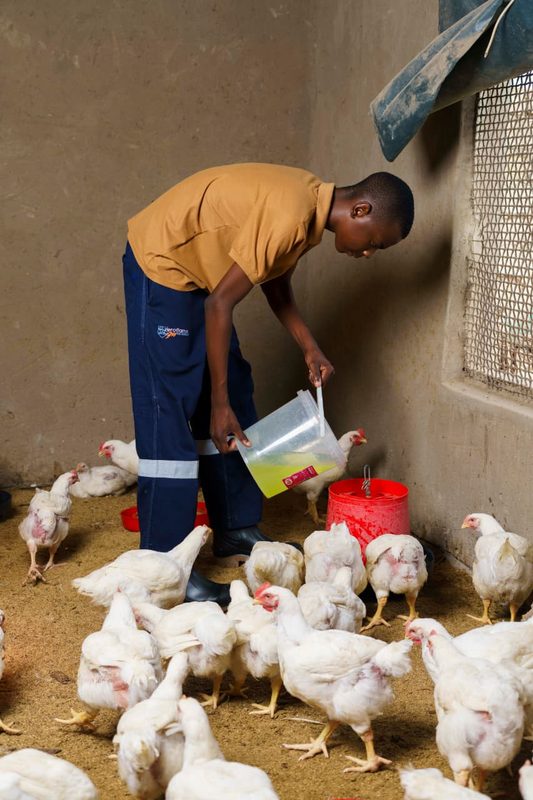
He attends to other duties throughout the day, including turning the bedding, defeathering when necessary, and recording his farm entry times.
At around 4pm, he tops up the water and feed, closes the side curtains and checks that the CCTV cameras are working. He also locks the gates and secures the premises, as theft is a serious concern in his area.
Building a business mindset
Chabangu says biosecurity is vital to keeping his chickens healthy. He limits visitors, maintains cleanliness, controls access and follows proper hygiene practices.
“It prevents diseases from entering and spreading on the farm. This helps protect my chickens, reduce losses, and maintain a healthy flock.”
He notes that he chose broiler farming because it required less starting capital than other farming options. “Since my dad funded my business, I had to start with something affordable.”
His father also wanted to teach him the value of money and responsibility. He made it clear that Chabangu would have to repay the money lent to him. “That taught me to take my business seriously and manage my finances wisely.”
Registering the company was another challenge, as Chabangu is still underage and the business had to be registered under his father’s name.
During school days, his father takes care of the farm, while Chabangu works to balance his business responsibilities with his education.
“I prioritise my education while planning my farm duties around my school schedule,” he says. “During holidays, I dedicate more time to managing my poultry farm.”
Although balancing school and farming can be difficult, his passion motivates him to work hard at both.
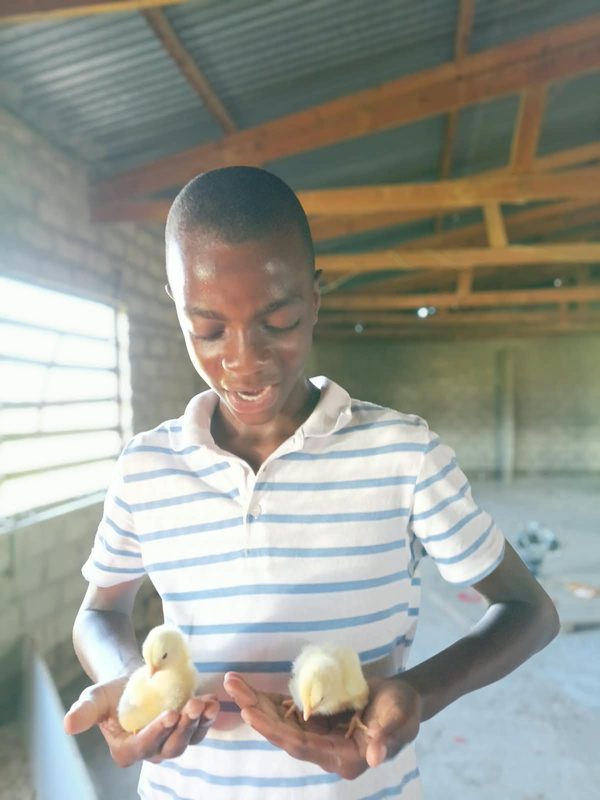
Farming in Phalaborwa has brought further challenges, including extreme heat, which he has addressed by buying more fans. Electricity interruptions have also caused losses.
“While renting, other tenants sometimes switched off the electricity, causing my heat lamps to stop working and my chicks to die,” he says.
Water shortages have also contributed to high chick mortality. However, he refuses to let it dampen his passion for farming.
Plans to grow beyond local clientele
Chabangu’s customers include local individuals, crèches and buyers from inland areas. As Golden Roost Farm grows, he hopes to enter the commercial market, supplying businesses with fresh, quality poultry products and building long-term relationships.
Looking ahead, Chabangu hopes to study business management and other business related courses. He wants to use the knowledge he gains to build businesses that create opportunities and jobs for others.
“I want to use my knowledge to become a successful entrepreneur and make a difference in my community,” he says.
In the meantime the young farmer continues to work hard to grow his poultry business, secure his future and contribute to food security.
READ NEXT: Limpopo youth turns backyard broiler project into poultry business