Friday, October 23, 2026
SUBSCRIBE
22 GLOBAL MEDIA AWARDS
Food For Mzansi
  • News
  • Changemakers
  • Lifestyle
  • Farmer’s Inside Track
  • Food for Thought
No Result
View All Result
  • News
  • Changemakers
  • Lifestyle
  • Farmer’s Inside Track
  • Food for Thought
No Result
View All Result
Food For Mzansi
No Result
View All Result
in Inspiration, Small Scale Farmer

Cultivating crops is second nature to Morodi

When humans go into survival mode, there's nothing that can stop them and Limpopo farmer Mokgomotsi Morodi hopes that more people will realise that food can be grown anywhere, from backyards to kitchen window sills

by Vateka Halile
26th May 2023
Cultivating crops is second nature to Morodi

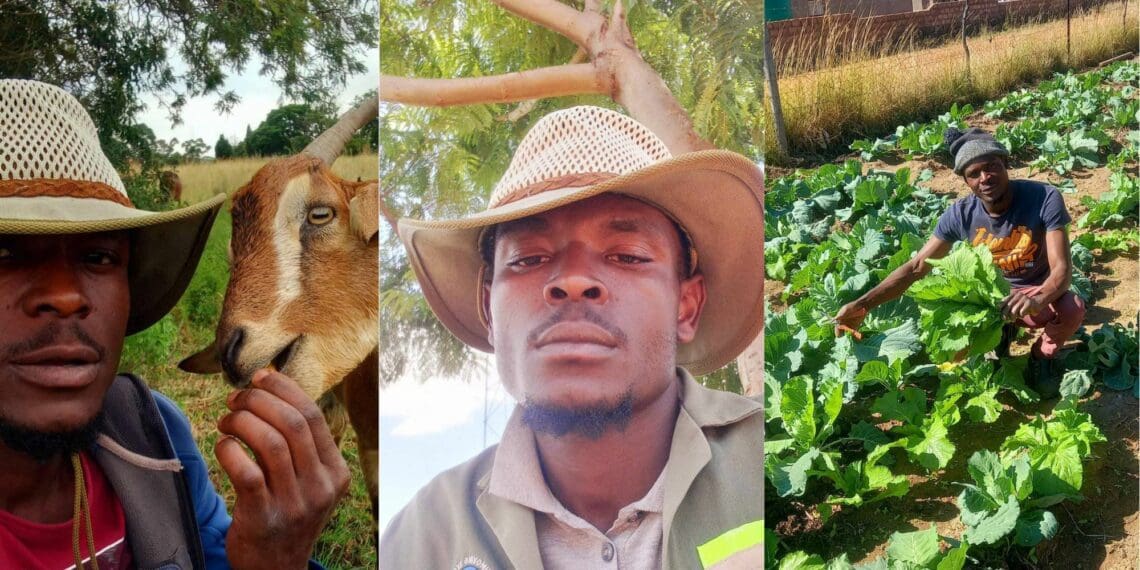
Mokgomotsi Morodi advises South Africans to start cultivating food in our window sills and backyards as an easier option to fight food insecurity. Photo: Supplied/Food For Mzansi

Share on FacebookShare on TwitterShare on WhatsApp

Limpopo farmer Mokgomotsi Morodi started his agricultural journey during the Covid-19 pandemic and the imposed lockdown in 2020. This came after conducting research for his honours degree in agribusiness management at the University of Zululand in KwaZulu-Natal. Soon, his agripreneurship venture, Morodi Agro-production, came into existence.

Morodi conducted research on how climate change affects food security in the uMhlathuze local municipality in KwaZulu-Natal. His research revealed that the residents of Kwadlangezwa rely heavily on food cultivation as a means of generating income to purchase other necessities.

According to Morodi, most people living in the uMhlathuze local municipality lack employment opportunities and therefore resort to selling fruits and vegetables at designated areas such as stalls and taxi ranks in order to make a living.

Impact of climate change

“Upon my discovery, I realised that the consequences of climate change significantly influence the availability of food in the uMhlathuze region. Considering the occurrence of climate change in South Africa, it is imperative that we take necessary actions to address it,” he explains.

Some of his research findings were that the most significant challenge in Mzansi is the rise in food prices, and if the effects of climate change persist, Mzansi will experience challenges in accessing sufficient food.
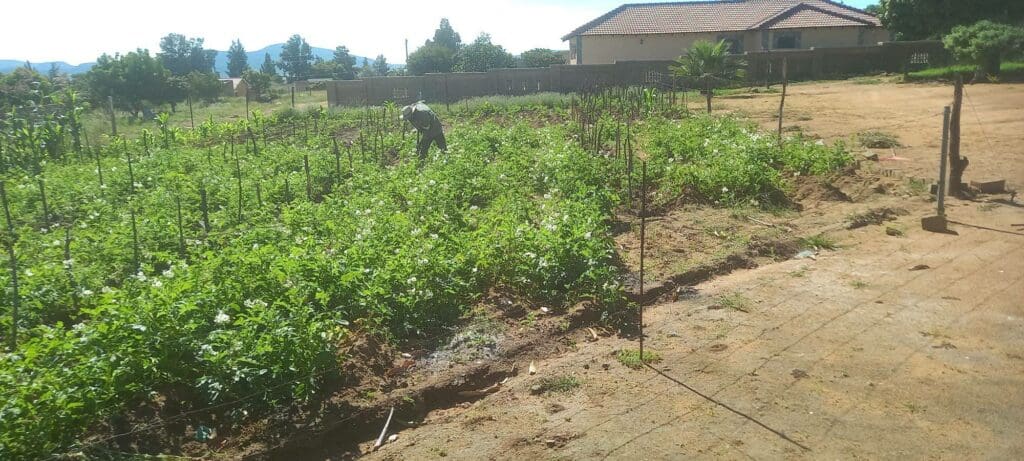
Morodi's half a hectare land in Glen Cowie, Limpopo.
Mokgomotsi Morodi believes that it is important for South Africans to understand the significance of growing our own food. Photo: Supplied/Food For Mzansi

Working towards a goal

Morodi has a deep passion for setting and pursuing goals. He accumulated his National Student Financial Aid Scheme (NSFAS) funds for a duration of three months until he completed his academic programme in 2019.

“I constructed a watering hole at home and procured various farming materials such as water pipes, seedlings, fertilisers, a wheelbarrow, trowel, bolo, weeding hoe, and spades.”

Morodi began cultivating potatoes, brinjal, tomatoes, and cabbage on half a hectare of his family’s land situated in Sekhukhune, Glen Cowie in Limpopo.

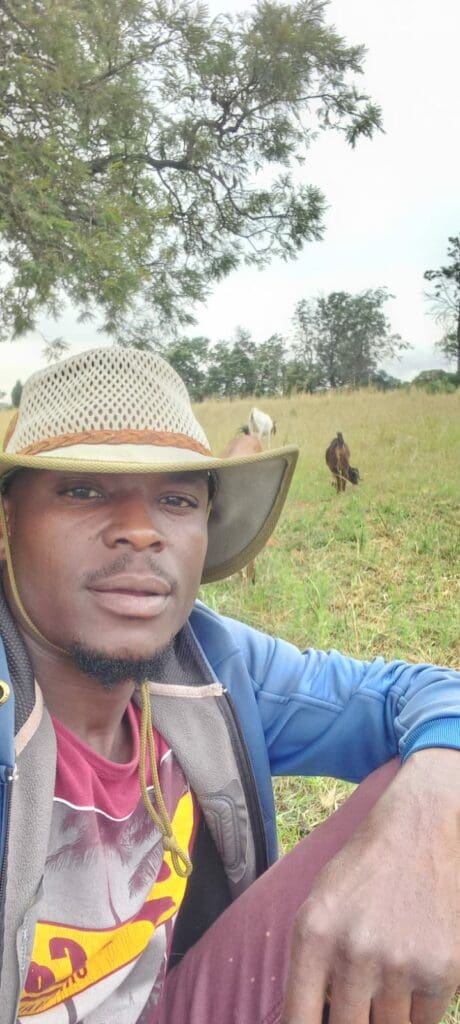
In 2020, he procured three goats, and two years later an additional three goats. He now owns nine goats.

Morodi started practising a rotation-based cultivation method. According to him, preserving the soil structure is crucial as it not only enhances the ability to retain water, which is vital for different crop requirements, but also enables the identification of crops suitable for the region.

“Crop rotation can aid in effective pest management by identifying beneficial control measures for your crops.”

Sustainable farming is the way to go

Morodi says to address the issues of food production and unemployment in Mzansi, it is imperative to instil necessary skills in children from a young age so as to ensure effective hunger control and generate employment prospects.
Morodi says that farming is his finest swag. Photo: Supplied/Food for Mzansi

He expresses his desire to provide food and conducts educational sessions to equip people with the knowledge of cultivating crops in any available area. “Growing food in our window sills and backyards can be a more viable option at this time of need in South Africa,” he says.

He has loyal customers based within his community, including his neighbours from Glen Cowie, street vendors, and nearby vegetable stalls.

Cultivate wherever you can

“It is ideal to cultivate sprouts in the nooks of our kitchens and explore various other methods to produce food that is essential in South Africa. This is especially crucial at present, with the challenges posed by food inflation and the prevailing challenge of hunger.”

He also notes that sustainable farming is more common in rural areas, where there is plenty of land and free water from dams and rivers.

“Occasionally, it is possible to find yourself without helpful connections or assistance when in a state of need.”

As a result, it is crucial to develop the ability to survive difficult situations on your own, he advises.

This farmer aims to inspire others by conveying his knowledge and skills in that regard, in the hopes of making a positive impact throughout Africa. 

READ NEXT: Grab indaba tickets before they’re gone!

Sign up for Mzansi Today: Your daily take on the news and happenings from the agriculture value chain.

Vateka Halile

Vateka Halile grew up in rural areas of Cofimvaba in the Eastern Cape. She was raised in a traditional family setting and found writing to be a source of comfort and escape. Vateka participated in an online citizen journalism course through Food For Mzansi, and her passion for health and medicine-related stories was born. Her dedication to community work and love for social justice and solidarity spaces is evident in her quality time with the community when she isn't working.

Tags: Commercialising farmerKwaZulu-NatalLimpopoStimulate meVegetable farmer
Advertorial

Smart irrigation: Precision tools boost crop yields while cutting costs

by Lisakanya Venna
21st October 2026

PARTNER CONTENT: Facing persistent climate risks, Southern African farmers are turning to precision tools to trim input costs without losing...

Read moreDetails
Record farm exports overshadowed by growing drought disaster

By-laws vs. livelihoods: Barriers facing WC smallholder farmers

21st October 2026

CPAs urged to register for free governance support toolkits

21st October 2026

Potatoes and tomatoes plunge while avocado prices soar

20th October 2026
Becoming bankable: How to get your farm ready for finance

Becoming bankable: How to get your farm ready for finance

20th October 2026

FNB puts relationships at the heart of commercial farming

Promising early conditions predicted for 2027 SA wine harvest

By-laws vs. livelihoods: Barriers facing WC smallholder farmers

How to protect poultry from damaging sticktight flea infestations

Potatoes and tomatoes plunge while avocado prices soar

Join Food For Mzansi's WhatsApp channel for the latest updates!

JOIN NOW!
Next Post
Podcast: The role of stingless bees in Africa

Podcast: The role of stingless bees in Africa

THE NEW FACE OF SOUTH AFRICAN AGRICULTURE

With 21 global awards in the first six years of its existence, Food For Mzansi is much more than an agriculture publication. It is a movement, unashamedly saluting the unsung heroes of South African agriculture. We believe in the power of agriculture to promote nation building and social cohesion by telling stories that are often overlooked by broader society.

Limpopo teen farmer turns dream into growing poultry business

How to protect poultry from damaging sticktight flea infestations

Eskort announces Herman Janse van Rensburg as group CEO

Agda pushes for pathways to commercialise emerging farmers

Karoo sheep tallow finds new purpose in Mzansi beauty brand

Why simple farm records beat complex systems

  • Awards & Global Impact
  • Our Story
  • Contact Us
  • Cookie Policy
  • Privacy Policy
  • Copyright

Contact us
Office: +27 21 879 1824
News: info@foodformzansi.co.za
Advertising: sales@foodformzansi.co.za

Contact us
Office: +27 21 879 1824
News: info@foodformzansi.co.za
Advertising: sales@foodformzansi.co.za

  • Awards & Global Impact
  • Our Story
  • Contact Us
  • Cookie Policy
  • Privacy Policy
  • Copyright

Chat Options

About this assistant

This feature generates automated answers summarised from Food For Mzansi articles. By using it, you are interacting with an AI system (provided by Google), not a human. AI can make mistakes. Please refer to the source articles for verification and citation purposes.

Our staff do not check or moderate Lerato’s answers in advance, but may review some later. Our journalists continue to write and edit all the articles Lerato uses as sources.

To estimate unique and returning web users, we store a random browser ID in this browser. WhatsApp users are counted by phone number. The same person using both channels may be counted twice.

I'm Lerato, your AI assistant!
No Result
View All Result
  • News
  • Changemakers
  • Lifestyle
  • Farmer’s Inside Track
  • Food for Thought

Copyright © 2026 Food for Mzansi