Sunday, October 25, 2026
SUBSCRIBE
22 GLOBAL MEDIA AWARDS
Food For Mzansi
  • News
  • Changemakers
  • Lifestyle
  • Farmer’s Inside Track
  • Food for Thought
No Result
View All Result
  • News
  • Changemakers
  • Lifestyle
  • Farmer’s Inside Track
  • Food for Thought
No Result
View All Result
Food For Mzansi
No Result
View All Result
in Farmer's Inside Track

Local markets drive South Africa’s banana industry

Tam Johnson of Du Roi Laboratory sheds light on South Africa's banana industry, which differs from tropical exporters. Focused on local consumption, growers emphasise sustainable techniques, including crop rotation and organic farming

by Patricia Tembo
18th August 2024
Tam Johnson is an animal scientist, and sales and technical manager at Du Roi Laboratory.
Photo: Food For Mzansi

Tam Johnson is an animal scientist, and sales and technical manager at Du Roi Laboratory. Photo: Food For Mzansi

Share on FacebookShare on TwitterShare on WhatsApp

Banana farming in South Africa occupies a unique niche within the broader agricultural landscape. Unlike tropical regions where bananas are a major export commodity, South Africa’s banana industry is largely focused on local consumption due to its subtropical climate.

Tam Johnson, an animal scientist and sales and technical manager at Du Roi Laboratory, says the banana industry in South Africa is part of the subtropical banana-growing areas, making it different from tropical regions.

Due to the cold winters, South African bananas are primarily for local consumption, as they cannot meet the bright yellow colour standard required for export.

“Most of our supply in South Africa is for our local use. We’ve got about 11 000 hectares of bananas in South Africa. Our main growing regions are Tzaneen, Kiepersol, Komatipoort, and then north of KwaZulu-Natal, and then along the coast, coming all the way down to the south coast of KwaZulu-Natal. Those are the main growing regions within South Africa, as well as Levubu,” he says. 

Sustainable banana cultivation

Johnson highlights various sustainable farming practices in banana cultivation including, organic farming, integrated pest management, cover crops, mulching, fallows, and crop rotation. 

“A lot of them (farmers) have now started looking into what other plants and crops they can integrate into their fields for obviously beneficial insects, and also providing nutrients back into the soils for the plants. [In] doing that, they also create a mass which can hold water and moisture in the soil much longer,” he says.


Related stories
  • Farmer 101: Fancy growing bananas? Here’s how
  • Sustainable small-scale sugarcane growers vital to sugar industry

Johnson also shares a bit about his journey in the agricultural sector and working at Du Roi Laboratory, which specialises in producing tissue culture banana plants. The laboratory supplies 100% of banana plants within South Africa and a significant portion to other regions, including southern Africa, Cameroon, Ivory Coast, Senegal, Morocco, the Middle East, and central America. 

“I [travel] a lot to the different regions that we supply plants to just to follow up, see how our plants are doing, and make sure that everyone is happy with the quality of plants. I just go to help out technically where I can in the field,” he shares. 

In this episode, Johnson also discusses:
  • The impact of climate change on the banana industry;
  • Major banana diseases; and
  • Technological advancements. 

Dive deeper into the episode and gain insights from the award-winning Farmer’s Inside Track, officially recognised as Africa and the world’s best podcast at the 2024 Digital Media Awards presented by WAN-IFRA, the global press organisation.

Option 1: Click here to listen on Spotify (all mobile and other devices)

Option 2: Click here to listen on any Apple device

READ NEXT: Four agroecological practices to implement on your farm today

Sign up for Farmer’s Inside Track: Join our exclusive platform for new entrants into farming and agri-business, with newsletters and podcasts. 
Patricia Tembo

Patricia Tembo is motivated by her passion for sustainable agriculture. Registered with the South African Council for Natural Scientific Professions (SACNASP), she uses her academic background in agriculture to provide credibility and technical depth to her journalism. When not in immersed in the world of agriculture, she is engaged in outdoor activities and her creative pursuits.

Tags: Banana farmingCommercialising farmerTeach me
Karoo sheep tallow finds new purpose in Mzansi beauty brand
Agripreneur

Karoo sheep tallow finds new purpose in Mzansi beauty brand

by Vateka Halile
22nd October 2026

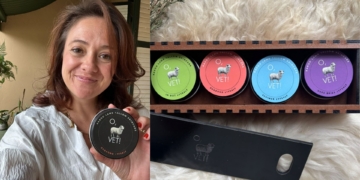
Former journalist Carla Coetzee turned a traditional family remedy into O’Vet Skincare, a thriving brand supplying 15 retailers. Sourcing natural...

Read moreDetails

Why simple farm records beat complex systems

22nd October 2026
Mogogelo farmers receive packhouse and cold storage facilities

Mogogelo farmers receive packhouse and cold storage facilities

22nd October 2026
Godongwana unveils fuel relief and R10 billion El Niño buffer

Godongwana unveils fuel relief and R10 billion El Niño buffer

21st October 2026

Smart irrigation: Precision tools boost crop yields while cutting costs

21st October 2026

Becoming bankable: How to get your farm ready for finance

Reluctant farmer scales EC cabbage enterprise to supply Spar

Karoo sheep tallow finds new purpose in Mzansi beauty brand

Why simple farm records beat complex systems

Agda pushes for pathways to commercialise emerging farmers

Join Food For Mzansi's WhatsApp channel for the latest updates!

JOIN NOW!
Next Post
Chamonix’s chardonnay scoops top wine award at Michelangelo

This week’s agri events: 19 – 23 August

THE NEW FACE OF SOUTH AFRICAN AGRICULTURE

With 21 global awards in the first six years of its existence, Food For Mzansi is much more than an agriculture publication. It is a movement, unashamedly saluting the unsung heroes of South African agriculture. We believe in the power of agriculture to promote nation building and social cohesion by telling stories that are often overlooked by broader society.

Shoprite opens second food garden competition with R1m in support

Costa Rica’s banana battle offers critical field lessons for SA

Africa’s indigenous crops and youth are the secret to ending hunger

Agda conference: Why giving farmers land isn’t enough

Limpopo teen farmer turns dream into growing poultry business

How to protect poultry from damaging sticktight flea infestations

  • Awards & Global Impact
  • Our Story
  • Contact Us
  • Cookie Policy
  • Privacy Policy
  • Copyright

Contact us
Office: +27 21 879 1824
News: info@foodformzansi.co.za
Advertising: sales@foodformzansi.co.za

Contact us
Office: +27 21 879 1824
News: info@foodformzansi.co.za
Advertising: sales@foodformzansi.co.za

  • Awards & Global Impact
  • Our Story
  • Contact Us
  • Cookie Policy
  • Privacy Policy
  • Copyright

Chat Options

About this assistant

This feature generates automated answers summarised from Food For Mzansi articles. By using it, you are interacting with an AI system (provided by Google), not a human. AI can make mistakes. Please refer to the source articles for verification and citation purposes.

Our staff do not check or moderate Lerato’s answers in advance, but may review some later. Our journalists continue to write and edit all the articles Lerato uses as sources.

To estimate unique and returning web users, we store a random browser ID in this browser. WhatsApp users are counted by phone number. The same person using both channels may be counted twice.

I'm Lerato, your AI assistant!
No Result
View All Result
  • News
  • Changemakers
  • Lifestyle
  • Farmer’s Inside Track
  • Food for Thought

Copyright © 2026 Food for Mzansi