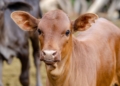
Nguni cattle are fertile and hardy. A project was started in 2004 by the Industrial Development Corporation (IDC) to “upgrade cattle in communal areas to Nguni status through the establishment” of herds of these indigenous animals. In the Eastern Cape, the University of Fort Hare was selected as the implementer.
But, as two forensic investigations show, this well-intentioned project has, at least in recent years, been plagued by poor governance and mismanagement by Fort Hare. The investigations, conducted by Morar Incorporated, were commissioned by the university’s vice-chancellor in February 2021 and completed in April 2024. GroundUp obtained the reports.
The Special Investigating Unit (SIU) is also investigating.
Fort Hare’s farming projects
Honeydale is Fort Hare’s research farm. It is the site of the Nguni project, which is overseen by the Nguni Cattle Development Trust. Morar was commissioned to investigate these two entities. Honeydale also has a piggery, overseen by the Fort Hare Piggery Trust and a dairy, overseen by the Fort Hare Dairy Trust. The university has a sizeable share in all three trusts.
All four of these entities, Honeydale, the Nguni trust, the piggery trust and the dairy trust, are the subject of the main forensic investigation, described in this article.
The second forensic investigation looked at dodgy cattle deals taking place at Honeydale.
The Nguni trust was originally funded by the IDC. In 2017, the Eastern Cape Department of Rural Development committed over R20-million over several years to the trust “as a suitable implementing agent for commercialisation of smallholder beef cattle farmers in the Eastern Cape”.
Mismanagement and bad governance
At the centre of the main investigation are Vuyani Somyo, the former manager of the Nguni trust, and Adrian Runganathan, the trust’s financial manager. The 120-page Morar report is dense, detailing incidents that demonstrate governance that can, at best, be described as incompetent. Here are just a few examples:
- The trust’s 2018 close-out report, prepared by Somyo, accounts for R7-million, but the Department of Rural Development deposits came to R8.5-million.
- Cattle to the value of R12-million were procured between 2004 and 2018, but the investigation found that the financial records were not complete. The reported procurement of cattle only amounted to R8-million, and invoices came to R210 000.
- There were contradictory numbers within the same Somyo reports for the number of bulls and equipment delivered to beneficiaries. The reports did not indicate specific numbers or breeds delivered.
- A report is dated two days before a cattle sale described in it takes place.
- The investigators visited some of the farms that were supposed to be supplied with cattle, electronic tags and medicine by the trust, but found that what the farms were supplied with fell short of what was expected or claimed.
- Invoices given to the investigators came to far less than the amounts tabulated in the reports they were given.
- Three service level agreements over several years, all signed by the vice-chancellor, were the basis for how this money should be spent. The second service level agreement with the department has a table on how the funds will be spent, but it contains straightforward arithmetic errors. The third service level agreement appears to have been sloppily drafted, with incomplete paragraphs and numbering errors.
- The trust was supposed to present quarterly and annual accurate records to the Department of Rural Development, but failed to do so.
- The original board of trustees included a representative from the university, two representatives from the IDC and one from the provincial agricultural department. The trustees were never replaced formally, despite there being new board members governing the trust.
The investigation describes shambolic asset management at the Honeydale farm and its projects. It concluded that the farm does not have the capacity to safeguard its assets.
Related stories
- Fort Hare agricultural students in limbo amid qualification crisis
- University of Fort Hare launches high-tech dairy research hub
- Living wage study on Cape Winelands opens for public comment
- Witzenberg’s Alhambra Estate honoured for outstanding harvest
Investigators found that “equipment was dismantled and ‘harvested’ for parts for other equipment without permission, whereafter the parts left over are dumped in a field next to the workshop”.
At the piggery trust, Fort Hare members were absent when monetary decisions involving millions of rands were taken. The trust’s board of trustees “displayed a notable disregard in respect of maintaining sound administrative and governance practices”, the investigators wrote.
In one instance, a profit distribution of over R2-million to the university doesn’t appear in bank statements provided to the investigators.
And at the dairy trust, millions of rand were paid into the account of an agriculture company, Amadlelo Agri (which ran the university’s dairy), instead of the trust account.
The report states, “it is clear that an amount of [R12.5-million] was due to be paid to the [university], but was not. From the R12-million owed … as part of their distribution, an amount of [R8.2-million] was ‘questionably’ paid to the bank account of Amadlelo Agri during the period 2020 to 2022. There is however an amount of [R4.3-million] … which is unaccounted for / not paid to the [university]…”.
Unsigned resolutions and resolutions which were not acted upon, including profit distributions, litter the forensic report. There are contradictory documents on the calculation of the rent owed by the dairy trust to the university and whether it was paid.
A former senior lecturer is implicated in growing crops on the farm and selling them without approval, though the report has contradictory accounts of how this occurred and its extent.
The investigators recommend opening a criminal case against Somyo because of a “reasonable suspicion” of theft and fraud in relation to cattle. The report recommends that the Asset Forfeiture Unit seize the cattle on his farm until he is able to show that he has obtained them legally.
Somyo told GroundUp that the SIU had recently made contact with him. He said he had cooperated with an internal audit conducted by the university and “gave them all the information they wanted”.
He said he had “suffered tremendously” as a result of the allegations.
Disciplinary action is recommended against Runganathan, who authored two letters to the Department of Rural Development, “which intentionally misrepresented” the Nguni trust’s information, “potentially placing the name of the [university] in disrepute, in that no audit financial statements were ever prepared for the [trust]”.
Responding to questions, Runganathan said he did not “have authority to disclose university information”.
The activities of Fort Hare’s Nguni Cattle Development Trust were added to a 2024 Presidential Proclamation, amending a 2022 proclamation authorising the SIU to investigate corruption, maladministration and malpractices at the university (see, for example, Fort Hare paid R17-million for work that was never done, investigation finds).
Fort Hare responds
Responding to GroundUp, Fort Hare spokesperson JP Roodt said the forensic investigations were commissioned by the university’s management executive committee “as part of the University’s drive to root out corruption”.
“In several cases, disciplinary action was instituted against implicated employees, resulting in their dismissal,” he said. “It should also be noted that some staff members resigned once disciplinary proceedings were initiated.”
He said some disciplinary matters were still in process.
Amadlelo’s stinging criticism of Fort Hare
Amadlelo acting CEO, Vukile Hlobongwana, said that Fort Hare “was supposed to supply the fixed assets, but never put up the funds for the dairy, so we funded it”.
“The R8-million [which Morar says was diverted to Amadlelo] was for the recovery of money Fort Hare was meant to put up, but we had to.”
While Honeydale belonged to Fort Hare, Hlobongwana said, “The tractor is ours, we built the dairy. [Fort Hare] should have paid for that. The money we received from the dairy trust was to cover that. Amadlelo has a 10% share in the trust, and we share in the profits.”
He also maintains that: “We have never seen the Morar report and don’t know about what’s in it. We are involved in ongoing discussions with Fort Hare. No one has contacted us about these things, not the SIU, not the Hawks, not the SAPS.”
There was an ongoing problem with continuity with Fort Hare, Hlobongwana said. “Every few years, they change their management. The new lot comes in and does not know what you are talking about. It is very frustrating.”
- This article was first published on GroundUp.
READ NEXT: Mzansi celebrates its brightest young farming talent