
Want to set yourself up for success in 2023? Start with a positive attitude and a proactive approach, advises Maluta Netshaulu, a leading agricultural economist and banker. After all, your attitude determines your altitude.
Many a book has been written on what differentiates highly successful people from ordinary people. One such characteristic is their tenacity to succeed no matter what. In its simplest form, this behaviour speaks to one’s attitude towards life; not giving up until you get what you want.
Farmers – as entrepreneurs – also require this characteristic to be successful business people. Having met hundreds of farmers throughout my career, the key differentiator between successful farmers and those that were struggling or just getting by, was their attitude.
Their views on life; acknowledgement that they can’t succeed without strategic partners (financial advisor, banker, broker, market agent, accountant, agronomist, veterinarian, mechanic, etc); the importance of understanding every facet of their business (operation, financial management, market access, risk management, workforce management, etc); the importance of education (understanding of the sector in which they operate, the challenges and opportunities in the sector, new trends on consumer needs, new players, technology and innovation, new production techniques and requirements, etc); and the imperative of cultivating leadership skills.
In farming there will always be setbacks. Some encounter these before they even start farming. Like having access to land and not having the technical skills to cultivate the land. Or having access to land but not having the funding to buy required inputs to cultivate the land. Others could have access to land, skills to cultivate the land and the funding (grant and/or debt), but don’t have access to markets.
Some could have access to the land, possess the required technical skills to cultivate the land, have access to funding and markets, but not have access to risk instruments such as insurance to act as buffer or protection against theft, natural disasters, or climate change.
Reliance on government aid
Another reality – especially to new era farmers – is having all the resources but not having the required mechanisation to cultivate the land. Thus forcing the farmer to rely on government equipment or contractors, which could have a negative impact on production if the equipment comes past the optimal windows (planting, chemical spraying or harvesting), or if the equipment is not properly calibrated thus resulting in crop waste.
Understanding these setbacks and putting the required measures in place to protect a farmer’s livelihood, is what will set them apart from those that do nothing with the hope that nothing will happen to jeopardise their livelihoods. This attitude is tantamount to buying a car and driving it without an insurance cover with the hope that nothing will happen to the car; accidents with other motoristss, act of God like hail or criminal activity such as theft or vandalism. The risk is not worth taking.
On the production side, successful farmers are never satisfied with doing the same thing repeatedly. They are always looking for ways to improve their productivity and margins, through optimal production techniques like precision farming and efficient resource utilisation.
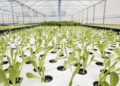
Others adopt technologies such as imagery (satellite and/or drone) and Internet of Things (IoTs) to better manage their farms, while others adopt technologies such as alternative energy systems (such as renewable energy) to prevent downtime because of grid inefficiencies. I have also met a livestock farmer that experimented with growing pasture/fodder hydroponically in shipping containers.
Finding the solutions
The production cycle, from seeding to harvesting was a matter of weeks compared to months on conventional pasture production on open land. I have also come across a dairy farmer that had a water scarcity problem that prevented him from increasing his stocking to capacity.
His solution was genius in that he approached and convinced his municipality to give him usage of the grey water (being flushed from the system) as a solution to their grey water disposal problem. In the end everyone benefited in that the municipality didn’t have that problem anymore while he suddenly had access to water that he could use to irrigate his pastures which allowed him to double his capacity.

Unlocking the power of agritech
One often reads and hears successful farmers and industry specialists cautioning against cultivation of lands without market contracts in place. Market contracts are important as they give the farmer the confidence that at harvest they have a customer for their end-product.
These contracts, especially those that have prices for the produce, the off-taker will buy the produce, help the farmer to plan their finances accordingly, and also allow the farmer to make an informed decision on whether the contract is fair or exploitative or whether the proceeds from the sale of the produce will be able to cover the costs of production (both direct and indirect costs).
While commercial farmers have the luxury of supplying their produce to traditional markets such as cooperatives and fresh produce markets, new era farmers are thinking differently about market access. They are thinking beyond traditional markets by subscribing and listing their produce with new players such as agritech companies.
These new players’ propositions allow for farmers to list their produce on their platforms without having to harvest the produce which helps to reduce waste. These players also cut out the middlemen like market agents which helps put more money in the farmers pockets.
The participants (farmers as sellers and wholesalers as buyers) on the platform are also protected from unscrupulous parties through the use of technology such as traceability systems and escrow accounts. Some of the platforms also allow for buyers to bid on the sellers’ produce thus pushing the farmers’ margins even higher.
That said, to benefit from these new opportunities, the farmers need to know of them otherwise they will continue using traditional market platforms. This necessitates the need for farmers, especially new era farmers, to continuously read on the developments in the sector in terms of new players, technology, and enablers.
Find the correct information
Almost every other week I get calls from family members, old varsity mates, connections on social media, industry networks and work colleagues. The conversations usually go like, “Hi Maluta, I have a piece of land, but I don’t know what to do with it.”
The reality is that most people with access to land who are not well informed about the various agricultural enterprises and which enterprises are viable to what size and region, and the complexities of those enterprises, will always have this problem. But knowing what to produce (crops or livestock) is not enough.
Unless you have the expertise from an educational perspective and experience, you need to find out the technical specification of going about the agricultural enterprise you have decided on. Once you have that figured out, you need to find out how much it will cost to undertake production.
And once you have that information and are happy, you will then have to decide how you are going to fund that production – either from own funds, grant funding debt funding or a combination of these.
On the funding from external sources, it is important to know the lay of the land – institutions that provide funding and their qualifying criteria as well as value-adds they provide.
The challenge with the agriculture sector in South Africa is that there isn’t a website or portal that offers a comprehensive solution to this problem – institutions that offer technical production information and training, institutions that compiles enterprise budgets, institutions that offers funding and institutions that offers market access.
Until someone develops this information portal, it will remain pivotal that information sharing becomes an attitude that government, news platforms, private institutions, and industry leaders adopt to help bridge the information asymmetry gap in the sector.
As we take time to rest this festive season, let us also take time to reflect on the year that was with an attitude to address the following: what are the behaviours I should stop doing, keep doing, and start doing to propel me towards success in 2023? At the end of the day, it is our attitude that paves the way for success in whatever endeavours we venture into.
- Maluta Netshaulu is an agricultural economist, banker, thought leader, husband and father. The views and opinions expressed in this article are those of the author and do not necessarily reflect the views or positions of Food For Mzansi.
ALSO READ: How to become a great first-generation farmer
Sign up for Mzansi Today: Your daily take on the news and happenings from the agriculture value chain.