The NSPCA has described shocking scenes at Daybreak chicken broiler farms as food runs out. Thousands of birds die or have to be euthanised – and it’s ongoing.
A humanitarian crisis has unfolded behind the walls of South Africa’s state-funded poultry operations near Delmas, Mpumalanga. In a deeply troubling intervention last weekend, the National Council of SPCAs (NSPCA) responded to what inspectors described as “systemic and ongoing neglect” at chicken farming operations run by Daybreak Foods.
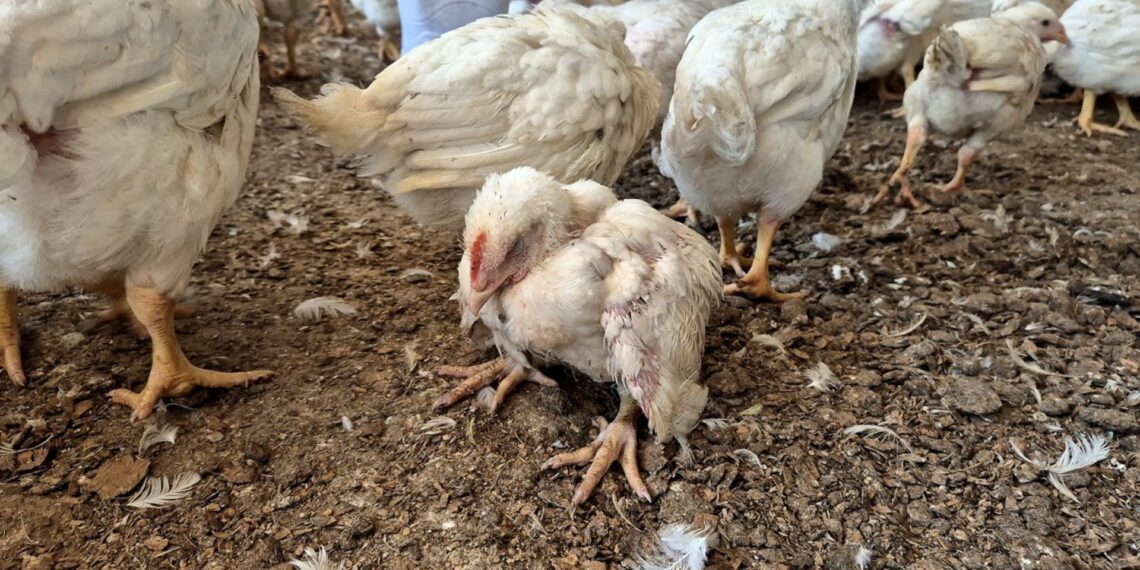
What they found was grim. Thousands of birds, weakened by prolonged starvation, had turned on one another in a desperate attempt to survive. Some had visible injuries with exposed intestines, others, weakened and bloodied, had their wings entirely eaten by pen-mates. Inspectors witnessed chickens frantically running in circles, wounded, while others pursued them to feed on open wounds.
The phenomenon, though shocking, was not a surprise to those who had followed the trajectory of Daybreak Foods – once a hopeful black-owned success story in South Africa’s agricultural landscape, now unravelling amid financial collapse, management exodus and looming liquidation.
The company’s own abattoir had been instructed to halt slaughtering birds that had reached age but not weight, removing any economic incentive to continue feeding them.
Related stories
- SA poultry industry wary of potential US import duty shifts
- Government backs poultry industry with R2b investment
Internal affairs
The crisis appears to have been triggered by a catastrophic breakdown in Daybreak’s internal operations. According to the NSPCA, poultry houses were left without feed for more than 48 hours. Chickens that should have weighed 1.8kg at slaughter age averaged just 660 grams – too small to be sold, but still alive and overcrowded in confined housing.
Compounding the crisis, the company’s own abattoir had been instructed by Veterinary Public Health officials to halt slaughtering birds that had reached age but not weight, removing any economic incentive to continue feeding them. With no outlet for their product, Daybreak appears to have simply stopped feeding large flocks, and mortality rates soared.

Thousands of birds, weakened by prolonged starvation, had turned on one another in a desperate attempt to survive. Photo: NSPCA
“The scale is staggering,” said Nazareth Appalsamy, an NSPCA inspector who has been on-site since Friday. “Just between two of the farms we visited,” he told Our Burning Planet, “we estimated around 140 000 birds. We’ve had to euthanise over 5 500 so far – and that’s just the beginning.”
For at least five consecutive days, more than 25 000 birds have died across just two sites. Mortality numbers are expected to rise as inspectors assess further farms still under Daybreak’s control.
Daybreak spokesperson Nokwazi Ngcongo confirmed that the birds did go without feed for a period due to financial challenges affecting feed delivery.
“The cannibalism, which resulted from the feed shortages, was seen in some birds and they were culled as they appeared. The dead birds observed outside chicken houses were part of our daily mortality collection process. One of our farms experienced a power outage due to Eskom supply issues and a failure of the standby generator to kick in on time, which affected the birds.”
She said efforts had been made to limit animal suffering as much as possible.
READ NEXT: SA’s poultry industry at risk as bird flu looms
A system collapsing
While the immediate causes of the crisis are horrifying enough, the broader picture is just as concerning. Daybreak Foods was financed by the Public Investment Corporation (PIC), the largest asset manager on the African continent, which controls funds on behalf of public institutions like the Government Employees Pension Fund and the Unemployment Insurance Fund.
The collapse of operations at Daybreak suggests potential oversight failures at the highest levels.
Once heralded for its vertically integrated model and sustainable practices, Daybreak now appears to be struggling with the most basic necessities: feeding its birds.
In February 2025, the NSPCA had already flagged similar abuse at other Daybreak sites. The recent resurgence of starvation and cannibalism confirms fears that the problems are not isolated, but systemic.
“They are clearly engaging in ‘skip-a-day’ feeding practices,” said Appalsamy.
“It’s criminal. Birds are being fed one day and starved the next just to spread out what limited feed they have. This violates industry standards and basic decency.”
READ NEXT: Marketing tips for poultry agribusinesses
Resignations
Behind the scenes, Daybreak’s woes are tied to a cascade of financial failings and management shake-ups. In December 2024, the company is reported to have failed to repay R42-million to its largest poultry contract grower. It also defaulted on a R100-million emergency loan from Shoprite.
When the PIC later rejected a request for a R250-million bailout in early 2025, the company’s top management, including CEO Richard Manzini, resigned.
Since then, says Appalsamy, Daybreak appears to have been adrift. With no central leadership, feed deliveries became inconsistent, and the farms spiralled into chaos. On-site workers confirmed to NSPCA staff that they felt powerless to intervene and were reliant on decisions from the absent central management.
“This problem is not going to go away,” one staff member reportedly told inspectors.
According to Appalsamy, the problems extend to both Daybreak-owned farms and a network of contract growers – independent farmers who rear Daybreak’s birds under supply agreements.
“The contract growers are especially vulnerable,” he explained. “They rely entirely on Daybreak for feed and many are now running out.”

Systemic and ongoing neglect was found at chicken farming operations run by Daybreak Foods. Photo: NSPCA
Legal action
In response to the animal suffering, the NSPCA has confirmed it will lay criminal charges under the Animals Protection Act. Charges will be filed directly against the board of directors of Daybreak Foods, one of whom has previously held a leadership role in the South African Poultry Association.
“The scenes we’ve witnessed are not farming,” said the NSPCA in an official statement. “They are neglect, plain and simple.”
The NSPCA was joined over the weekend by staff from the Benoni, Brakpan, Kempton Park, Randburg and Springs SPCAs, all of whom assisted in the emergency culling and care of surviving animals. Despite the collaborative effort, the NSPCA emphasised that responsibility ultimately lies with Daybreak Foods, which has failed to uphold even the most basic standards of care.
“This is a state-owned entity,” said Appalsamy. “And yet, we – the NSPCA, an NGO – are the ones having to pick up the pieces, roll up our sleeves and cull birds in unimaginable conditions because no one else will.”
A history
Daybreak Foods was originally a subsidiary of Afgri before being sold in a government-backed deal around 2015. Although touted as a black-funded empowerment project, the company’s structure left it exposed.
Unlike its competitors, Daybreak is not vertically integrated. This means it does not produce its own feed and has little control over escalating input costs, leaving it particularly vulnerable to market shocks.
Chicken prices slumped in mid-2024 due to overproduction and foreign poultry dumping, while rising electricity costs and outbreaks of avian influenza deepened the financial strain. By the time Daybreak sought emergency funding, it was too late.
Meanwhile, other major players in the poultry industry, including Astral, Rainbow Chicken and Sovereign Food, have only recently started to recover from their own economic shocks. The potential collapse of Daybreak now threatens not just the animals in its care but food prices, industry stability and the futures of hundreds of contract growers.
At the time of writing, the NSPCA remains on-site at several farms. While feed was finally delivered to some sites this week, it remains uncertain whether future deliveries will arrive.
“Today, a farm might have feed,” said Appalsamy. “But in three days it could be empty again. That’s the tragedy – we’re chasing a moving target.”
The fate of Daybreak’s birds – and its farms – now rests on decisions made behind closed doors by government stakeholders and a silent PIC. For now, the only certainty is that without urgent intervention and a sustainable solution, more suffering lies ahead.
This article was first published on Daily Maverick.
READ NEXT: Freedom Day: Setou urges action to unlock land reform’s potential
Sign up for Mzansi Today: Your daily take on the news and happenings from the agriculture value chain