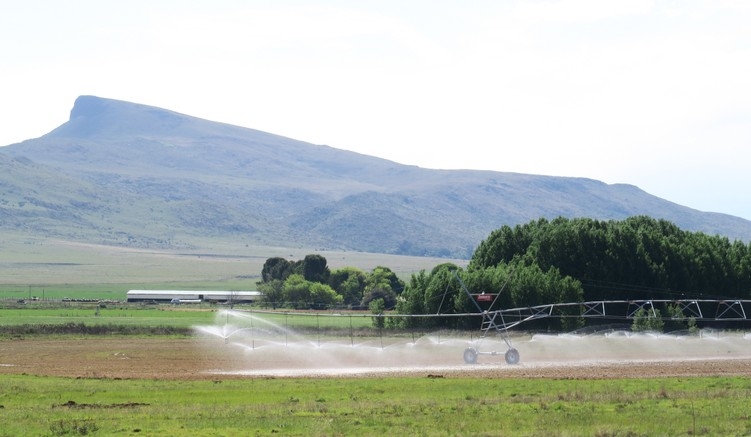
As billions of litres of untreated or partially treated sewage are released into South Africa’s watercourses every day, scientists have found our vegetables are being contaminated by irrigation from rivers and boreholes.
Professor Lise Korsten of the University of Pretoria told Parliament’s portfolio committee on agriculture in January that irrigation water was “not fit-for-purpose” for food production and that fixing the quality of irrigation water should be a national priority.
The “crisis of our water” was one of several elements impacting food safety and human health, she said.
The daily sewage pollution of our rivers is contaminating irrigation water with disease-causing bacteria, known as pathogens. In many cases, these pathogens are resistant to antibiotics, which is an extremely serious health concern.
Contaminated spinach
At least six studies by scientists at the University of Pretoria link irrigation water to contamination of fresh vegetables in Gauteng, Limpopo, North West, and the Western Cape. Contamination by pathogens has been found in both large commercial and informal small-scale supply chains.
One of the studies from the university’s department of plant and soil sciences, co-authored by Korsten and published in the Journal of Applied Microbiology in November 2021, found 80 different types of E. coli (Escherichia coli – a type of bacteria found in the human gut) as well as Salmonella species in the irrigation water and on the produce at three commercial spinach farms in Gauteng.
Although E. coli bacteria are common and naturally occurring, many of which are harmless or even beneficial, there are types that are pathogenic and can cause serious food poisoning. E. coli is also an indicator species revealing larger faecal contamination.
Related stories
- Sewage, waste, neglect: Joburg’s rivers are drowning in pollution
- Pesticide pollution in WC rivers threatens child health
- Water crisis worsens: Fix failing systems, urge experts
The scientists tested for E. coli and Salmonella on 288 samples collected from the farms. Of the samples, 192 were from the spinach and 42 were taken from the irrigation water. The remaining samples were from soil, water used for washing during processing, and from work surfaces.
Of the 288 samples, 65 tested positive for E. coli, with 80 different types of E. coli found. Some samples had more than one E. coli type. One of the E. coli types found contained the stx2 virulence gene that releases a toxin that can cause severe stomach cramps, diarrhoea, bloody stools, vomiting, fever, and kidney failure in severe cases.
The stx2 virulence gene was found in the irrigation holding dam fed by river water. Salmonella species were found in nine of the 288 samples.
Of the 80 E. coli types, 76 (95%) were resistant to at least one antibiotic and 35 (44%) to three or more.
The paper notes that contamination of fresh vegetables with human pathogenic (disease-causing) bacteria such as E. coli and species of Salmonella can come from manure in the soil or from processing facilities. But contaminated irrigation water “is regarded as one of the primary reservoirs, and routes of transmission, of human pathogenic bacteria onto fresh produce during primary production”, state the authors.
In a 2021 report to the Water Research Commission, the study’s authors stated: “A clear link was established between contaminants isolated from the irrigation water and the associated fresh produce.”

Untreated sewage leaks from a sewage treatment works in Standerton, Mpumalanga, into the Vaal River, which is visible in the background. Photo: Steve Kretzmann/GroundUp
Open sewers
South Africa’s sewage quality guidelines measure microbiological compliance (levels of faecal bacteria), chemical compliance, which refers to “Chemical Oxygen Demand (COD), Ammonia, Nitrites and Nitrates, Ortho-Phosphates, etc.”, and physical compliance, which refers to pH, suspended solids and electrical conductivity.
To comply with minimum microbiological standards, effluent released into the environment should contain less than 1,000 faecal coliforms (such as E. coli) per 100ml.
There are 144 municipalities responsible for sewage treatment in South Africa. The department of water and sanitation Integrated Regulatory Information System shows 86 of these achieve microbiological compliance scores of less than 50%. A further 31 are “Poor”, achieving compliance scores of between 50 – 70%. This means 81% of our sewage works are failing microbiological compliance.
But of the sewage works that have good microbiological compliance, many fail on chemical compliance, meaning they are releasing high levels of nitrates, ortho-phosphates, and ammonia into rivers. And it is often the case that the large sewage works, which release millions of litres daily into rivers, are the ones failing, whereas small sewage works that release thousands of litres daily are meeting minimum standards.
An example of this is in Cape Town, where Philadelphia sewage works, which achieves a 100% compliance score, releases up to 86,000 litres of effluent into the environment per day. But the Athlone sewage works, which currently has a 4% microbiological compliance rate, turns the Black River into little more than an open sewer as it releases up to 105-million litres of largely untreated effluent into it daily.
Similarly, the Klip River in Gauteng, which is a river used to irrigate produce analysed by the University of Pretoria researchers, receives about 260-million litres of effluent from failing sewage works per day. In Vereeniging, where the Klip joins the Vaal River, dead fish regularly float past.
Other rivers used to irrigate the crops analysed by the University of Pretoria researchers were the Olifants, which receives 18-million litres of effluent per day, and the Crocodile River, which receives about 68-million litres of effluent per day.
READ NEXT: Agritourism: Boost profits with hiking trails on farms
Superbugs
Head of the Division of Infectious Diseases and HIV Medicine at Groote Schuur Hospital, University of Cape Town, Professor Marc Mendelson, in a four-part series for GroundUp, said the global increase in antibiotic-resistant bacteria is a major health problem.
Mendelson wrote that since the discovery of penicillin 83 years ago, “miraculous antibiotics have become less and less effective as the bacteria that they are used to treat become resistant”.
Antibiotics are not only needed to treat infections, but they are also needed to prevent infections in cancer treatment and surgery. “Losing these antibiotics is a big deal,” he stated.
He stated he had seen a continuous rise in antibiotic resistance over the last 15 years at Groote Schuur Hospital, which was “now culminating in the end game, with an increasing number of untreatable infections”.
“We have had to use dire measures to save lives, such as amputation of infected limbs, because no antibiotic options are left, something unthinkable 20 years ago.”
Speaking to GroundUp, he said we are seeing “the coming together of poor sanitation systems and the overuse of antibiotics”, with the result being that antibiotic-resistant bacteria are being found on food.
But he said even if sewage treatment plants were run properly, they would not remove all antibiotic-resistant bacteria, as they were not designed to do so.
Nonetheless, he said if South Africa were able to meet the goal of universal provision of clean water, it would have “major impacts” on reducing mortality and infection rates, as well as secondary impacts such as improving education outcomes. Pathogens, particularly those which are antibiotic-resistant, in tap water sourced from dams polluted by failing sewage treatment works, increased diarrhoeal outbreaks, he said.
The small thing people could do was to properly wash fruit and vegetables before eating or preparing them (or cooking them). The “bigger thing” was the provision of clean water and sanitation systems, along with environmental surveillance of antibiotic resistance.

A dysfunctional sewage treatment works in Winburg, Free State, from which sewage flows untreated into the dam from which drinking water for the town is extracted. Photo: Steve Kretzmann/GroundUp
Economic threat
ActionSA chief whip and MP Athol Trollip told GroundUp the contamination of fruit and vegetables from contaminated irrigation water could harm South Africa’s significant export market.
Trollip was particularly concerned about citrus, which last brought in R33-billion from exports to Europe, the Middle East, Russia, and the USA.
He said European competitors such as Spain were looking for ways to prevent South Africa – which is the second largest citrus exporter after Egypt – from muscling into the highly regulated European market.
For instance, new European Union regulations, which Citrus Growers’ Association chief executive Justin Chadwick called “discriminatory” and “unscientific”, regarding citrus black spot and false codling moth, posed a challenge to exporters last year.
The last thing you want is a consignment of citrus from the Eastern Cape to be riddled with E. coli, as it would set off a high alert and put our exports in danger, said Trollip.
He said losing the European market due to such an incident would be “devastating”. Besides affecting the farmers, it would have “massive employment consequences” and reduce the country’s access to foreign currency.
The state of South Africa’s sewage treatment and resultant pollution of rivers is “of great concern” as it also affects local produce and livestock.
That many municipalities extracted drinking water from dams polluted by untreated or partially treated effluent meant a cholera outbreak – such as occurred in Hammanskraal in 2023 – was “waiting to happen”, he said.
“My concern is we’re not doing enough to hold municipalities to account for [sewage treatment] dysfunction. It seems a case of out of sight, out of mind, but the downstream impact is immense.”
This article was first published by GroundUp.
ALSO READ: One year later: Rural farmers left behind in GNU promises
Sign up for Mzansi Today: Your daily take on the news and happenings from the agriculture value chain.