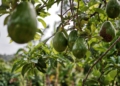
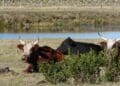
Democracy was the best thing to have happened for South African agriculture, says new research findings that commercial agriculture has almost doubled in volume, while the country built a strong footprint in international markets.
Two of Mzansi’s foremost agricultural experts believe that post-apartheid policies have positively impacted commercial agriculture since their implementation after the dawn of democracy in 1994, also opening up local markets.
National Agricultural Marketing Council chief economist Dr Sifiso Ntombela and Agbiz chief executive Dr John Purchase say the Marrakesh Agreement, which established the World Trade Organisation in 1994, also paved the way for South African agriculture.
This agreement, signed by 123 nations, created an integrated, multilateral trading system and opened up new export opportunities for South African farmers and agribusinesses. Also, the agricultural marketing act deregulated the sector and unlocked markets which largely benefitted commercial agriculture.
Policies curbed black farmer growth

Ntombela says since then the policies were able to drive technological innovation. This assisted farmers and agribusinesses to access new markets. They were also now able to place investments in areas that were previously not growing. Furthermore, efficiencies were improved which helped drive huge growth.
Today, Mzansi’s citrus count among the best performing products in the world, says Ntombela. “Our wine and fruit baskets are all doing relatively well and South Africa is one of the biggest producers and exporters of mohair.”
Ntombela adds, though, while this is commendable, this has unfortunately been an exclusive growth that only profited the very large previously advantaged farmers and agribusinesses. Medium and smaller-scaled, particularly black farmers did not benefit from this development.
“It perpetuates inequality,” says Ntombela, adding that it also perpetuates the under-development of marginalised areas, former homelands and some of the areas that were acquired by government through land reform initiatives.
He says this is problematic because it is becoming a factor that is partially contributing to the instability of the agricultural sector. Ntombela warns that it is time South Africa implemented “radical strategies” that can build on this success to drive an inclusive growth in the sector post covid-19. This will lead to a South African agri-sector which everyone is proud of because everyone is benefiting from it.
Private partnerships remain key – Purchase
Meanwhile Purchase adds that growth in the emerging sector has generally been disappointing and slower than one would have hoped for, or even as envisaged in the National Development Plan. This is despite the deregulation of the agricultural sector in 1996.

Purchase says the use of technology, among others, made many of our major value chains globally competitive and thus attracted greater investment that ensured the growth of our sector. “This has also benefitted the country as a whole from a national food security and a balance of payments perspective as we became a growing net exporter of agricultural products.”
The Agbiz boss says various reasons contributed to the stunted growth of the emerging and development sector. This includes a “lack of or limited access to finance, secure land tenure rights, water allocation, infrastructure, technology and extension, markets,” to name a few.
“There are various reasons for this state of affairs, including legacy issues, but most certainly also because of a lack of support, poor service delivery and poor policies by government. In addition, often where private sector offered assistance, such assistance was declined. There are various examples to substantiate this statement,” he says.
“It is time to implement radical strategies to drive inclusive growth in agriculture post covid-19.” – Dr Sifiso Ntombela
Purchase adds that if we do not establish proper public private partnerships at scale and also address key structural problems this dualism will continue. In the end, we will not realise the full potential of the people, he believes.
“In the constrained fiscal environment we now find ourselves in, this becomes an even greater imperative as government simply does not and will not have the capability and capacity to make a meaningful difference.”