Vergelegen in Somerset West is celebrating a remarkable season of new life at its 3 000-hectare wine estate, which includes a 400-hectare game camp located within a 1 980-hectare nature reserve.
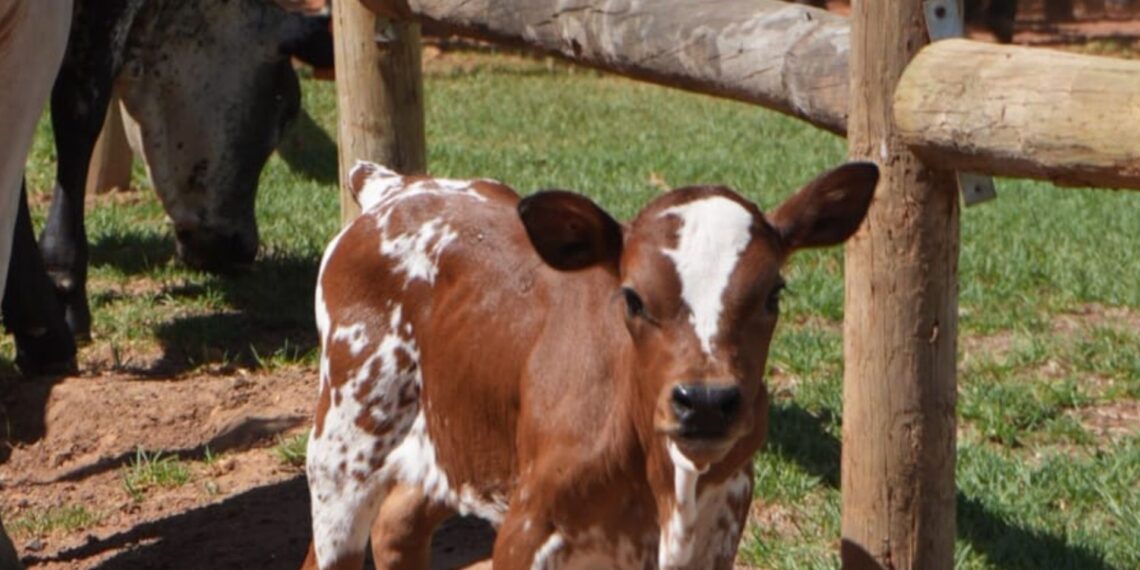
The most unusual newcomer is a dwarf Nguni calf, born in December. With short, stocky legs and a distinctive brown-and-white spotted hide, he is expected to grow no taller than between knee-and-waist height when fully grown.
“Dwarf Nguni cattle have a much shorter lifespan than standard Nguni, usually around four years, compared to up to 20 years for a normal Nguni,” says Vergelegen’s environmental manager, Eben Olderwagen.
“His mother is very protective and closely monitors anyone who approaches.”
Baby boom expands population
According to Olderwagen, the calf, who is yet to be named, joins another young Nguni, Henry, who is mostly white in colour and something of a celebrity on the estate. Bottle-fed and tame, Henry has formed a close bond with hospitality and events manager Sue Steenkamp and enjoys spending time in her garden.

“Both calves were late arrivals. Vergelegen welcomed an impressive 133 Nguni calves between July and September last year, bringing the total Nguni herd to around 450 animals. The baby boom has extended beyond cattle. Two eland calves were born in mid-December 2025, boosting the estate’s eland population to 11.
Related stories
- Cattle vs. wildlife: How farming can help with solutions
- Innovation is the new vintage for SA wine amid climate crisis
- SA and Netherlands celebrate milestone in agri e-certification
- Tariffs bite, but SA wine exports show resilience
“The original five eland, three cows and two bulls, were introduced in July 2020 from Elandsberg near Wellington as part of a long-term project to monitor their grazing impact on fynbos species and grasses,” Olderwagen stated.
Seven bontebok lambs were born in October 2025, bringing the total bontebok population at Vergelegen to approximately 90. While this is slightly below the usual 12 to 15 lambs born annually, Olderwagen says there is a natural explanation.
“Young females are reaching breeding age, and new breeding groups are forming as young males establish their territories,” Olderwagen said.
Bontebok were introduced to Vergelegen in 2008, when 13 animals were relocated from the nearby Helderberg Nature Reserve. Since then, the population has flourished.
Vergelegen is home to several spotted eagle owls, and a pair breeds every year in oak trees near the management offices. In November last year, two owlets were discovered out of their nest at the base of the tree, where their parents continued to feed them until they could fly.
READ NEXT: Agri outlook: SA’s farmers face a year of reckoning and renewal