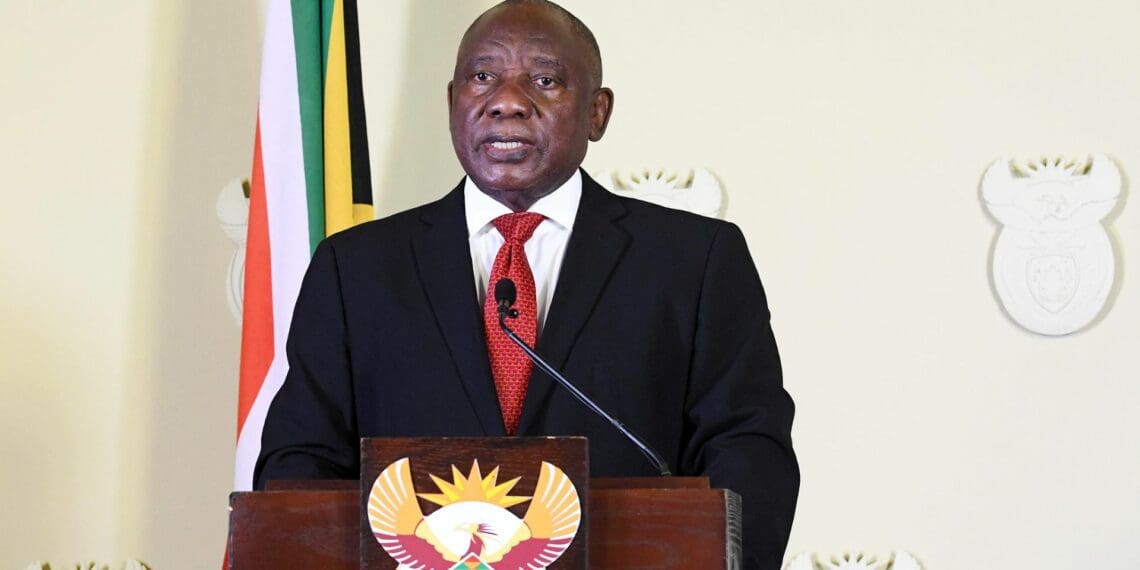
President Cyril Ramaphosa will deliver the State of the Nation Address (Sona) this Thursday under heightened economic pressure and growing expectations for decisive action – both from the nation’s citizens and the already stretched public purse.
The agricultural sector, which has been hit hard by illicit trade, tariffs, biosecurity, adverse weather conditions, and ailing infrastructure, wants a resolute approach from Ramaphosa on how the country will move forward.
Sugar and tobacco industries on their knees
South African Sugar Association (SASA) executive director Sifiso Mhlaba said the sugar industry is facing one of its most difficult moments, which needs urgent intervention.
“In his 2019 State of the Nation Address, President Cyril Ramaphosa announced that there would be a master plan for the sugar industry, which was at the time facing an existential crisis due to debilitating challenges such as the sugar tax, sugar imports and insufficient tariffs. The following year (2020), the master plan was introduced and brought the industry back from the brink of collapse.
“Fast-forward to 2026, it’s a déjà vu moment for the industry. Sugar imports are wreaking havoc, and the deleterious sugar tax continues to devastate the industry. The time is now for the president to signal a decisive intervention, the need to urgently increase the tariff to protect us from subsidised countries’ imports,” he said.
Related stories
- Ramaphosa urges regional farming unity at Zimbabwe agri show
- Farmers seek stronger support in Ramaphosa’s Sona
- Land Bank’s Mr Fixit quits after pulling lender out of four-year debt default
- Mixed reactions as national minimum wage increases to R30.23
The tobacco industry, which is also facing hard times, stated that they are on their knees and struggling for survival, not because of a shrinking market, but because the government is not enforcing laws to bring illicit players in the tobacco industry to book.
Francois van der Merwe, director of Limpopo Tobacco Processors and spokesperson for the South African Tobacco Transformation Alliance, said between 66% and 75% of the tobacco market is currently illegal, so it means the illicit, non-compliant and non-tax-paying industry has taken over the market.
“Because they don’t pay taxes, they can put cigarettes on the market for as little as R10 a pack, while the taxes alone on a pack are more than R26 a pack. So the legal industry can simply not compete, and therefore the legal industry has shrunk to levels where its survival is questionable.
Francois van der Merwe
“So, we would like the president to announce that fighting the illicit economy will be a priority for government from now onwards. The illicit economy is costing our country many billions in lost revenue, for tobacco alone its more than R25 billion every year.”
He said it is time that the president declares war on the illicit economy, and fight it with all the might and resources at its disposal.
‘Sona must move beyond promises’
Another industry that was hit hard by United States president Donald Trump’s tariffs, is the wine industry. Role players said, in a rapidly changing global trade environment, disciplined and targeted trade discussions are essential to protect market access, grow exports and build investor confidence.
Chief executive officer of South Africa Wine Rico Basson said South Africa does not need new plans for wine and brandy, and there is a need for collaboration and faster implementation of the plans that are already there.
“If delivery is accelerated, the sector can unlock significant growth in exports, wine tourism, rural employment and inclusive enterprise development. As part of an export-led growth agenda, South Africa Wine is urging the government to prioritise market access for wine, with a focus on value growth in prioritised markets.
“To remain competitive, South Africa must shift exports toward higher-value packaged wine and protect science-based standards that underpin fair market access,” he said.
Meanwhile, executive director for WaterCan, Dr Ferrial Adam, said they expect the State of the Nation Address to move beyond promises and confront the daily water crisis faced by millions of South Africans.
“The president must outline concrete actions to fix failing municipal water systems, improve coordination between national government, water boards and municipalities, and ensure transparent, regular communication with communities during outages.
“We expect firm timelines, accountability measures, and a commitment to prioritise maintenance, reduce water losses, and protect water infrastructure from continued neglect and mismanagement,” she said.
READ NEXT: Expropriation Act: Land reform faces its toughest test yet