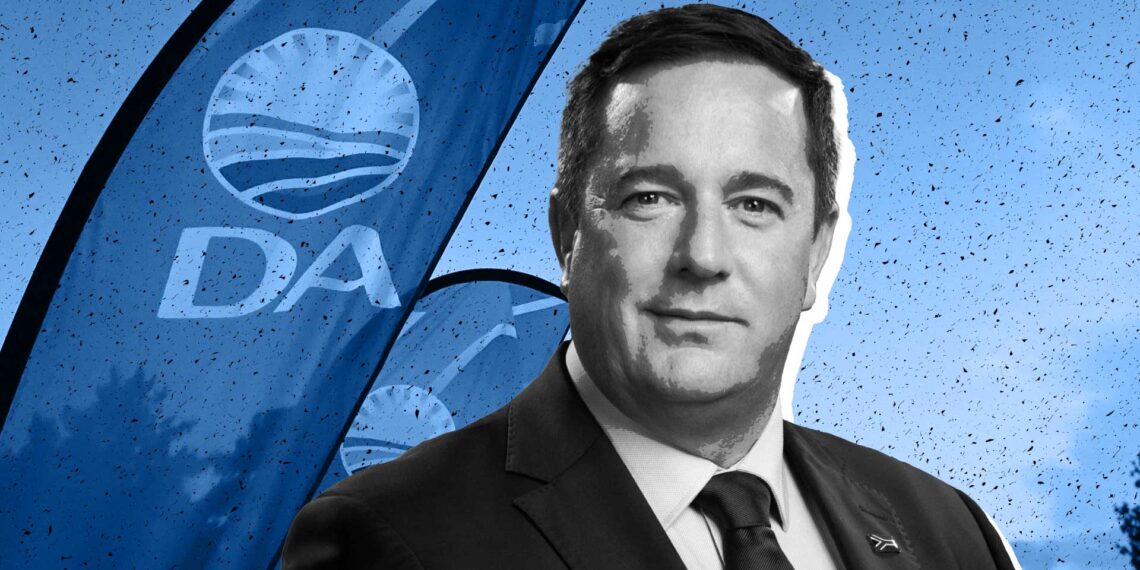
Sources confirm that agriculture minister John Steenhuisen will not stand for re-election as leader of the Democratic Alliance, with a formal announcement expected tomorrow. The decision has already raised questions about the future of the country’s agriculture portfolio.
Steenhuisen currently wears two hats: he’s DA leader as well as minister of agriculture, a cabinet position negotiated by the DA as part of the government of national unity.
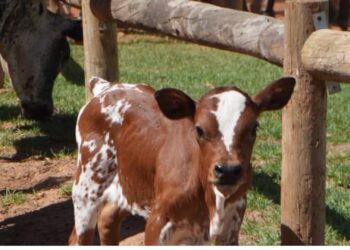
While his party politics grab the headlines, it’s his agricultural portfolio that has farmers on edge. The country is battling its biggest foot-and-mouth disease (FMD) outbreak in decades, and many producers feel the state-controlled vaccination strategy is failing them.
In recent weeks, across the country, commercial farmers have been sounding the alarm over the foot-and-mouth disease outbreak.
Many say they are watching their herds suffer while waiting for vaccines, describing the situation as a crisis that could have been managed with faster government action. The delays have left farmers frustrated and anxious, with growing concern about the impact on livestock, production, and livelihoods.
Steenhuisen has repeatedly defended the national vaccination strategy, arguing that giving private farmers free rein could derail the scientific framework needed to keep South Africa FMD-free. “Uncontrolled vaccines risk undoing years of disease control,” he said. But his assurances have done little to ease frustration on the ground
Farmers’ organisations, including Saai and Free State Agriculture, have gone as far as sending a letter of demand to the department, insisting that private vaccination is legal and urgent. They say delays in implementation are costing the sector millions, while livestock health deteriorates.
What’s next?
With Steenhuisen stepping down as DA leader, the future of the agriculture portfolio remains uncertain. Ministers are appointed by President Cyril Ramaphosa, and it is still unclear whether Steenhuisen will continue in the cabinet under the current government of national unity.
Questions are also already emerging about whether a possible successor would maintain the same centralised approach to issues like foot-and-mouth disease, or allow more flexibility for private farmers.
In November 2019, John Steenhuisen was elected interim leader of the DA after defeating Makashule Gana, a DA MPL in Gauteng. A year later, he secured a full term as party leader at the Federal Congress, defeating KwaZulu-Natal MPL Mbali Ntuli, and he was re-elected for another term on 2 April 2023.
Ahead of the DA’s elective conference in April, Cape Town mayor Geordin Hill-Lewis is emerging as a frontrunner for the top job. He had, however, previously indicated that he would not challenge Steenhuisen and would not take up a national cabinet post.
For farmers, this is more than politics. It’s about survival. Livestock producers are watching closely, knowing that leadership changes could directly affect vaccine access, disease control, and the bottom line on their farms.
READ NEXT: An FMD-free future: Pipe dream or reality?